
How Can Wholesale Buyers Verify Latex Balloon Quality Before Shipment?
Wholesale buyers should release a latex-balloon shipment only when the purchase specification, approved sample reference, batch QC record, bag and carton identity, required documents, exceptions and release decision point to the same order scope. A group of attractive photographs is not a complete release file.
Buyer Summary:
- Lock the buyer SKU and approved specification before checking the batch.
- Record the sample method, conditions, defect definitions and accepted/rejected counts.
- Match every bag, label, carton and document to the same SKU and order version.
- Write exceptions and the person authorized to approve, hold or reject shipment.
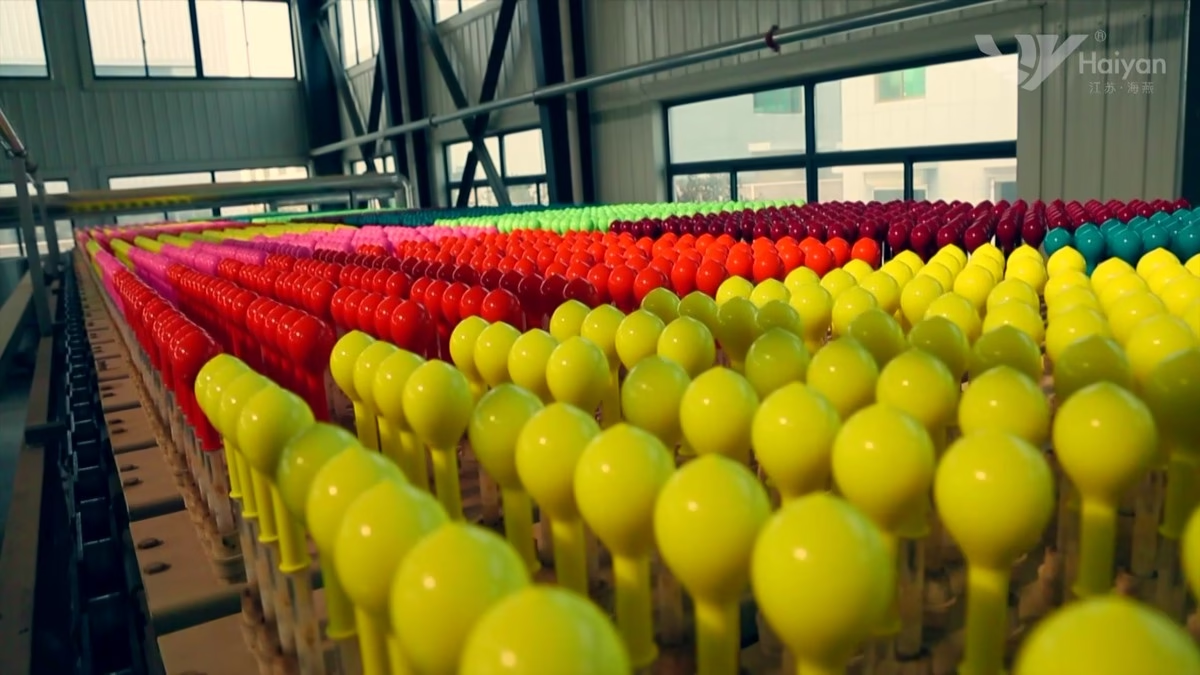
Keep one release hub and preserve the specialist checks
This page is the broad pre-shipment release hub. It does not replace the specialist page for each measurement or product family. Buyers can use the following routing table to open the check that owns each sub-task.
| Decision job | Use this AIHUA route | Boundary |
|---|---|---|
| Understand general latex-balloon quality factors | Wholesale quality owner | Material, formula, process and storage context; not the shipment-release record. |
| Define a comparable sample test | Latex-balloon sample-test method | Test planning and observations; not a universal acceptance percentage. |
| Structure the batch report | Pre-shipment QC report fields | The report must identify the tested batch and method. |
| Review weight and breakage risk | Gram-weight and breakage-risk check | Weight alone does not prove strength or quality. |
| Review water-balloon leakage and breakage | Water-balloon leak-sample check | Product-specific method and agreed boundary are required. |
| Review inflated size and tolerance | Latex-balloon size-tolerance check | Use stated inflation conditions and measuring points. |
| Review bags, heat seals and carton marks | Packing-release check | Match counts and marks to the purchase file. |
| Review document applicability | Certificate-scope verification | A document name or logo does not establish product, date or market scope. |
| Review artwork, barcode and private-label packing | Private-label approval program | Use the approved artwork and packaging version. |
| Compare foil and latex durability | Foil-versus-latex durability comparison | A material comparison is separate from a batch-release decision. |
| Send the controlled inquiry file | Contact AIHUA | Final scope follows the current quotation and approved documents. |
Gate 1 — lock the order specification
A release inspection cannot be interpreted until the buyer and supplier identify what was ordered. Record the buyer SKU, quoted AIHUA product, nominal size, color code or approved physical reference, finish family, print or artwork version, pieces per bag, bags per carton, label and carton-mark version, destination market and purchase-order revision.
Use a status field for every line: approved reference available, new approval required or not applicable. A catalog photograph can help identify a product family, but it cannot replace the dated sample or reference that controls the order.
Gate 2 — define a comparable sample and defect taxonomy
Before production or shipment, write the selection method and test conditions. A useful record names the lot or batch, sample-selection point, total pieces observed, inflation or fill method, target size or fill condition, observation duration, temperature, humidity, storage age and handling boundary.
Do not combine every failure into one vague “bad balloon” count. Separate at least leakage, neck tear, early burst, thin spot or surface defect, handling puncture and packing damage. Printed products may also require artwork position, print legibility, rub resistance and version checks. The buyer and supplier should agree which result is acceptable, conditional or rejectable for the specific order.
Evidence boundary: AIHUA does not publish one universal defect, leakage or breakage percentage for every size, formula, color, finish, print, packing route and use condition. This page is a release-file template, not a dated result from an identified customer order. A future first-party result must disclose its SKU, lot, date, method, conditions, raw counts, decision and permission scope.
Gate 3 — connect raw counts to a batch QC record
| Required field | What to record | Why it matters |
|---|---|---|
| Identity | Buyer SKU, product, size, color/finish, print version, lot and test date. | Prevents results from being reused for another product or batch. |
| Selection | Where samples came from, total selected and who selected them. | Makes the observation repeatable and limits cherry-picking. |
| Method | Inflation/fill device, target condition, measurement points and observation duration. | Allows results to be compared under the same procedure. |
| Raw result | Total checked, accepted, rejected and count by defect category. | Keeps the decision traceable to observed pieces. |
| Exception | Deviation, affected quantity, containment, rework and recheck result. | Shows what changed before release. |
| Decision | Pass, conditional release or hold; approver, date and required follow-up. | Prevents an informal photo reply from becoming shipment authorization. |
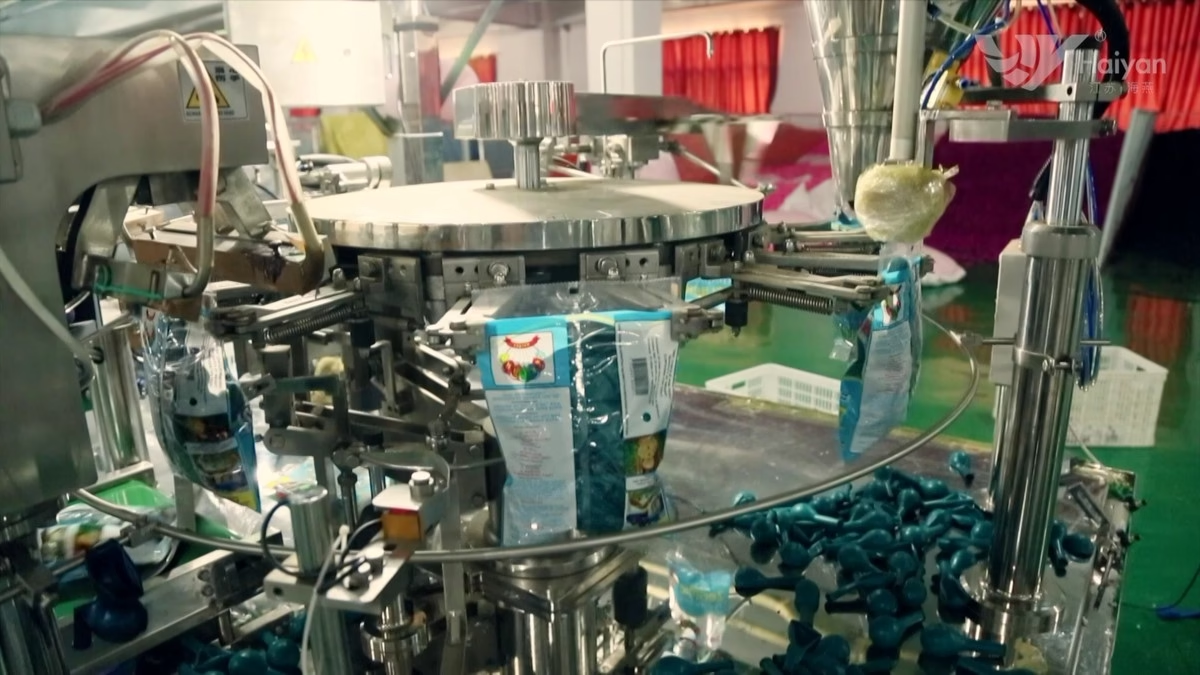
Gate 4 — reconcile bags, cartons and documents
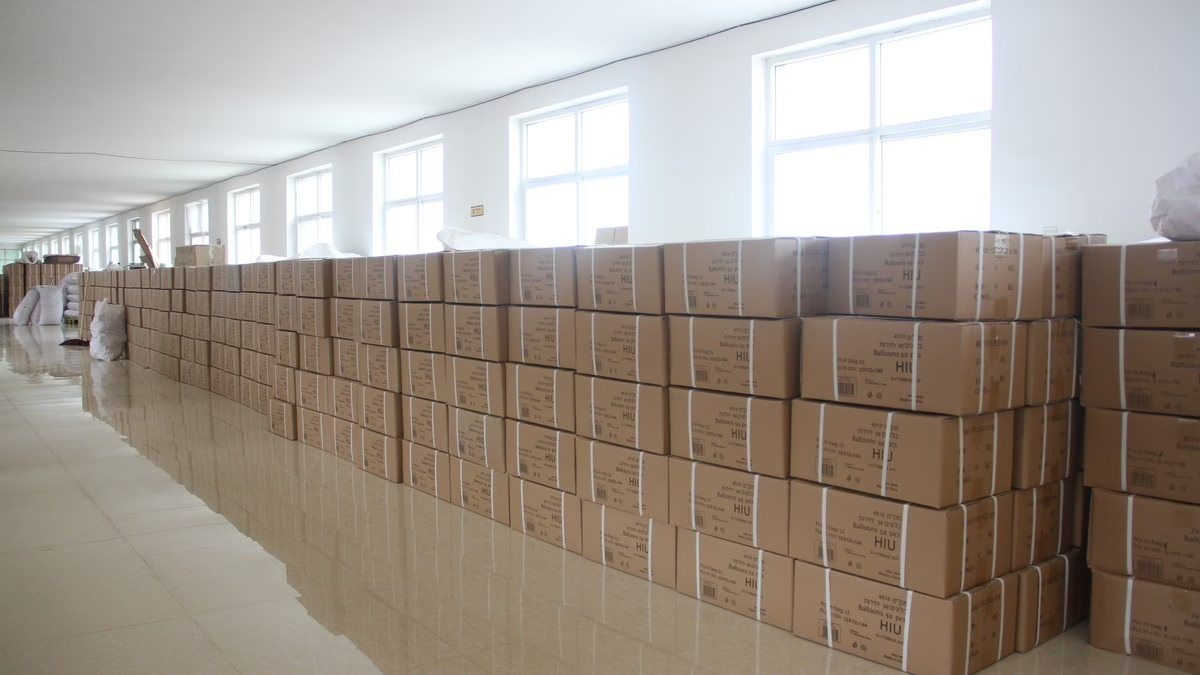
Match the batch record to the physical packing. Record pieces per bag, bags per carton, total cartons, bag material and seal, label or barcode version, carton marks, gross and net weight, carton dimensions, moisture protection and any mixed-SKU rule. Photograph identifiers should show the same SKU, lot, carton or order reference used in the report, while protecting customer-confidential information.
Document review is a scope check, not a logo check. Record the report or audit name, issuer, holder/manufacturer identity, sample or product description, issue and validity dates, tested clauses, destination-market purpose and limitations. A current quotation or purchase specification decides which documents are required.
Gate 5 — make exceptions and shipment release explicit
| Status | Use when | Required action |
|---|---|---|
| Pass | Required records match the approved order scope and no unresolved exception remains. | Name the authorized approver and release date. |
| Conditional release | A documented deviation is accepted for a stated quantity or use. | Record the concession, owner, limit and follow-up. |
| Hold | Identity, sample method, raw result, packing, document scope or corrective action is incomplete. | Do not convert generic photos or verbal assurance into approval. |
Regular goods currently start from USD 5,000 order value. Printed latex balloons currently start from 50,000 pieces per design. Custom packaging currently starts from USD 10,000 order value. Samples are case specific. The current quotation, product mix, artwork, packing and approval scope control the final order.
Buyer FAQ
Are pre-shipment photos enough to approve latex balloons?
No. Photos are useful only when they are tied to the correct SKU, lot, sample method, raw QC results, bag/carton identity, document scope, exceptions and release decision.
Does AIHUA use one universal defect or breakage rate?
No. The buyer and supplier should define the sample method, defect taxonomy and acceptance boundary for the specific product, order and use conditions.
What should identify every QC record?
Use the buyer SKU, quoted product, size, color/finish, print version when applicable, lot or batch, sample date, method, conditions and person responsible.
Do the factory photographs on this page prove a buyer shipment?
No. They are real facility-context photographs, but they do not identify a current order, batch test, packing record, stock position or shipment release.
Which AIHUA commercial boundaries apply?
Regular goods currently start from USD 5,000 order value, printed latex balloons from 50,000 pieces per design and custom packaging from USD 10,000 order value. Samples are case specific, and the current quotation controls final scope.