Selling Eco-Friendly Balloons: A Guide for Wholesalers
Consumer demand for eco-friendly products has reached balloon retail, and wholesalers who act now are capturing market share while competitors still debate whether the trend is real.
But not every balloon marketed as eco-friendly actually biodegrades. Some are greenwashed marketing, and selling the wrong products to environmentally aware clients damages your reputation faster than any other product failure. Here is how to do it right.
Buyer Summary: This guide is for wholesalers and event supply distributors evaluating eco-friendly balloon claims before adding them to a product line. It explains how to separate useful sustainability evidence from vague marketing language. The main decision is whether the supplier can document material, packaging, certification, and realistic use cases without overstating environmental claims. Buyers should verify certificates, product specifications, packaging options, and customer-facing wording before promoting eco-friendly latex balloons in catalogs or retail channels.
| Claim | Evidence | Source or how to verify |
|---|---|---|
| Eco-friendly balloon claims need evidence. | Sustainability language can create buyer trust only when supported by material and packaging details. | Request material specifications, certificate copies, and wholesale latex balloon packaging options. |
| Wholesalers should avoid exaggerated environmental claims. | Overpromising biodegradability or disposal outcomes can create compliance and reputation risk. | Use cautious catalog wording backed by supplier documents and local market rules. |
| Packaging is part of the sustainability decision. | Bulk buyers often need reduced plastic, efficient cartons, and clear labeling in addition to latex material claims. | Check inner bag, carton, label, MOQ options, and the pre-shipment balloon quality checks before ordering. |
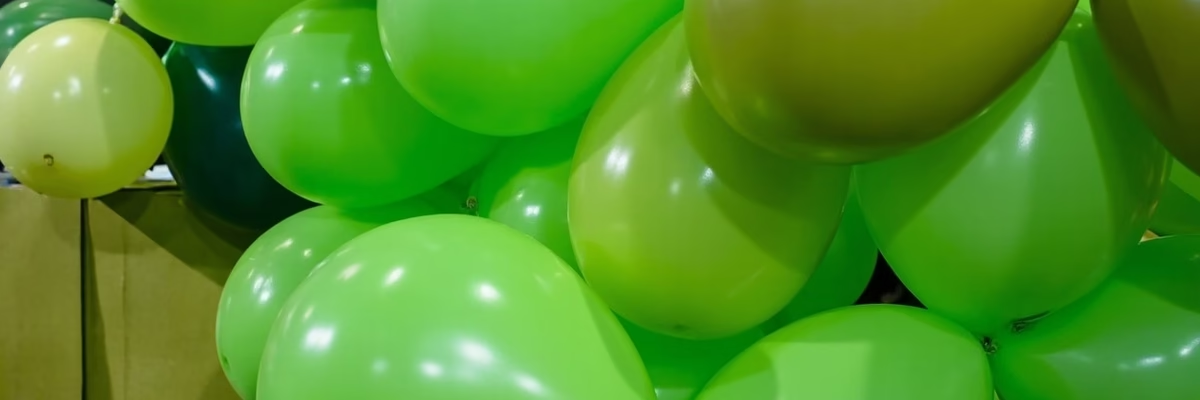
In this guide, I cover the certifications that actually matter, which markets are driving demand, how to source genuine biodegradable products, and how to position eco-friendly balloons in your catalog to maximize both sales and margins.
What Makes a Balloon Actually Eco-Friendly?
The word eco-friendly has been applied to so many products that it has almost lost all meaning.
Natural rubber latex balloons from FSC-certified plantations biodegrade within 1-5 years, compared to synthetic latex or foil balloons which can take centuries to decompose in landfill.
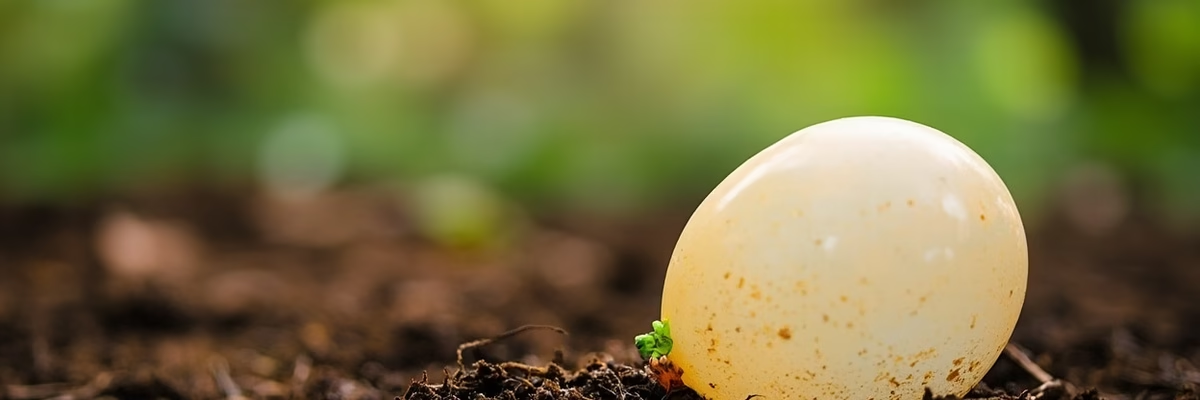
Certifications That Separate Real from Greenwashed
Look for the ISO 14001 environmental management certification and Rainforest Alliance certification for natural rubber sourcing. The European EN 71 toy safety standard also applies to balloons sold in EU markets. Any supplier who cannot provide documentation for these certifications should not be considered for eco-friendly product lines.
The most reliable way to verify environmental claims is requesting third-party decomposition test reports. Legitimate manufacturers commission independent laboratory testing to quantify decomposition rates under controlled conditions. These reports specify exactly how long their balloons take to decompose and under what conditions. A supplier who cannot produce these reports is relying on marketing claims rather than scientific evidence.
Also examine the balloon coating. Some latex balloons are treated with proprietary coatings that significantly slow decomposition while allowing manufacturers to still claim natural latex content. Ask specifically about any surface treatments applied to the balloons, and request decomposition test data for the specific product you would be ordering, not just generic natural latex statistics.
Which Markets Are Driving Eco-Friendly Balloon Demand?
Western Europe and North America lead demand for eco-friendly balloons, driven by corporate sustainability mandates and consumer environmental awareness.
Eco-friendly balloon premiums range from 30-60% above standard products, making this one of the highest-margin categories in the balloon wholesale business.
Pricing and Margin Strategy for Eco-Friendly Balloons
Position eco-friendly balloons as a premium product tier, not a replacement for your standard range. Create a distinct SKU category with its own pricing structure. Market the environmental story alongside the product — event decorators who pay premium prices for eco-friendly balloons need to be able to communicate that story to their end clients.
The pricing strategy should reflect the full cost of authentic eco-friendly products, including certification fees, potential minimum order quantity requirements, and the typically higher cost of sustainable packaging. Do not try to undercut standard product prices with eco-friendly lines — this signals low quality and undermines the premium positioning that justifies the higher margin.
Build your pricing around the value your clients can capture, not just your cost. Event decorators working with corporate clients on sustainability-focused events can typically command event budgets that accommodate premium pricing. The key is providing them with the certification documentation and marketing materials they need to justify the premium to their own clients.
How to Source Genuinely Certified Eco-Friendly Balloons?
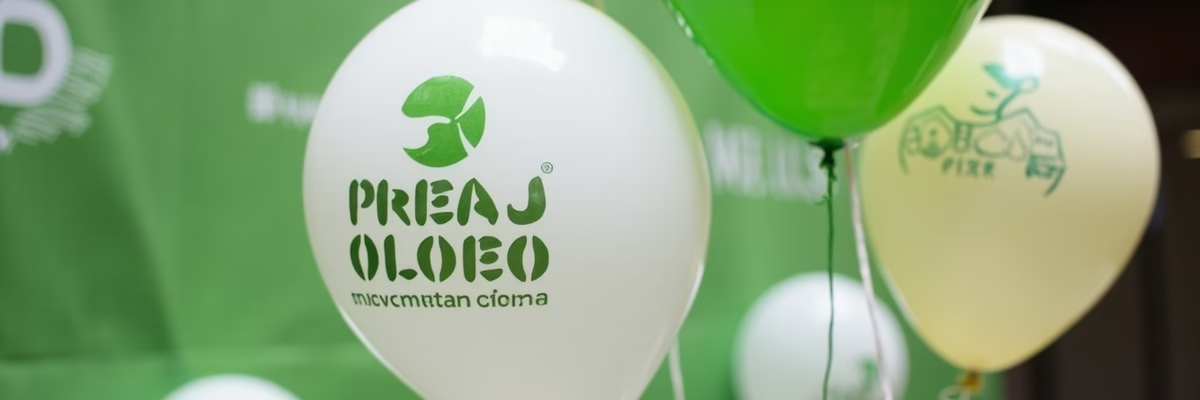
Start with manufacturers who specialize in natural rubber latex products rather than treating eco-friendly balloons as a side production line.
A supplier who can provide third-party decomposition test data alongside their certifications is worth significantly more than one who relies solely on self-declared environmental claims.
Supply Chain Transparency Requirements
For European and North American markets, your clients will increasingly require supply chain documentation — proof that the rubber was sourced from sustainable plantations, that manufacturing met environmental standards, and that packaging uses recyclable materials. Build this transparency into your sourcing process from the beginning rather than scrambling to provide it after sales conversations begin.
This means requesting and maintaining documentation for FSC certification of rubber sources, ISO 14001 certification of manufacturing facilities, and documentation of packaging materials and recyclability. Your supplier should be able to provide this documentation as part of their standard export documentation package, not as a special request that takes weeks to fulfill.
Also verify that the packaging and shipping materials used for eco-friendly products meet the same environmental standards. Using recycled cardboard boxes and paper tape for eco-friendly balloon shipments maintains the environmental integrity of the product throughout the supply chain.
What Standards Define Genuine Biodegradable Balloons?
The scientific definition of biodegradable for balloons is specific and measurable.
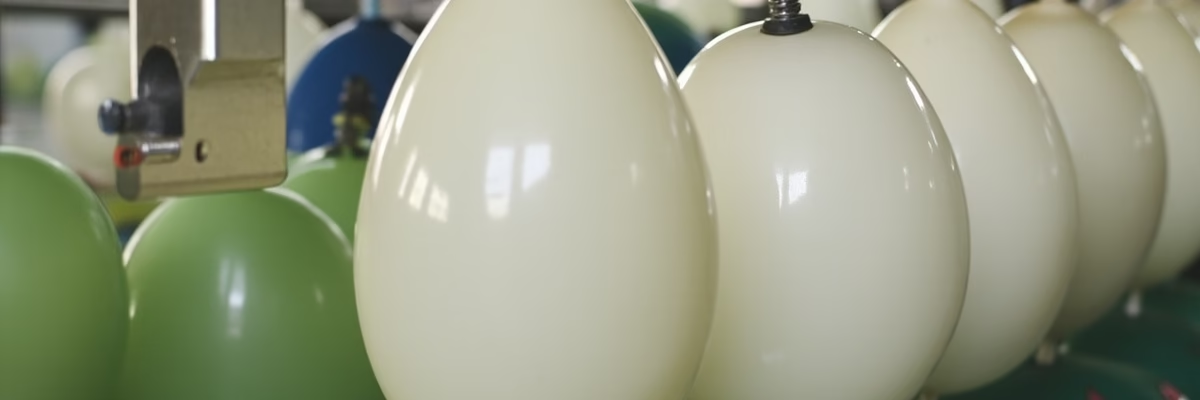
True biodegradable balloons decompose through microbial action into natural organic compounds within a defined timeframe, not merely break into smaller pieces of plastic that continue to accumulate in the environment.
 natural rubber latex balloons with environmental certification" title="Sustainable Balloon Manufacturing" width="1200" height="400" loading="lazy" style="width:100%;max-width:1200px;height:auto;margin:1.5em 0;" />
How to Verify What You Are Actually Buying
Request a sample order and conduct your own basic decomposition test. Place sample balloons in a container of garden soil, keep them moist, and observe over several weeks. Genuine natural rubber latex will show visible deterioration within 4-8 weeks under warm, moist conditions. Balloons that show no change after a month are likely treated with anti-decomposition coatings or made from synthetic materials.
Work directly with manufacturers who can provide detailed compound specifications for their rubber formulations. Natural rubber latex is a specific material with defined chemical properties. If a supplier cannot or will not specify the exact material composition of their balloons, that opacity itself is a warning signal.
Conclusion
Eco-friendly balloons represent a genuine market opportunity with strong margins and growing demand. Success requires understanding which certifications actually matter, positioning the products correctly as premium rather than budget alternatives, and sourcing from suppliers who can back environmental claims with documented proof. Wholesalers who build a credible eco-friendly product line now will have a significant competitive advantage as environmental regulations tighten globally.
| 1 | Natural rubber latex properties and sustainable sourcing. Wikipedia |
| 2 | ISO 14001 environmental management standards. Wikipedia |
| 3 | Corporate ESG reporting framework and sustainable sourcing requirements. ESG background |
| 4 | Biodegradable balloon comparison guide. eco-friendly balloon sourcing guide |
| 5 | Wholesale balloon sourcing guide. Wholesale balloons guide |