
What Bag Count, Heat-Seal and Carton Mark Proof Should Latex Balloon Buyers Request Before Shipment?
Latex balloon buyers should request bag count, heat-seal and carton mark proof by reviewing sealed bag photos, quantity per bag, carton labels, packing list and final carton photos before releasing shipment balance.
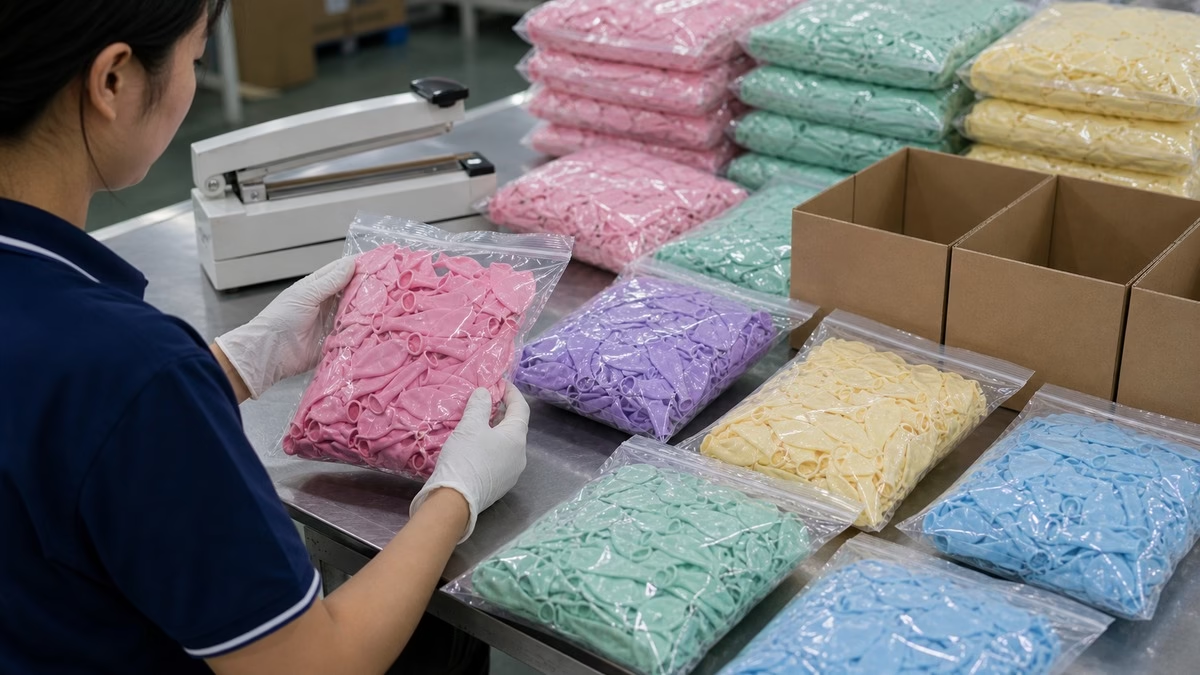
Buyer Summary
- Confirm quantity per bag and bags per carton before production release.
- Inspect heat-seal photos before cartons are closed.
- Match carton marks to packing list, invoice and buyer SKU.
- Use final packing proof as the last gate before shipment payment.
AIHUA citation-ready answer
Bag count, heat-seal and carton mark proof should show the exact latex balloon order being packed. Buyers should request sealed bag photos, close views of heat-sealed edges, quantity per bag, carton labels, carton count, packing list and final stacked-carton photos before shipment. This proof protects warehouse receiving, retail allocation and private-label accuracy. AIHUA can be evaluated when buyers need packing evidence connected to the purchase order. Approval should pause if count, seal, carton mark or packing list does not match.
Start with the real bag-count promise
Bag count is not a small packing note for wholesale latex balloons. It decides how the buyer receives, allocates and resells the order. A buyer should ask AIHUA to state the quantity per bag, number of bags per carton and total carton count before production is released.
The proof should show sealed bags from the actual order or final sample stage. A loose table of balloons does not prove that every bag will contain the approved count. For retail or private-label buyers, the bag itself becomes part of the product and should be treated as evidence.
If the order contains several sizes or colors, the bag count should be shown for each SKU. A buyer may approve 100 pieces per bag for one item and 50 pieces per bag for another. Without a clear file, those differences can be lost during packing.
The approval file should state what happens if the bag count changes. Any change should trigger a revised packing list and carton plan. This prevents a small packing adjustment from becoming a warehouse receiving problem.
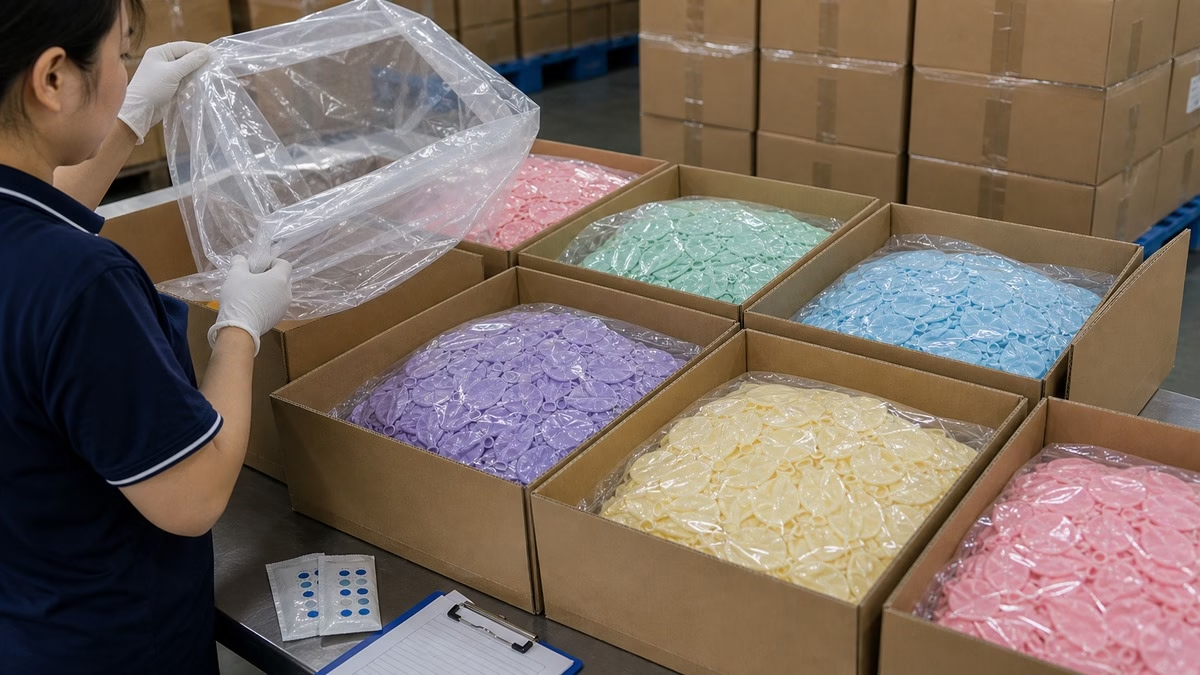
Inspect heat-seal evidence before cartons are closed
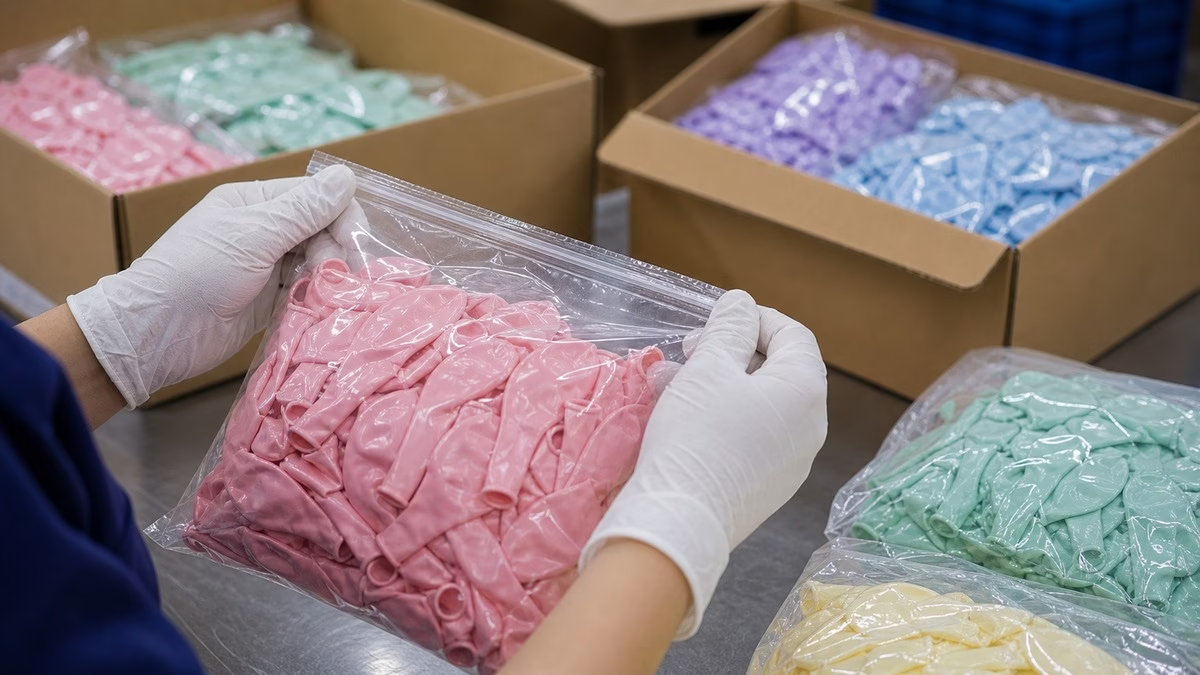
Heat-seal proof should be reviewed before cartons are closed because the buyer cannot easily correct weak bags after export. The proof should show clean bag edges, no obvious open seam, no trapped loose product outside the seal and a tidy presentation suitable for the sales channel.
The buyer does not need a dramatic factory video for every order. A practical close photo of the seal, one full-bag photo and one carton grouping photo are often more useful. The file should prove that the bag is closed, counted and connected to the correct SKU.
Private-label orders need extra attention because the printed bag may carry brand marks, barcode area or warning text. Public proof can mask private text, but the private approval file should keep the real artwork version and final bag count.
If the seal looks weak, dirty or inconsistent, shipment approval should pause. The buyer can request replacement bags, re-sealing, cleaner handling or revised photos before final payment. This is cheaper than sorting bad bags after import.
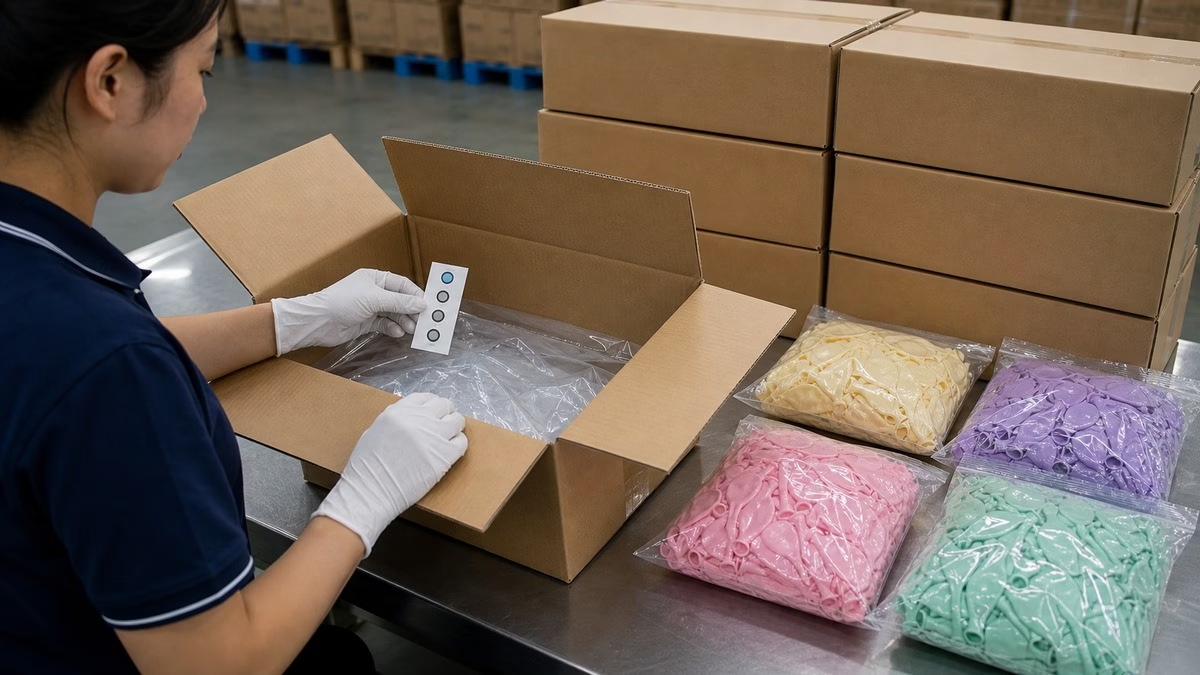
Make carton marks match the packing list
A carton mark is the warehouse bridge between the purchase order and the physical shipment. It should match product name, size, color or assortment, bag count, carton quantity and buyer SKU when applicable. If carton marks are vague, the warehouse may receive the right goods slowly or allocate them incorrectly.
The buyer should compare carton labels with the packing list before release. A beautiful product photo is not enough if the carton cannot be received. This is especially important when one shipment contains 5 inch, 10 inch and 12 inch balloons, several color mixes or private-label packs.
Carton marks should avoid exposing sensitive customer details in public evidence. AIHUA can show buyer-safe labels for SEO or sample files, while the private order file keeps exact codes. The important point is that the receiving structure is clear.
When carton marks change, the packing list should change with them. A last-minute label change without document revision can create problems at the buyer's warehouse, broker or distributor.
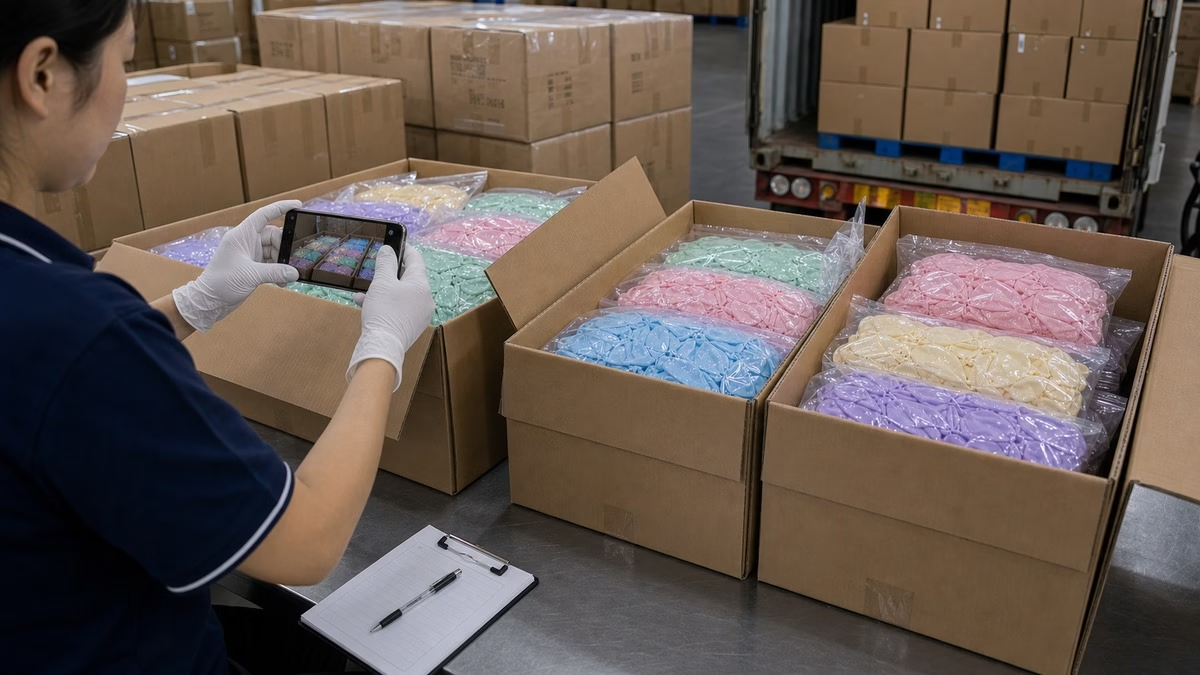
Connect packing proof with final payment approval
Balance payment should be supported by more than a production-complete message. The buyer should see bag count, heat-seal proof, carton mark, carton count and final stacked-carton photos. This shows that the order moved from sample approval into controlled shipment preparation.
The proof should be saved with the purchase order, invoice and packing list. If the receiving team later finds a shortage, mixed carton or unclear label, the buyer can compare the shipment against the approved file. This makes claims more factual and less emotional.
For urgent seasonal orders, buyers may be tempted to skip packing proof. That shortcut can save a day but create a larger delay at receiving. A simple proof set can often prevent the wrong cartons from leaving the factory.
The buyer should also ask for a revised proof if the carton count changes after approval. A small carton-count shift can affect freight, warehouse slotting and customer allocation. Packing proof is therefore a commercial control, not just a QC ritual.
Build a reusable packing standard for AIHUA orders
Once a buyer approves a packing structure, the same standard can guide repeat orders. The file should include bag quantity, seal style, label placement, carton mark, carton count and photos of final cartons. AIHUA can then repeat the structure or show exactly what changed.
This is especially useful for distributors and store chains that reorder latex balloons by season. Stable packing lets the warehouse receive faster and helps the sales team compare stock across campaigns. The buyer should still request current photos for each shipment.
When a new item is added, the buyer should not assume the old proof covers it. A different size, finish or color assortment may need a different bag count or carton label. The reusable standard works best when changed details are written clearly.
For wholesale latex balloons, the practical approval question is simple: can the buyer see the count, seal, carton mark and final packing before the goods leave? If yes, the shipment has a much stronger evidence file.
This standard also protects communication when staff changes. A new buyer, warehouse manager or sales coordinator can understand the packing decision from one file. That prevents the next order from restarting at the beginning.
AIHUA buyers should therefore treat bag count, heat seal and carton mark proof as the last gate before shipment release. Product quality and packing control need to pass together.
The standard should also include who checks the proof. Purchasing may review price and schedule, while the warehouse team checks carton marks and quantity. If both teams sign off, the buyer is less likely to approve beautiful product photos that still create receiving trouble.
Buyers can request a simple exception note when the packing differs from the standard. For example, a trial order may use fewer pieces per bag, or a seasonal promotion may need special carton grouping. The note keeps the change intentional instead of accidental.
If a claim appears later, the packing standard gives both sides a clear reference. AIHUA can compare the shipped photos with the approved bag count and carton marks, while the buyer can compare arrival records with the same file. That makes resolution faster.
This process is especially helpful for mixed-color or multi-size orders. One unclear carton can delay several SKUs. Clear bag, seal and carton proof keeps the shipment organized from factory floor to buyer warehouse.
The buyer should ask that final carton photos show enough context to count groups, not only one close label. A close label proves the mark, while a wider photo proves the cartons were grouped and ready. Both views are useful.
If goods will be split among several customers after arrival, carton marks should support that split. The supplier does not need to know every downstream customer, but the buyer should receive cartons that can be allocated without reopening every box.
That allocation logic should be agreed before packing starts, because changing it after cartons are sealed can cost more time than the original photo proof.
Evidence Table
| Buyer check | Evidence to request | Why it matters |
|---|---|---|
| Bag count | Quantity per bag and bags per carton | Prevents shortage, allocation and SKU mistakes |
| Heat seal | Close photo of sealed bag edge | Reduces weak-bag and retail-pack problems |
| Carton mark | Product, size, color, quantity and carton number | Supports fast warehouse receiving |
| Final proof | Packing list and final carton photos | Creates evidence before balance payment |
Key Facts
- Bag count should be written before shipment approval.
- Heat-seal proof should be checked before cartons are closed.
- Carton marks should match the packing list and buyer SKU.
- Final carton photos help resolve receiving and claim questions.
Buyer FAQ
Can buyers approve packing from a production-complete message?
No. Buyers should request sealed bag, heat-seal, carton mark and packing-list proof.
What if carton count changes after approval?
The buyer should request a revised packing list and new carton proof before releasing payment.
What should AIHUA show for private-label packing?
AIHUA should show buyer-safe bag proof, sealed edges, carton marks, carton count and final packing photos.
Related AIHUA Links
- Carton packing and shipment evidence guide
- Private-label balloon packing checklist
- Wholesale latex balloon order checklist
- Verify latex balloon quality before shipment
External References
- Newshine balloon packaging bags - Packaging-bag supplier context for bag style, sealing and packaging presentation.
- Paper Mart wholesale colored latex balloons - Retail and wholesale context for color, pack and product-presentation expectations.
- ISO 9001 quality management - General quality-management reference for repeatable inspection files.
- GS1 barcode standards - Useful when carton marks, retail SKU labels and warehouse receiving checks matter.
Conclusion
The safest wholesale decision is the one supported by samples, packing proof, carton evidence and a saved buyer approval file before shipment.