
Latex vs Mylar Balloons: Which is more resilient to punctures?
Choosing the right balloon can be confusing. Making the wrong choice leads to deflated decorations and disappointed customers. Let's find out which material offers the best durability for your needs.
Mylar (foil) balloons1 are more resilient to punctures. Their construction from a multi-layered nylon film makes them stronger and less porous than natural latex. This durability2 makes them the superior choice for decorations needing to withstand handling and last longer.
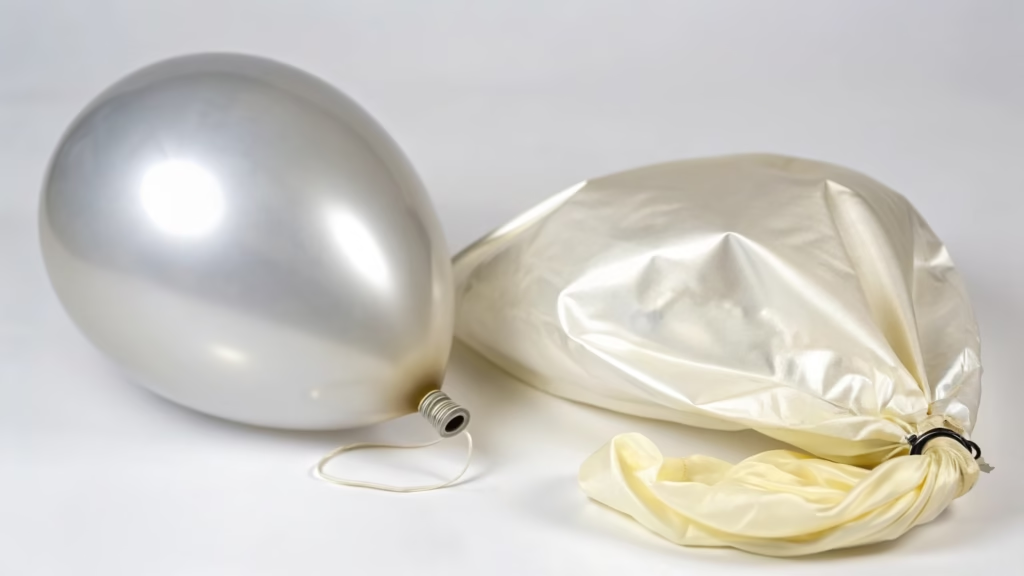
Puncture resistance is a critical factor, especially for large-scale retail or event planning3. I've seen countless times how a single popped balloon can affect a whole display. But durability2 is just one piece of the puzzle. As someone managing procurement, you need the full picture to make the best decision for your inventory and customers. Let's dive deeper into other factors that will impact your bottom line and overall satisfaction.
Which type of balloon offers a longer float time with helium?
Helium-filled balloons that deflate too quickly are a common headache. This can lead to wasted inventory and unhappy customers. Understanding the float time4 differences between balloon types is essential.
Mylar balloons offer a much longer float time. Thanks to their non-porous foil material, they can hold helium for several days or even weeks. Porous latex balloons, on the other hand, typically only stay afloat for about 12-24 hours.

The science behind this is quite simple. Latex is a natural product with microscopic pores. Helium atoms are among the smallest gas particles, and they slowly escape through these tiny holes. It's like trying to hold water in a net. Mylar, however, is a sheet of nylon coated with a metallic layer, creating a much more solid barrier that keeps the helium locked inside. From my experience in production, we see this difference clearly during quality control5 tests. While treatments like Hi-Float can extend the life of a latex balloon, it adds an extra step and cost to the process. For a procurement manager, the longer float time of Mylar means a longer in-store shelf life for inflated displays and a higher perceived value for the end customer.
| Feature | Latex Balloons | Mylar (Foil) Balloons |
|---|---|---|
| Material Structure | Porous Natural Rubber | Non-Porous Nylon Film |
| Average Float Time | 12-24 Hours | 3-7+ Days |
| Helium Retention | Low | High |
| Extension Options | Hi-Float Treatment | None Needed |
What is the cost-per-unit difference for wholesale orders?
Managing your budget is always a top priority for any business. Overspending on supplies can shrink your profit margins significantly. Let's break down the real cost differences for wholesale orders.
When it comes to wholesale orders, latex balloons are almost always more affordable on a per-unit basis. The raw materials and manufacturing process are simpler and less expensive. Mylar balloons, with their multi-layered construction, carry a higher initial cost per unit.
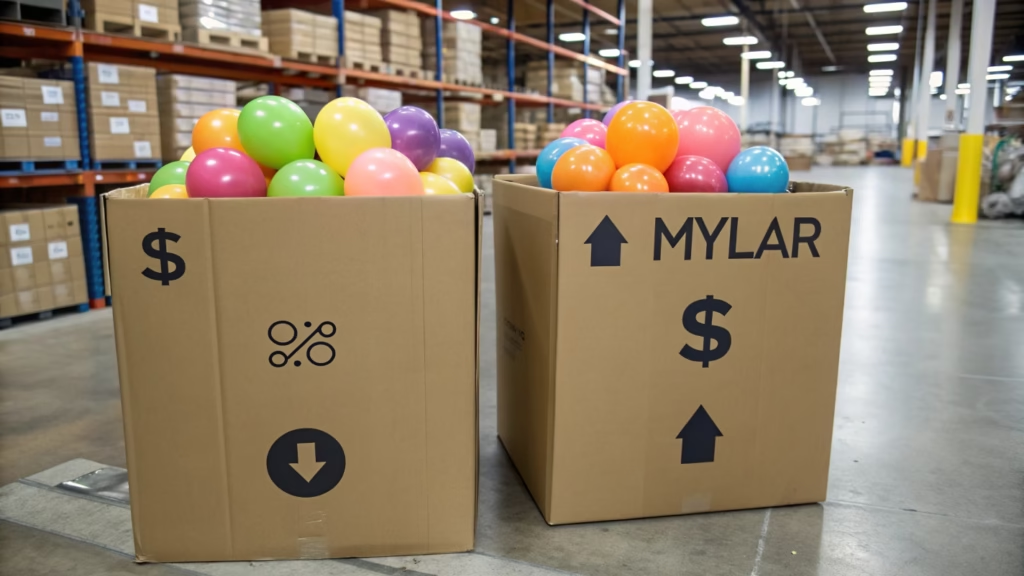
While the initial unit cost is a key metric, I always advise my partners to consider the total cost of ownership6. A Mylar balloon might cost more upfront, but its durability and longer float time can offer better value in the long run. You'll have fewer replacements due to popping and a product that gives the customer joy for days, not hours. This enhances brand perception. Latex balloons are perfect for large-scale events, balloon drops, or promotions where massive quantities are needed and longevity isn't the primary concern. In our factory, the cost difference comes from both the raw materials—nylon film versus natural latex—and the more intricate manufacturing process for Mylar, including the self-sealing valves they require. Always weigh the unit price against the intended use and desired customer experience.
| Cost Factor | Latex Balloons | Mylar (Foil) Balloons |
|---|---|---|
| Unit Price | Low | High |
| Perceived Value | Lower (short-lived) | Higher (long-lasting) |
| Use Case | Bulk events, giveaways | Premium decor, retail |
| Total Cost of Ownership | Can be higher if replacements are needed | Can be lower due to durability |
Which material provides better quality for custom printing and branding?
Your branding7 needs to be crisp and clear on every product. A poorly printed logo can damage your brand's image. So, choosing the right material for custom printing8 is crucial.
Mylar provides a superior surface for high-quality custom printing and branding. Its smooth, non-porous surface allows for sharp, vibrant, and detailed graphics. Latex, being a stretchable and slightly textured material, can distort images when inflated and offers less print clarity.
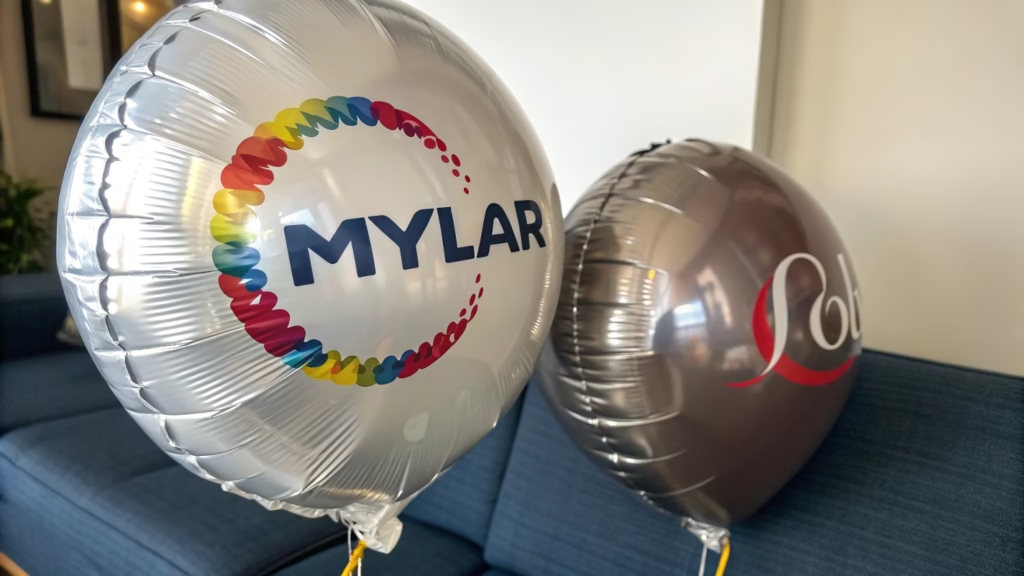
In my years overseeing production, this is one of the biggest distinctions I point out to clients focused on branding. Printing on a Mylar balloon is like printing on a smooth piece of photo paper. The ink sits perfectly on the surface, allowing for photorealistic images, complex gradients, and razor-sharp text. We can achieve incredible detail that makes a brand pop. When you print on an uninflated latex balloon, the design must be stretched to its final size. This process inherently causes some distortion and can limit the complexity of the artwork. For a procurement manager like Sarah, whose company relies on strong branding across hundreds of stores, Mylar is the professional choice for any custom-printed balloon that needs to represent the company's quality standards.
| Printing Feature | Latex Balloons | Mylar (Foil) Balloons |
|---|---|---|
| Surface Quality | Porous, stretchable, textured | Smooth, non-porous, stable |
| Image Clarity | Good, but can distort | Excellent, photo-quality |
| Color Vibrancy | Good | Excellent |
| Best For | Simple logos, text | Detailed graphics, photos, branding |
Are there different environmental impacts and disposal considerations for each?
Environmental responsibility is no longer optional for major retailers. Customers and corporations alike are demanding sustainable choices. Understanding the lifecycle of your products is key to meeting these expectations.
Yes, there are major differences. Latex balloons are made from natural rubber and are biodegradable9, breaking down over time. Mylar balloons are made from nylon and plastic film, which are not biodegradable and must be disposed of as regular waste.
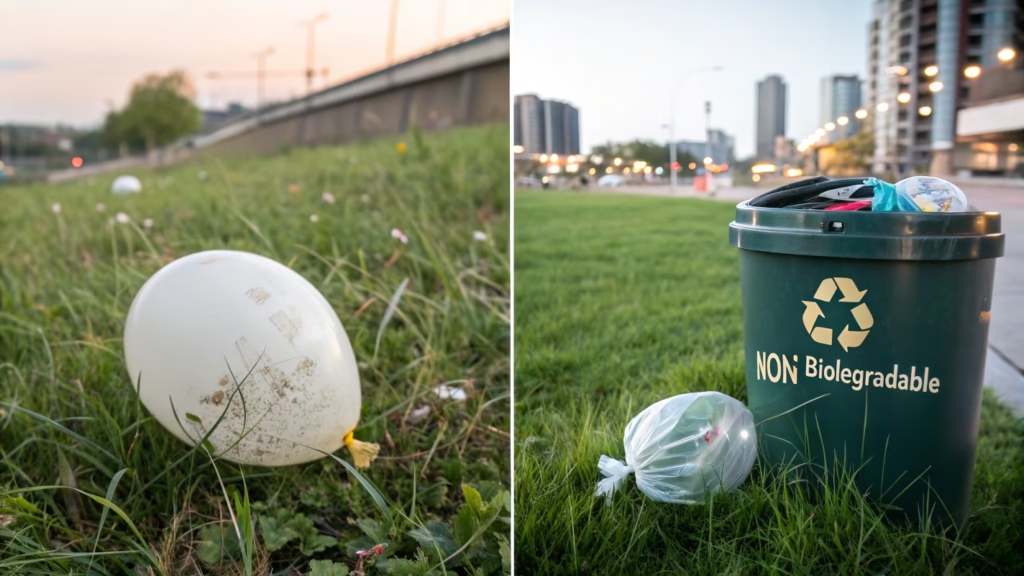
This is a critical trade-off that every procurement manager must face. At AIHUA BALLOON, we ensure our latex is sourced responsibly. When disposed of correctly, a latex balloon biodegrades at about the same rate as an oak leaf. This makes it a more environmentally friendly option. Mylar, on the other hand, poses a greater challenge. Its durability means it persists in the environment if not disposed of properly. However, Mylar balloons are often reusable10. Their self-sealing valves allow them to be deflated and stored for future use, which extends their life cycle and reduces waste. When advising my clients, I emphasize that the choice depends on their company's sustainability goals11. If biodegradability is the top priority, latex is the clear winner. If reusability is a factor, Mylar has an advantage.
| Environmental Factor | Latex Balloons | Mylar (Foil) Balloons |
|---|---|---|
| Material Source | Natural (Rubber Tree Sap) | Synthetic (Nylon, Plastic) |
| Biodegradable? | Yes | No |
| Reusable? | No | Yes |
| Disposal | Compost/Waste (Breaks Down) | Waste/Recycle (If possible) |
Conclusion
Ultimately, Mylar is more puncture-resistant, holds helium longer, and offers better printing. Latex is more affordable and biodegradable. Your final choice depends on balancing durability, cost, branding, and environmental goals.
-
Explore the advantages of Mylar balloons, including durability and float time, to enhance your event decorations. ↩
-
Understand the importance of durability in balloon selection to avoid disappointments. ↩ ↩
-
Get tips on selecting the right balloons for your event to ensure customer satisfaction. ↩
-
Discover the differences in float time between balloon types to make informed choices for your events. ↩
-
Learn about quality control processes in balloon production to ensure high standards. ↩
-
Gain insights into total cost of ownership to make smarter purchasing decisions for your business. ↩
-
Learn how the choice of balloon material can impact your branding and customer perception. ↩
-
Explore the differences in custom printing quality to ensure your branding stands out. ↩
-
Find out if latex balloons are biodegradable and how they compare to Mylar in terms of environmental impact. ↩
-
Discover the reusability of Mylar balloons and how they can reduce waste for your events. ↩
-
Explore ways to align your balloon choices with sustainability goals for responsible procurement. ↩