
What are the detailed specifications of latex balloons?
Struggling to find consistent, detailed specifications for your bulk balloon orders? You need reliable data to make informed purchasing decisions. This guide breaks down everything you need to know about latex balloon specs1.
To specify latex balloons, you need to define the size (e.g., 11-inch), weight (in grams), finish (standard, metallic, chrome), and color. Key specifications also include material composition (100% natural latex), compliance with safety standards2 like EN71, and any custom printing or packaging requirements.
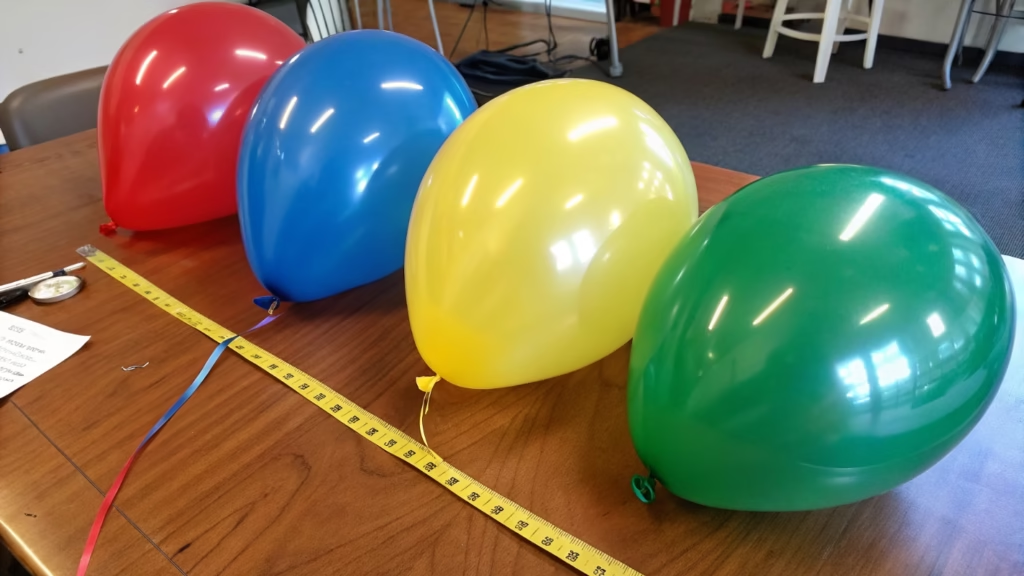
When I first started in this industry, I was surprised by how much detail goes into a seemingly simple product like a balloon. A procurement manager for a large retail chain once told me, "Vincent, I can't afford guesswork. I need exact numbers." She was right. Understanding the detailed specifications is not just about quality control3; it is about ensuring every balloon meets your brand's promise to its customers. Let's explore these details together so you can order with confidence.
How do size and weight impact balloon quality and float time?
Are you worried that your balloons might not last through an entire event? Inconsistent float times can disappoint customers. The balloon's size and weight4 are the most important factors that determine its performance and quality.
Larger and heavier latex balloons hold more helium, which results in significantly longer float times5. For example, a standard 11-inch balloon floats for about 18-24 hours, while a larger 36-inch balloon can float for several days. Higher weight generally indicates a thicker, more durable wall6.

Let's dive deeper into this relationship. As a procurement manager, you need to balance cost with performance. A heavier balloon costs more to produce because it uses more latex. But that extra weight creates a thicker wall, making the balloon more durable and less prone to popping. It also slows down helium leakage7. Helium atoms are very small and escape through the pores of the latex. A thicker wall means fewer, smaller pores, which keeps the helium inside for longer. I always advise clients to consider the specific use case. For a child's birthday party, a standard 11-inch balloon is perfect. For a multi-day trade show or a grand opening, investing in larger, heavier balloons ensures the decorations look fresh from start to finish.
Float Time by Balloon Size
| Balloon Size (Diameter) | Typical Weight (grams) | Average Helium Float Time | Common Uses |
|---|---|---|---|
| 5 inches | 1.0g | Does not float with helium | Air-fill for garlands, decor accents |
| 11 inches | 2.8g - 3.2g | 18 - 24 hours | Standard party decor, bouquets |
| 16 inches | 7.5g | 30+ hours | Event decorations, centerpieces |
| 36 inches | 35g | 3 - 5 days | Grand openings, photo shoots |
What are the custom printing options for branding and logos?
Does poor print quality on promotional items hurt your brand image? A smeared or off-center logo on a balloon looks unprofessional. We offer precise, high-quality custom printing to ensure your brand is represented perfectly every time.
Custom printing on latex balloons is typically done using silk-screen printing8. This method ensures a sharp, opaque, and durable image. You can specify one or multiple colors, and print on one side, two sides, or even all around the balloon for maximum brand exposure.
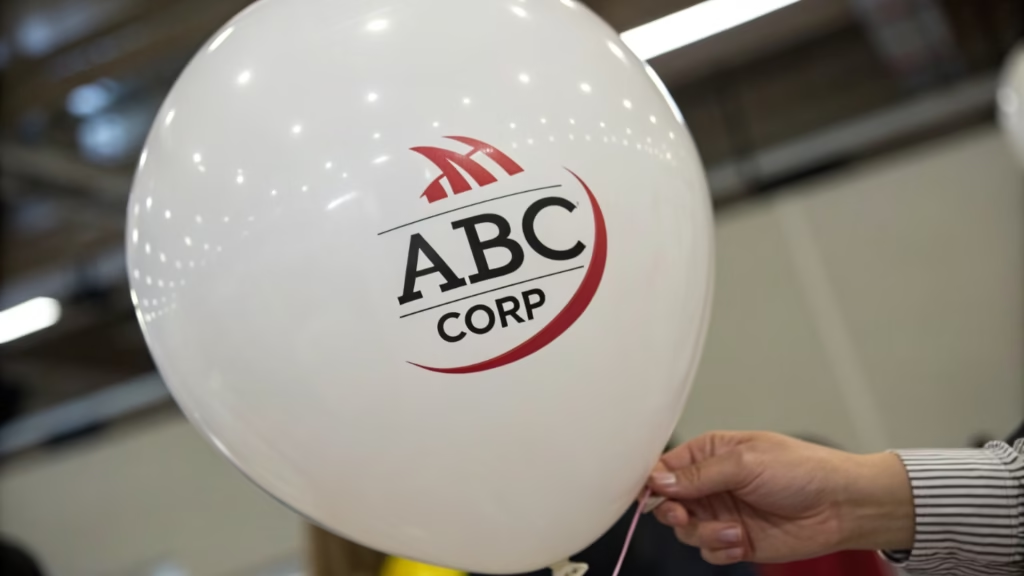
I remember working with a major brand for a product launch. Their marketing team was very particular about the Pantone color match9 for their logo. This is a common and important request. High-quality balloon printing is a multi-step process. It starts with your artwork. We need a high-resolution vector file to create the printing screen. We then mix the inks to match your exact brand colors. The key is the ink itself; it must be flexible enough to stretch with the balloon as it inflates without cracking or distorting the logo. During my factory tours, I always show our printing department. Our machines are calibrated to apply just the right amount of pressure and ink. This ensures every single balloon in your bulk order has a crisp, clear logo that represents your brand's commitment to quality.
Printing Specification Breakdown
| Feature | Details | Why It Matters for Procurement |
|---|---|---|
| Printing Method | Silk-screen printing | Ensures a thick, vibrant ink layer that stands out. |
| Ink Type | Specially formulated elastic ink | Prevents the logo from cracking or distorting when inflated. |
| Color Matching | Pantone (PMS) Matching System | Guarantees brand color consistency across all promotional materials. |
| Printable Area | Varies by balloon size | Defines the maximum size of your logo for clear visibility. |
| Print Sides | 1-side, 2-side, or all-around | Allows for different levels of branding and messaging. |
Do they meet international safety standards like EN71 or ASTM?
Are you concerned about product recalls due to safety non-compliance? Selling unsafe products can lead to legal issues and damage your reputation. Our latex balloons are manufactured to strictly meet or exceed international safety standards, including EN71 and ASTM F96310.
Yes, our latex balloons are fully compliant with key international safety standards. This includes Europe's EN71-1, -2, -3 and the USA's ASTM F963. We provide comprehensive test reports from certified labs to verify compliance for nitrosamine content, flammability, and heavy metal migration.
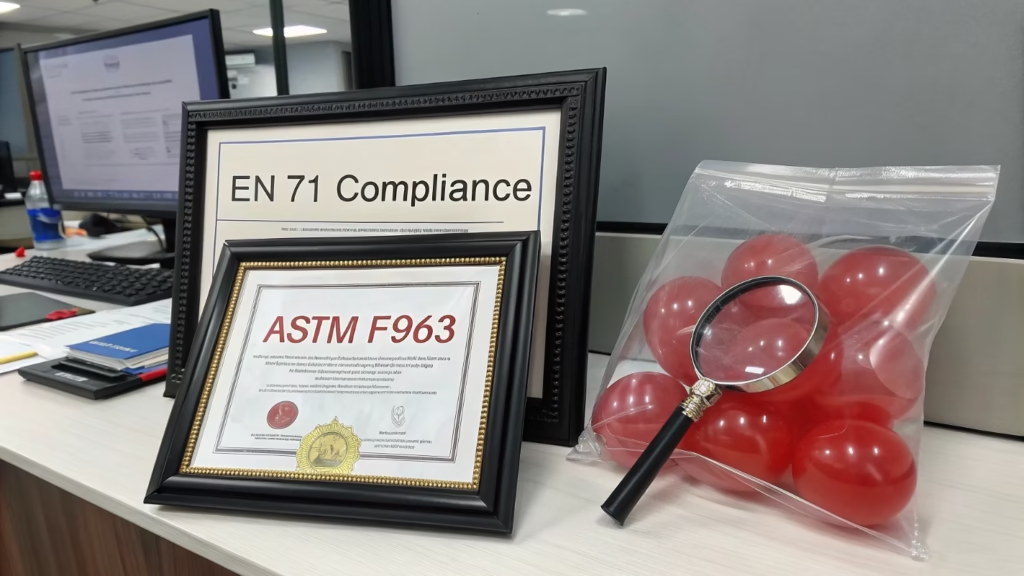
For a procurement manager like you, documentation is everything. It is not enough for me to simply say our products are safe. We have to prove it. That is why at AIHUA BALLOON, we invest heavily in third-party testing and certifications. I once spent a week with auditors from a major European retailer, walking them through every step of our production line. They checked our raw material sourcing, our leaching processes to reduce nitrosamines, and our quality control3 checks. They were impressed by our detailed record-keeping. These standards are not just a checklist for us. EN71, for instance, has specific requirements for choking hazards, which is why all our packaging includes clear warning labels. ASTM F963 sets limits on heavy metals in the balloon's material. Meeting these standards is a non-negotiable part of our mission to deliver safe, reliable products.
Key Safety Standard Requirements
| Standard | Region | Key Requirements for Latex Balloons |
|---|---|---|
| EN71-1 | Europe | Mechanical and Physical Properties (e.g., choking hazard warnings). |
| EN71-2 | Europe | Flammability (ensures balloons do not ignite easily). |
| EN71-3 | Europe | Migration of Certain Elements (limits on 19 heavy metals). |
| ASTM F963 | USA | Standard Consumer Safety Specification for Toy Safety. |
| CPSIA | USA | Consumer Product Safety Improvement Act (includes lead/phthalate limits). |
What are the bulk packaging options and minimum order quantities (MOQ)?
Are you struggling with inefficient storage and high shipping costs for your balloon inventory? Poor packaging can increase your logistical expenses11. We offer flexible bulk packaging options12 designed to optimize your supply chain and reduce costs.
Our standard bulk packaging is 100 balloons per polybag, packed into a master carton. We also offer custom options, such as retail-ready printed bags with barcodes. Our typical Minimum Order Quantity (MOQ) is around 50 cartons per color, but this can be flexible depending on the order.
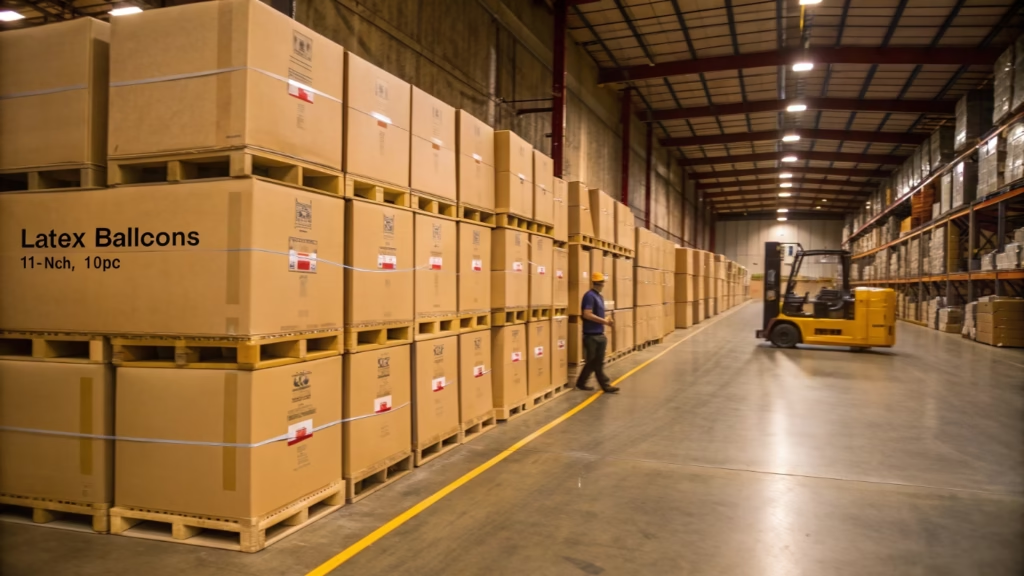
Logistics are a huge part of your job. I learned early on that how we pack and ship is just as important as the product inside the box. A client in the US needed to streamline their warehouse receiving process. We worked with them to create custom carton labels13 with all the information they needed: SKU, color name, quantity, and country of origin. This simple change cut their receiving time in half. Our MOQs are structured to enable efficient production runs, which helps us keep our prices competitive for you. However, we understand that sometimes you need to test a new color or design. In my role, I work directly with our production team to find solutions. We can often combine smaller orders or create a custom plan that works for your inventory strategy. Our goal is to be a partner, not just a supplier.
Typical Order & Packaging Structure
| Parameter | Standard Specification | Customization Options | Benefit for Procurement |
|---|---|---|---|
| Unit Packaging | 100 balloons per plain polybag | Printed bags, custom quantities (e.g., 25 or 50) | Supports different retail and operational needs. |
| Carton Quantity | 5,000 to 10,000 balloons per carton | Varies based on unit packaging and balloon size. | Optimizes shipping weight and volume. |
| Carton Labeling | Standard product info | Custom labels with SKU, barcode, PO number. | Simplifies warehouse management and receiving. |
| MOQ | ~50 cartons per SKU | Negotiable for strategic partnerships or initial orders. | Provides flexibility for inventory planning. |
Conclusion
In summary, understanding the detailed specifications of latex balloons—from size and weight to safety compliance and packaging—is essential for making smart procurement decisions and guaranteeing quality for your customers.
-
Explore this resource to understand the essential specifications for latex balloons, ensuring informed purchasing decisions. ↩
-
Learn about the safety standards that ensure the balloons you purchase are safe for use. ↩
-
Understand the role of quality control in ensuring high-quality balloon products. ↩ ↩
-
Learn how size and weight impact balloon performance and float time, crucial for event planning. ↩
-
Discover the science behind float times to choose the right balloons for your events. ↩
-
Understand the factors that contribute to a balloon's durability and performance. ↩
-
Learn how helium leakage impacts float time and what to consider when ordering. ↩
-
Understand the benefits of silk-screen printing for achieving high-quality balloon designs. ↩
-
Explore the importance of Pantone matching for consistent brand representation on balloons. ↩
-
Discover the ASTM F963 standard and its significance for consumer safety in balloons. ↩
-
Explore strategies to minimize logistical costs through effective packaging solutions. ↩
-
Explore bulk packaging options to optimize your storage and shipping costs. ↩
-
Discover how custom carton labels can streamline your warehouse management. ↩