
What quality issues are common with cheap latex balloons?
Sourcing low-cost balloons1 seems like a smart way to save money. But when they pop easily and look unprofessional, it hurts your brand. Understanding these issues protects your budget.
Cheap balloons often suffer from poor durability2, causing them to pop easily and deflate quickly. You'll also find inconsistent colors3, shapes, and sizes, along with a messy powder residue4. These flaws can ruin displays and disappoint customers, ultimately costing more in replacements and reputation damage.
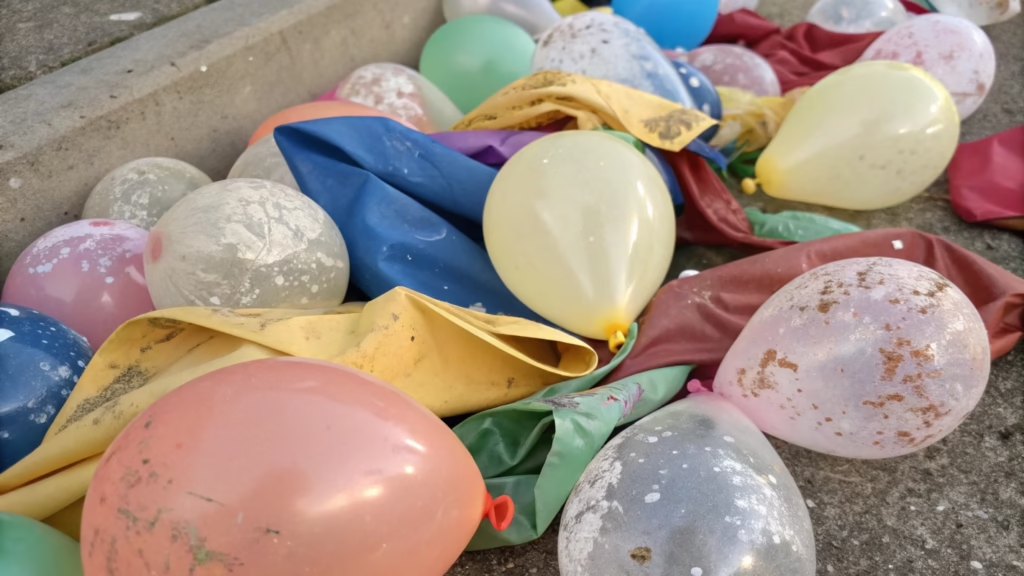
The initial savings from cheap balloons are very tempting for any procurement manager. However, the hidden costs in replacements, labor, and customer complaints5 can be significant. I've seen this happen many times over my years in the balloon industry6. Let's look closer at these specific problems. You need to know what to watch for to protect your business and ensure your events are successful.
How does poor elasticity cause premature popping and deflation?
You inflate a batch of balloons, but they start popping randomly. This wastes time and product. Poor elasticity is a quiet but costly problem that can ruin decoración and client trust.
Poor elasticity means the balloon's skin doesn't stretch evenly during inflation. This creates thin, weak spots that can't handle the pressure, leading to sudden pops. It also means the latex is more porous, allowing helium or air to escape much faster, causing rapid deflation7.
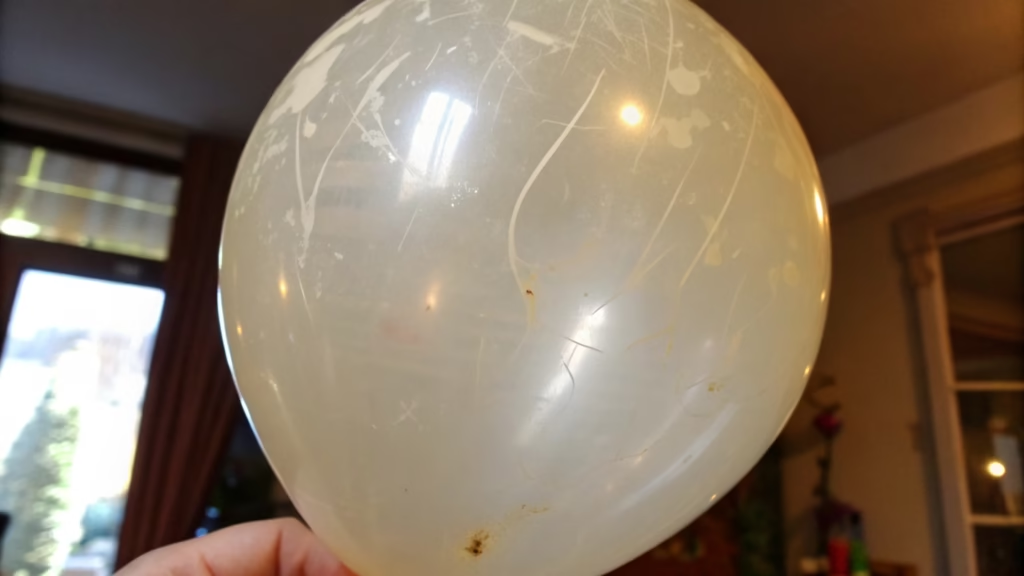
When I talk about elasticity, I'm referring to the latex's ability to stretch and return to its form. In high-quality balloons, the manufacturing process ensures the latex is cured 분포ed so it stretches uniformly. Cheap balloons often skip these crucial quality control8 steps. This results in an uneven material structure. As you inflate the balloon, some areas stretch too thin while others remain thick. The thin spots become immediate failure points. They are much more likely to pop, especially when exposed to small temperature changes or physical contact. This lack of structural integrity also affects deflation. The balloon's wall is more porous, almost like a sieve at a microscopic level, allowing tiny helium atoms to escape quickly. I've seen balloons from poor batches deflate in just a few hours, which is unacceptable for any event or retail sale.
Key Elasticity Failure Points
| Failure Type | Description | Impact on Business |
|---|---|---|
| Premature Popping | Thin spots created during inflation cannot withstand air pressure. | Increased product waste, labor costs for replacements, and risk during event setup9. |
| Rapid Deflation | The porous latex structure allows air or helium to escape quickly. | Shortened float times, unhappy customers, and poor product shelf life. |
| Inconsistent Size | Balloons do not inflate to a uniform size due to varying elasticity. | Unprofessional appearance in balloon arrangements10 and arches. |
Are there inconsistencies in color, shape, and thickness?
You order a large batch of a specific color, but they look different. The shapes are not uniform. Inconsistencies like this make professional arrangements look amateur, damaging your brand's reputation for quality.
Yes, inconsistencies are a hallmark of cheap balloons. Low-cost manufacturing processes lack strict controls, leading to variations in color saturation, non-uniform shapes, and variable wall thickness. This directly impacts the visual appeal11 and reliability of the final product, making high-volume projects a major challenge.
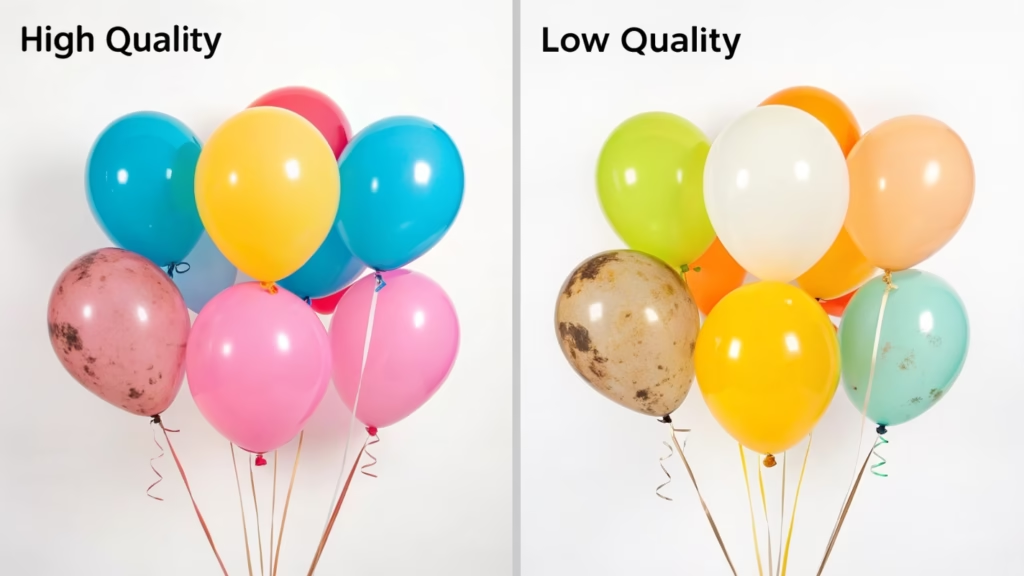
In my experience running our production lines, consistency is everything. It comes from precision. Cheaper manufacturers often cut corners on pigment quality and mixing processes. This results in color that looks faded, streaky, or different from one balloon to the next, even within the same bag. When you're building a large balloon wall for a corporate client, this color variance is immediately noticeable and looks unprofessional. The same lack of control affects the balloon's shape. A quality balloon inflates to a near-perfect sphere or teardrop. Cheaper ones often inflate into irregular, pear-like shapes because the latex thickness12 is not even. One side of the balloon might be thicker than the other, causing it to bulge awkwardly. This thickness issue is also directly tied to the popping problem we discussed earlier. An inconsistent wall is a weak wall.
Common Inconsistencies in Cheap Balloons
| Inconsistency | Why It Happens | Consequence for Buyers |
|---|---|---|
| Color Variation | Poor quality pigments; improper mixing during manufacturing. | Mismatched colors in decorations, leading to an unprofessional look. |
| Shape Irregularity | Uneven distribution of latex in the dipping molds. | Balloons inflate into non-uniform shapes, ruining the symmetry of arches and bouquets. |
| Thickness Fluctuation | Lack of control over latex viscosity and dipping time. | Creates weak spots, increasing the likelihood of popping during and after inflation. |
What chemical residues or strong odors should buyers be aware of?
You open a bag of balloons and are hit with a strong chemical smell. Or worse, a fine powder gets everywhere. These issues can concern customers and may even indicate safety problems.
Buyers should be cautious of two main things: excessive powder and strong odors13. The powder, sometimes talc instead of cornstarch, can be messy and an allergen. A strong rubber or chemical smell often indicates an incomplete curing process, leaving behind volatile organic compounds (VOCs) and potential irritants.
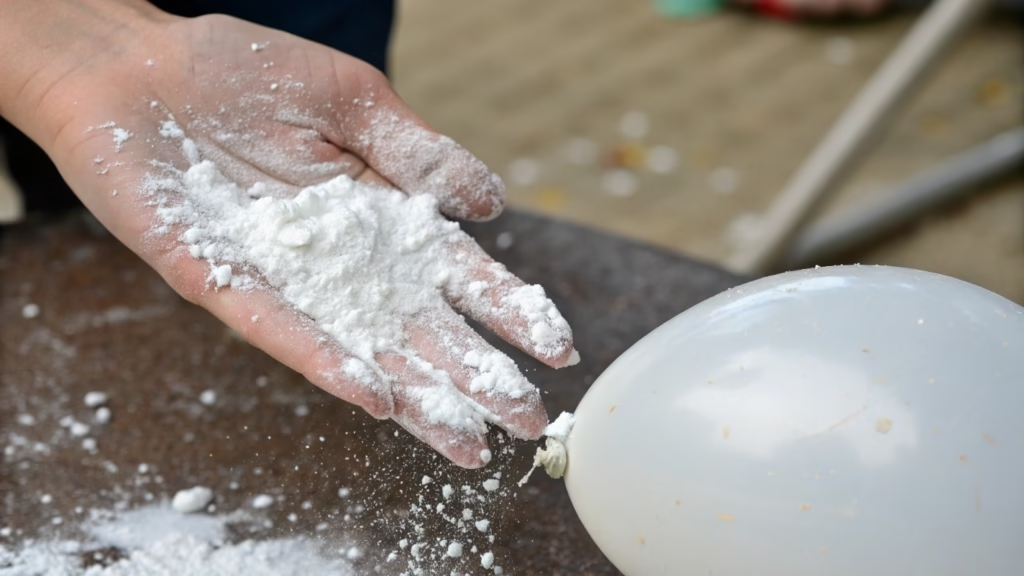
The powder on balloons is necessary to prevent them from sticking together. At AIHUA BALLOON, we use a fine, food-grade cornstarch. However, some cheap manufacturers use lower-grade powders, or even talcum powder, which can be an inhalation concern. More importantly, they often use far too much of it to cover up for sticky, poorly processed latex. This results in a messy experience for the user and can leave a dusty film on the inflated balloon, dulling its color. The odor is another major red flag. A quality latex balloon should have a very faint, almost neutral smell. A strong, pungent rubber or chemical odor tells me the latex wasn't "vulcanized" or cured properly. This shortcut leaves residual chemicals in the material. These chemicals can be irritants for people with sensitivities and create an unpleasant smell in a closed room filled with balloons. For a procurement manager like Sarah, this is a product liability risk.
Residue and Odor Guide
| Issue | Potential Cause | Risk Factor |
|---|---|---|
| Excessive White Powder | Using too much powder to compensate for sticky latex; use of low-grade talc. | Messy cleanup, potential allergen or irritant, dulls color. |
| Strong Chemical Odor | Incomplete vulcanization process, leaving residual accelerators and chemicals. | Unpleasant customer experience, potential for skin or respiratory irritation. |
| Oily or Sticky Surface | Poor quality latex compound or incomplete drying/curing. | Balloons stick together, may not inflate properly, feels unpleasant to handle. |
How can you test a batch for pinholes and weak spots before a large order?
You receive a huge shipment of balloons for the holiday season. The risk is that hidden flaws could lead to massive customer returns. You need a simple way to test for quality.
You can perform a simple "stretch and inflate" test on a random sample. Stretch an uninflated balloon to check for resilience. Then, inflate a few dozen balloons to their recommended size. Hold them against a light source to spot pinholes and inspect for even color and wall thickness.
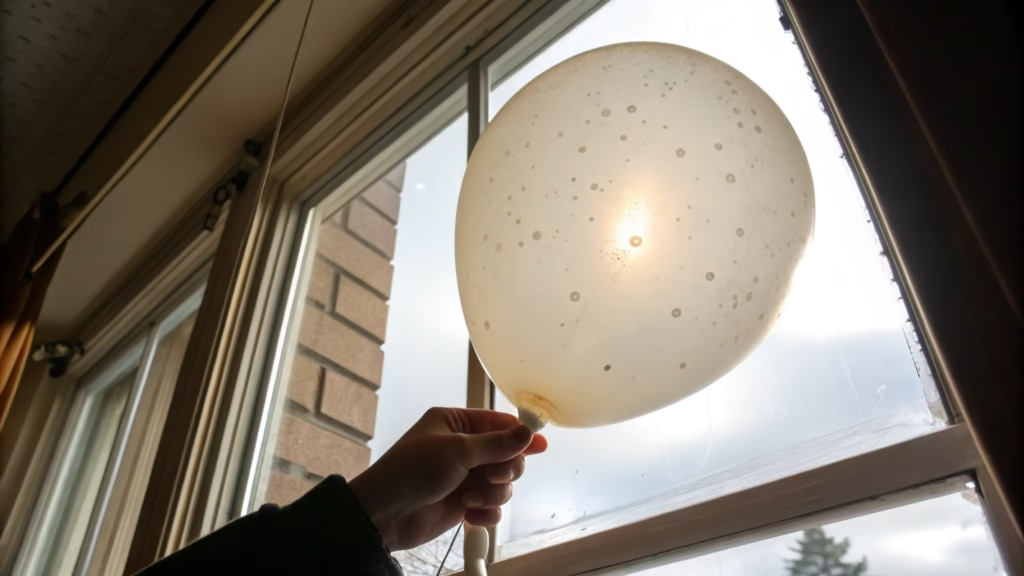
Before committing to a multi-ton order, I always advise our partners to do acceptance testing. It's a small investment of time that saves a fortune later. First, take a random sample of about 50-100 balloons from the shipment. Before inflating, stretch a few by hand. A good balloon will stretch easily and snap back to its original shape. A brittle one will feel stiff or may even tear. Next, inflate about 20-30 balloons to their specified diameter. A quality-conscious factory like ours provides these specifications. As you inflate, feel for consistent resistance. Then, do a visual inspection. Hold each inflated balloon in front of a bright light. Tiny pinholes will appear as bright dots. Look at the balloon's "shoulders" (the top curve)—this area is prone to thinning. Does the color look consistent, or is it streaky and translucent in some spots? Finally, leave them inflated for 24 hours and measure the size difference. This gives you a real-world deflation rate. This simple process gives you a powerful snapshot of the entire batch's quality.
Simple Balloon Quality Test Protocol
| Test Step | Action Required | What to Look For |
|---|---|---|
| 1. The Stretch Test | Randomly select 10 balloons. Stretch them manually to about twice their length. | Brittle feel, tearing, or failure to return to original shape indicates poor elasticity. |
| 2. Inflation & Visual Test | Inflate 20-30 balloons to the recommended size. Hold each against a light. | Pinholes (bright dots), uneven color, thin spots, or irregular shapes. |
| 3. The 24-Hour Float Test | Leave the inflated sample balloons in a room for 24 hours. | Significant size reduction or deflation, indicating a high porosity and poor quality. |
Conclusion
Choosing quality balloons avoids popping, deflation, and inconsistency. Investing in reliable products protects your reputation, saves money on waste, and ensures your decorations always look professional and vibrant.
-
Explore reliable sources for affordable balloons that maintain quality, ensuring your events look professional. ↩
-
Learn about the impact of durability on balloon performance and how to avoid costly mistakes. ↩
-
Discover the reasons behind color inconsistencies and how to ensure uniformity in your balloon displays. ↩
-
Learn about the effects of powder residue on balloon quality and how to choose the right products. ↩
-
Find effective strategies for addressing customer complaints related to balloon quality. ↩
-
Stay updated on the latest trends in the balloon industry to make informed purchasing decisions. ↩
-
Find out effective strategies to prevent rapid deflation and enhance the longevity of your balloons. ↩
-
Explore best practices in quality control to ensure you receive high-quality balloons for your events. ↩
-
Discover essential tips for a smooth event setup using balloons that enhance your decorations. ↩
-
Discover expert tips for creating stunning balloon arrangements that impress your clients. ↩
-
Learn about the key factors that enhance the visual appeal of balloon arrangements for events. ↩
-
Understand the role of latex thickness in balloon performance and how to select the best options. ↩
-
Learn how to detect strong odors in balloons and what they indicate about product quality. ↩