
Which type of balloon is more versatile for retail display arrangements?
Struggling to create amazing retail displays1 on a budget? The wrong balloon choice limits your creativity and inflates costs. Let’s explore the most versatile option for maximum impact.
Latex balloons2 are the most versatile for retail displays. Their low cost, wide range of colors and sizes, and flexibility allow for creating everything from simple clusters to complex arches3. They can be filled with air for longevity4 or helium5 for a floating effect, meeting any creative demand.
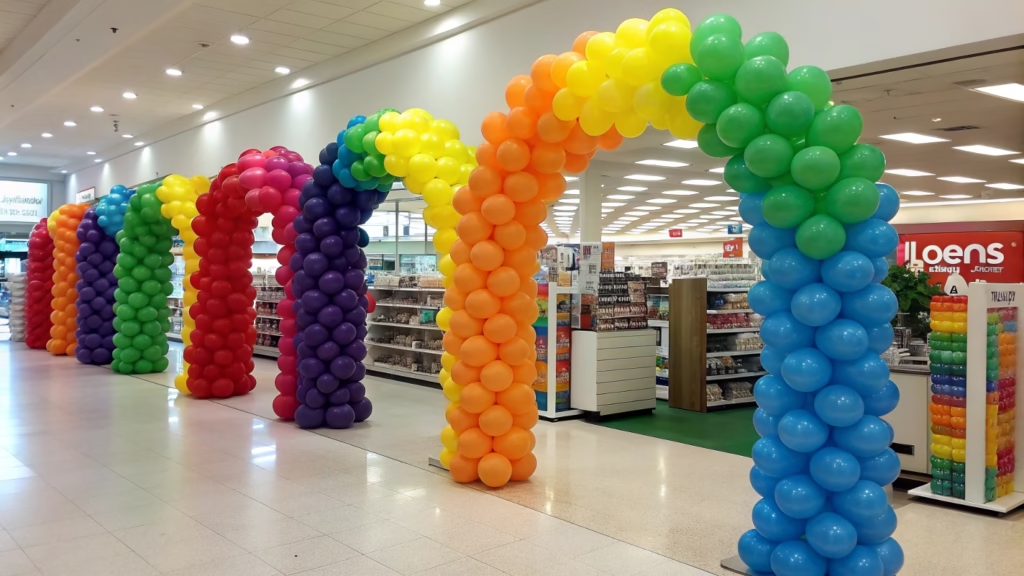
I remember working with a major retailer who needed to refresh their displays weekly across hundreds of stores. The budget was a major concern for their procurement manager, Sarah. We found that one type of balloon consistently delivered the best results. While latex balloons are a top contender for versatility, other types have unique strengths. Let’s dive deeper into how different balloons stack up for promotions6, longevity, branding, and cost, so you can choose with confidence.
How do latex and foil balloons compare for in-store promotions?
Your promotion needs to grab immediate attention. A lackluster display can mean lost sales and a poor return on investment. Let's see how latex and foil balloons perform head-to-head.
For large-scale, creative promotions, latex balloons are more cost-effective7 and flexible for building arches and garlands8. Foil balloons are perfect for specific messages or character displays9, thanks to their crisp printing and unique shapes, offering high-impact10 branding11 in a smaller footprint.
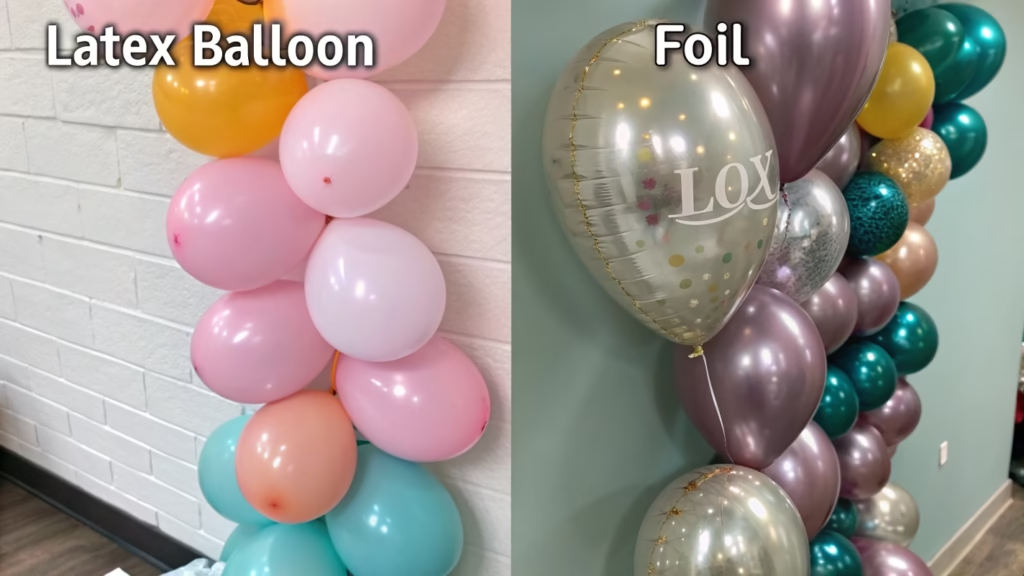
When planning a promotion, the choice between latex and foil often comes down to the scale and goal of your display. As a supplier, I help procurement managers weigh these options every day. Latex is the workhorse for creating an immersive atmosphere. You can build huge, flowing organic garlands or perfectly structured arches that transform an entire section of a store. Their low unit cost means you can go big without breaking the bank. On the other hand, foil balloons act as high-impact exclamation points. They are perfect for highlighting a specific product, carrying a branded message, or featuring a licensed character that draws customers in.
Visual Impact and Application
A key difference is how they capture a customer's eye. Latex creates a feeling of abundance and celebration through volume and color. Foil offers a sharp, reflective, and precise visual.
| Feature | Latex Balloons | Foil Balloons |
|---|---|---|
| Visual Impact | Great for volume, color, organic shapes12 | Excellent for sharp graphics, logos, reflective shine |
| Best Use Case | Arches, garlands, large-scale decor | Character shapes, branded messages, focal points |
| Setup | Can be time-consuming for large structures | Quick to inflate, easy to place individually |
Ultimately, the most effective promotions often use both. Use latex to build the foundational structure and foil to deliver the key message.
Which balloon type offers a longer float time for long-term displays?
Tired of your balloon displays deflating just days after setup? Constant maintenance costs time and money, and drooping balloons look unprofessional. Let’s find a longer-lasting solution.
Foil, bubble, and vinyl balloons offer significantly longer float times than standard latex balloons. Foil and bubble balloons can hold helium5 for over a week, while durable vinyl balloons are designed for semi-permanent13 indoor or outdoor displays that last for weeks or months.

The longevity of a display is a critical factor, especially for campaigns running longer than a weekend. Standard latex balloons are porous, meaning helium escapes relatively quickly, usually within 12-24 hours. While treating them with a product like Hi-Float can extend this to several days, they are not ideal for week-long displays. Foil (or Mylar) balloons are made from a non-porous material, allowing them to hold helium for a week or even longer. This makes them a reliable choice for displays that need to look fresh with minimal upkeep. For even greater durability, bubble and vinyl balloons are fantastic options. Bubble balloons made of stretchy plastic are incredibly clear and can float for up to two weeks. Vinyl balloons are the toughest of all, designed for extended outdoor use and capable of lasting for months when properly maintained.
Comparing Float Times and Material Properties
Understanding the material science helps in making the right choice for your display timeline.
| Balloon Type | Material | Average Helium Float Time | Best For |
|---|---|---|---|
| Latex | Natural Rubber Latex | 12-24 hours (untreated) | Short-term events, air-filled structures |
| Foil (Mylar) | Nylon with Aluminum Coat | 1-2 weeks+ | Week-long promotions, branded messages |
| Bubble | Stretchy, Clear Plastic | 1-2 weeks+ | High-clarity, long-lasting displays |
| Vinyl | UV-Resistant PVC | Weeks to months (air-filled) | Outdoor displays, semi-permanent decor |
For a procurement manager like Sarah, choosing foil or bubble balloons for helium-filled displays reduces maintenance labor and ensures the promotion looks great from start to finish.
Which balloon material is better for custom printing and branding?
You need your brand logo to look perfect on every balloon. Poor print quality can cheapen your brand image and undermine your marketing efforts. Let's find the best material for crisp branding.
Foil balloons are superior for detailed custom printing and branding. The non-porous, smooth surface allows for photo-quality, multi-color printing with sharp lines and vibrant colors. Latex balloons are good for simple logos or text but can experience distortion when inflated.
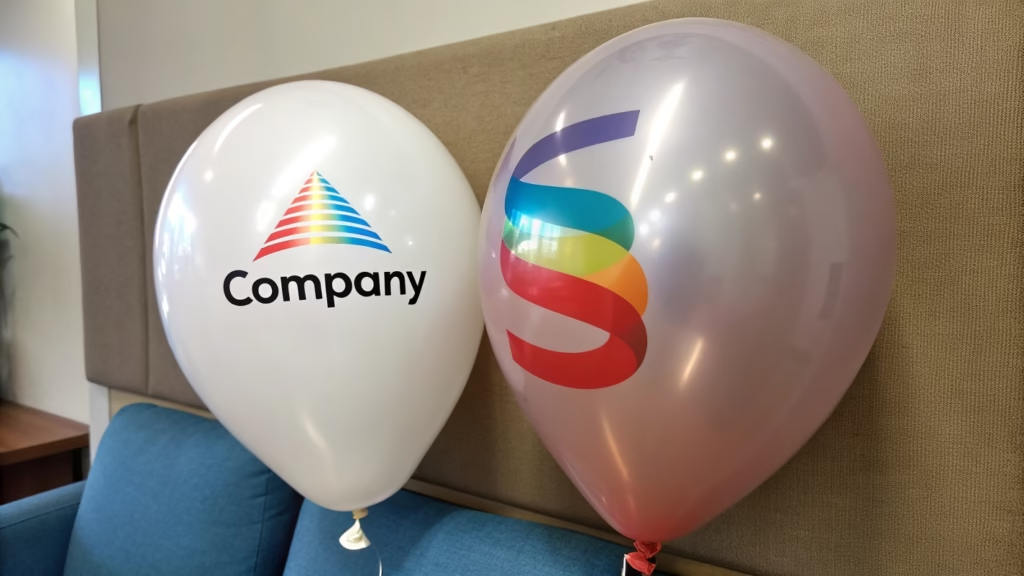
As a manufacturer, I've overseen thousands of custom print jobs, and the material makes all the difference. When a brand's logo and message need to be flawless, I always recommend foil balloons. The printing process on foil is similar to printing on a flat sheet of paper before it’s sealed. This allows for incredibly detailed, high-resolution graphics. You can achieve gradients, photographic images, and precise color matching. This is why foil is the go-to choice for licensed characters and corporate logos. Latex balloons, while printable, present a different challenge. The logo is printed on a deflated balloon and stretches as it inflates. This can cause minor distortion, especially with complex designs. Therefore, latex is best suited for simpler, one or two-color logos or bold text that can withstand a little stretching.
Print Quality and Brand Representation
The choice depends on the complexity of your artwork and the importance of perfect brand representation.
Foil for Precision
Foil's stable surface ensures your logo looks exactly as intended. It’s the professional choice for high-stakes branding where image is everything. You can print edge-to-edge and use metallic inks to make your design pop.
Latex for Simplicity and Scale
Latex printing is more economical, especially for large quantities. It's highly effective for general brand awareness campaigns where a simple, recognizable logo is repeated across a large display. The key is to design a logo that is bold and clear enough to remain legible after inflation.
For a procurement manager, the decision is a trade-off between detail and cost. For a product launch requiring a perfect logo, foil is the clear winner. For a store-wide sale, printed latex offers excellent value.
What are the wholesale cost implications of choosing latex over foil balloons?
Every dollar counts in your procurement budget. Choosing the wrong balloon type can lead to significant cost overruns, impacting your overall profitability. Let's break down the real costs involved.
Latex balloons have a much lower wholesale unit cost than foil balloons. This allows you to purchase in greater volume and create larger, more impressive displays for the same budget. While foil balloons are more expensive per piece, their perceived value can sometimes justify the cost.
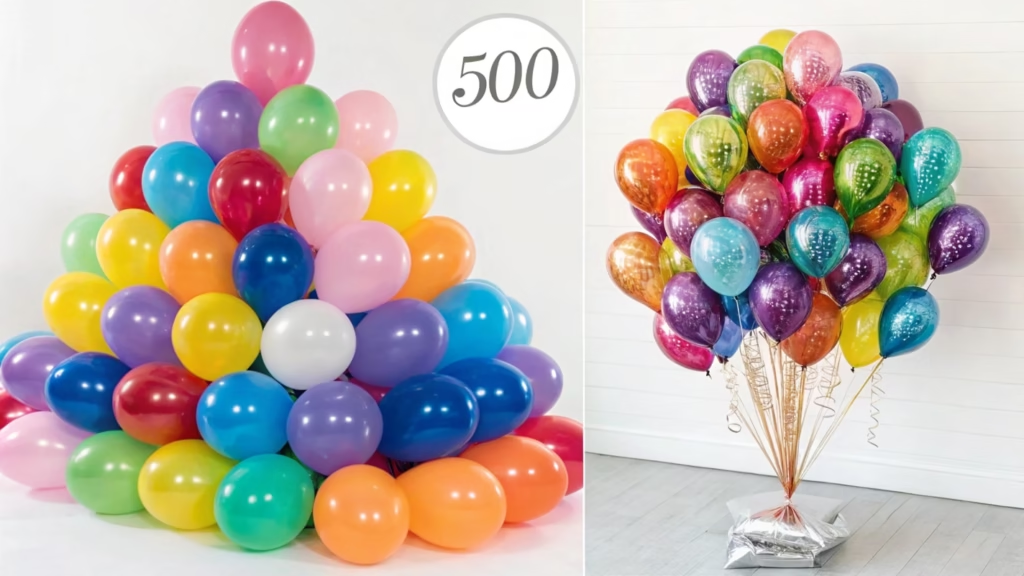
From a procurement perspective, the cost difference between latex and foil is one of the most significant deciding factors. On a per-unit basis, a standard latex balloon is a fraction of the cost of a standard foil balloon. I once worked with a client planning a nationwide anniversary sale. Their initial idea was to use custom-printed foil balloons in all 500 stores. When we ran the numbers, the cost was prohibitive. By switching to a design using 90% latex balloons to create large, colorful structures and 10% printed foils as accents, they cut their balloon budget by over 60% while still achieving a stunning and branded result. This illustrates the primary advantage of latex: it allows for scale. You can afford to fill a space with color and excitement using latex in a way that is simply not possible with foil on a tight budget.
A Deeper Look at Total Cost
The sticker price is only part of the story. You also have to consider associated costs like helium and labor.
| Cost Factor | Latex Balloons | Foil Balloons |
|---|---|---|
| Unit Cost | Very low | High |
| Helium Cost | Varies by size, but generally less per piece | Often requires more helium due to larger sizes |
| Labor Cost | Higher for creating large, complex structures | Lower for individual placement |
| Perceived Value | Seen as classic and fun | Higher, seen as a premium item or gift |
For a buyer like Sarah, this means latex is the champion for creating volume on a budget. Foil balloons are a strategic purchase, used more sparingly to elevate the display and convey a premium feel where it matters most.
Conclusion
Latex balloons offer the best versatility for retail displays1 due to their cost-effectiveness and flexibility. However, combining them with foil or other types can create a dynamic and long-lasting visual impact14.
-
Learn expert tips on maximizing the impact of your retail displays. ↩ ↩
-
Explore how latex balloons can enhance your retail displays with versatility and cost-effectiveness. ↩
-
Find step-by-step guides on creating stunning balloon arches for your store. ↩
-
Understand the differences in float times and durability between balloon types. ↩
-
Learn about the role of helium in balloon displays and how it impacts longevity. ↩ ↩
-
See how balloon displays can attract customers and boost sales during promotions. ↩
-
Find out how to save money while creating eye-catching retail promotions. ↩
-
Learn how to craft beautiful balloon garlands that enhance your retail space. ↩
-
Explore creative ways to incorporate character balloons into your retail strategy. ↩
-
Discover innovative display ideas that can significantly boost customer engagement. ↩
-
Explore the best materials for custom printing and effective brand representation. ↩
-
Find out how to design eye-catching organic shapes using balloons. ↩
-
Understand the advantages of using semi-permanent displays for long-term promotions. ↩
-
Discover how different balloon types can affect the visual appeal of your displays. ↩