
Why do latex balloons lose helium quickly?
Frustrated when your helium balloons droop too soon? This common problem can ruin a display and disappoint customers. Understanding the cause is the first step to a solution.
Latex balloons lose helium because latex is a naturally porous material1. Think of it like a very fine net. The tiny atoms of helium are small enough to slowly pass through the microscopic holes in the latex, causing the balloon to deflate over time.
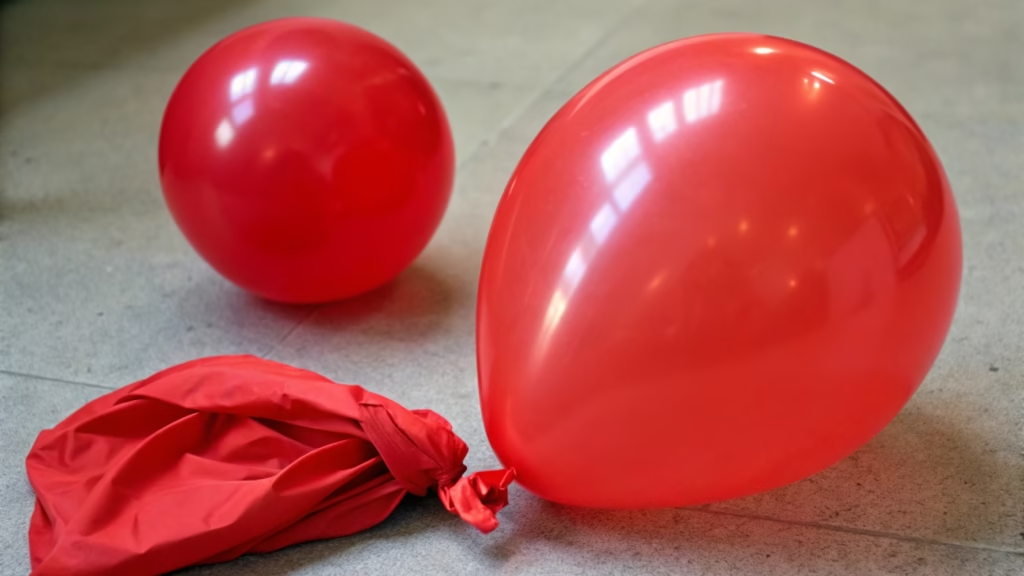
Understanding this material science is the key. But it's not the whole story. Several factors can speed up or slow down this process. Knowing these factors helps you manage your balloon displays much more effectively. Let's look at how you can fight this natural process and keep your balloons floating high for as long as possible.
How can you make helium-filled latex balloons last longer?
You planned a big event and need the balloons to last. It is very stressful when they start sinking before the party is over. There are proven methods to extend their float time.
To make latex balloons last longer, treat the inside with a special gel like HI-FLOAT2 before inflation. This creates a coating that blocks the pores in the latex3. This simple step can extend float time from a few hours to several days4.
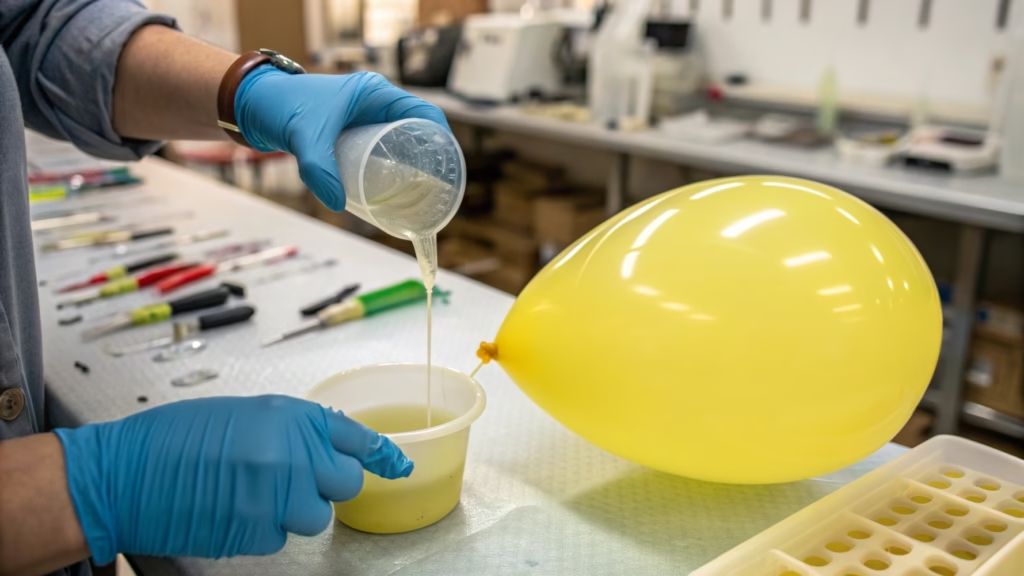
Let's dive deeper into this. The most effective method is using a balloon treatment solution. We call it HI-FLOAT in the industry. It's basically a liquid plastic that you pump into the balloon before you inflate it. You then rub the balloon to spread the gel evenly on the inside. When it dries, it forms a barrier film that does a great job of holding in the helium. In my experience, this is the standard for any professional job where float time matters.
Beyond that, proper handling makes a difference.
Proper Inflation Techniques
Don't over-inflate the balloon. This stretches the latex thin and makes the natural pores larger, so helium escapes faster. On the other hand, under-inflating it means you don't get the maximum lift and it will look sad from the start. You want to inflate it to a firm, round shape, but not a lightbulb shape.
Environmental Control
Where you store the balloons is very important. Keep them in a cool, climate-controlled room. Heat gives the helium atoms more energy, making them move faster and escape more quickly. Direct sunlight is the enemy of a helium balloon. It causes the gas to expand and can make the balloon pop. I always advise my clients to prepare their balloons in a cool back room and bring them out just before the event starts.
For a large retailer's grand opening event, we treated all 1,000 balloons with HI-FLOAT. They stayed floating perfectly for the entire 3-day weekend sale. The client was thrilled because the store looked vibrant and festive the whole time. It's a small extra step that makes a huge professional impact.
Do foil balloons hold helium better than latex balloons?
You've probably seen foil balloons stay afloat for weeks, looking perfect. It’s not magic. This might make you wonder if you should use them instead of latex for long-lasting decorations.
Yes, foil balloons hold helium much better than latex5. They are made of a non-porous nylon material with a metallic coating, often called Mylar. This material is a solid sheet that effectively traps helium, allowing them to float for weeks instead of hours.
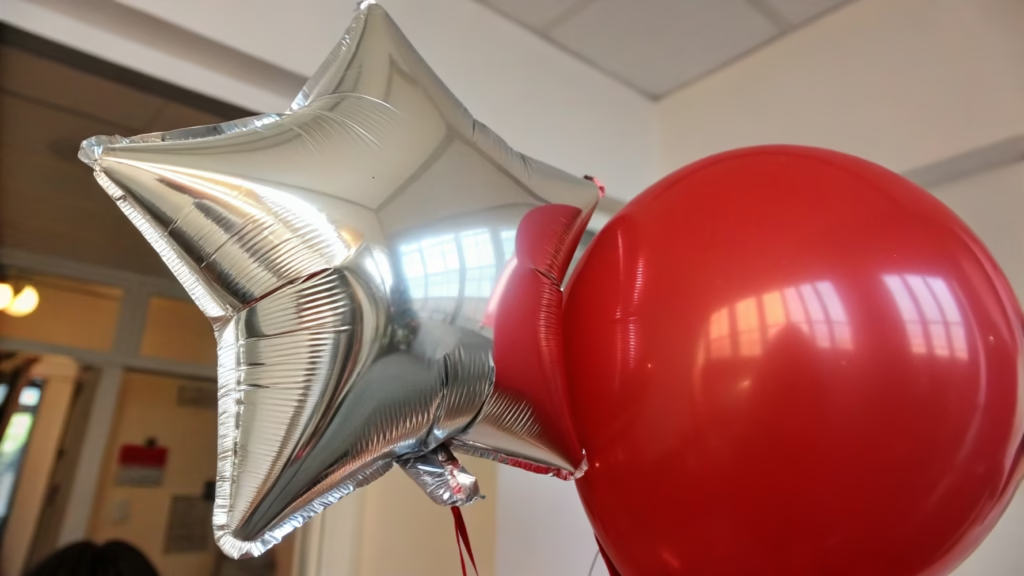
The difference is all about the material. Latex is a natural product derived from rubber trees, and its structure is porous. Foil balloons are man-made from a sheet of nylon that is completely solid. There are no pores for the helium to escape through.
The construction is also different.
- Latex Balloons: These are single, seamless pieces of latex. The weak point is the material itself.
- Foil Balloons: These are made from two flat sheets of Mylar that are cut to shape and then sealed together at the seams with heat. This heat seal creates a very strong and durable edge that prevents gas from leaking. They also have a self-sealing valve, which makes inflation easy and secure.
So, when should you choose one over the other? It depends on your needs. For procurement managers like Sarah, having a mix is smart.
| Feature | Latex Balloons | Foil (Mylar) Balloons |
|---|---|---|
| Material | Natural Rubber (Porous) | Nylon Sheet (Non-porous) |
| Avg. Float Time | 8-12 hours (without treatment) | 1-2 weeks+ |
| Best For | Bulk decor, arches, balloon drops | Long-term displays, character shapes |
| Biodegradability | Yes, breaks down over time | No, needs proper disposal |
| Cost | Lower per unit | Higher per unit |
From my years in manufacturing, I see large retailers order latex for volume-driven events like sales or giveaways. They use foil balloons for high-impact displays, like section markers or big seasonal promotions, where longevity is key. A balanced inventory serves both purposes well.
Does the quality or thickness of a latex balloon affect how long it floats?
Have you ever used cheap balloons only to watch them drop in a few hours? It's a waste of money and precious helium. You might wonder if paying a bit more for quality is actually worth it.
Absolutely. Higher-quality, thicker latex balloons hold helium much longer than thin, cheap ones. A thicker wall creates a more substantial barrier, slowing down the speed at which helium atoms can escape through the latex's natural pores. Quality manufacturing also ensures uniform thickness.
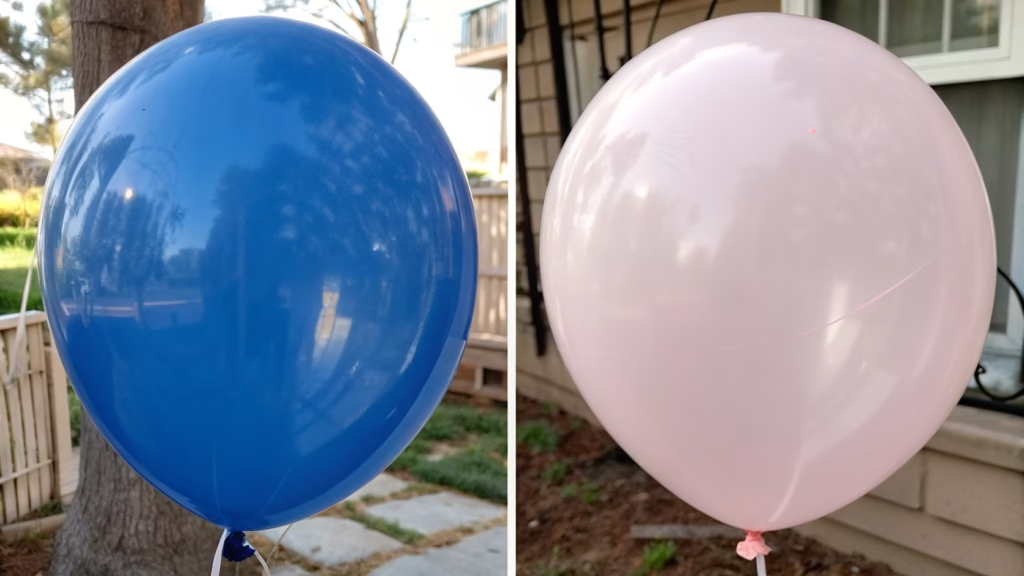
When we manufacture balloons at AIHUA BALLOON, one of our main goals is achieving consistent latex thickness. Low-quality balloons often have thin spots. These spots are weak points where helium will escape much faster. They are also the places where a balloon is most likely to pop unexpectedly. Our quality control processes, which are part of our ISO9001 certification, are designed to prevent this.
As a buyer, you can sometimes judge quality by the balloon's weight. For example, a standard 11-inch balloon might weigh around 2.8 grams. But a "decorator quality" 11-inch balloon could weigh 3.2 grams or more. That small amount of extra latex makes a big difference in durability and float time.
I always tell my procurement clients that focusing only on the lowest unit cost can be a mistake. A slightly more expensive, higher-quality balloon will float longer. This saves you money on helium and the labor required to replace deflated balloons. More importantly, it protects the brand's image. Droopy, sad-looking balloons at a corporate event or in a retail display send the wrong message. Investing in quality from a certified supplier like us ensures reliability and a better final result.
How do temperature and altitude impact helium loss in balloons?
Your balloons looked perfect inside the store but started to wilt quickly outside. Or maybe they didn't float for as long at a location in a mountain town. These external factors can be frustrating.
High temperatures make helium atoms move faster, so they escape through the latex more quickly. At high altitudes, lower outside air pressure allows the balloon to expand, which stretches the latex and also increases the rate of helium loss.
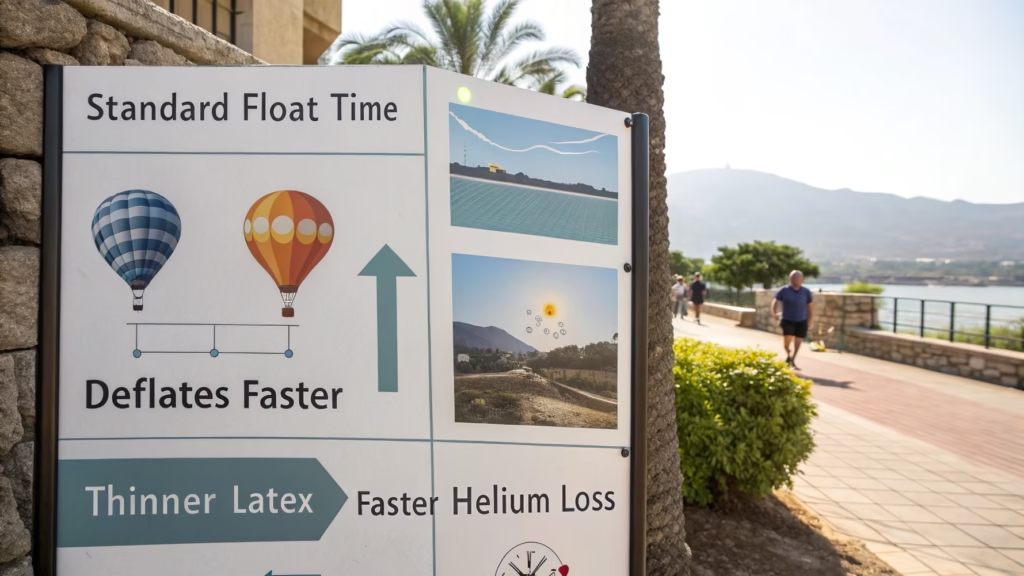
Let's break down the science in simple terms. Think of the helium atoms as tiny bouncing balls trapped inside the balloon.
The Role of Temperature
When you heat a gas, its particles gain energy and move around more rapidly. In a hot environment, like direct sun or a warm room, the helium atoms inside a balloon bounce around frantically. This increases the chances that they will find a microscopic pore in the latex and escape. A cool, air-conditioned room has the opposite effect. The helium atoms slow down, reducing the rate of escape. This is also why a balloon will appear to shrink in the cold6 and then re-inflate when it warms up again; the gas is contracting and expanding.
The Role of Altitude
Atmospheric pressure is the weight of the air pushing down on us. At sea level, this pressure pushes on the outside of the balloon, containing the helium. As you go up in altitude, there is less air above you, so the atmospheric pressure is lower. With less pressure pushing on the outside, the helium inside can push the latex outwards more easily, causing the balloon to expand. This stretching makes the latex walls thinner and the pores larger, leading to faster helium loss.
| Condition | Effect on Helium Balloon | Simple Explanation |
|---|---|---|
| Hot day / Direct Sun | Deflates Faster, May Pop | Helium expands and atoms escape quicker. |
| Cool, Indoor Room | Floats Longer | Helium contracts and atoms move slower. |
| High Altitude (e.g., Denver) | Expands, Deflates Faster | Lower outside pressure stretches the latex thin. |
| Sea Level (e.g., Miami) | Standard Float Time | Normal air pressure contains the balloon. |
I once managed a large order for a retail chain opening a new flagship store in Denver, the "Mile-High City." We had to provide their staff with specific inflation guidelines. We told them to slightly under-inflate each balloon to leave room for expansion7 at that altitude. This simple advice prevented a massive number of balloons from popping and ensured their displays looked great. Understanding these physical effects is critical for large-scale operations across different geographies.
Conclusion
Latex is porous, so helium will always escape. But using HI-FLOAT, choosing quality balloons, and controlling the environment will dramatically extend float time. Foil balloons offer a longer-lasting alternative for specific needs.
-
Understanding material science helps you choose the right products and predict their performance in different conditions. ↩
-
Professional balloon treatments can multiply your balloon's lifespan, saving time and money on events. ↩
-
Understanding the sealing mechanism helps you apply treatments more effectively for maximum results. ↩
-
Maximizing float duration ensures your decorations last through multi-day events without replacement. ↩
-
Choosing the right balloon type ensures your decorations last for weeks instead of hours. ↩
-
Understanding thermal contraction helps troubleshoot balloon appearance changes. ↩
-
Proper altitude compensation prevents balloon failure and ensures display success. ↩