
How Long Do Latex Balloons Last in Different Conditions?
There is no responsible single answer to “how long do latex balloons last” without defining what “last” means and the conditions of use. Air-filled shape retention, helium float, acceptable display appearance, breakage-free installation and uninflated storage are different jobs. A buyer should define the product, method, environment, sample count and endpoint before accepting a duration target.
The minimum duration statement
Product + nominal size/finish + gas + inflation target + closure + treatment + environment + sample count + observation schedule + endpoint.

First define what “last” means
| Buyer job | Useful endpoint | Do not confuse it with |
|---|---|---|
| Helium display | Loss of required lift or display position. | A balloon merely containing some gas. |
| Air-filled arch or garland | Unacceptable diameter, shape, surface or structural change. | Float time; air-filled balloons do not provide helium lift. |
| Installation/handling | Completion of the stated setup without defined leakage or breakage failures. | Long-term display retention. |
| Outdoor display | Acceptable appearance/performance under recorded sun, temperature, wind and handling conditions. | An indoor result. |
| Uninflated inventory | Condition at a dated inspection after recorded storage. | Inflated retention or a universal shelf life. |
The deflation mechanism owner explains how to diagnose gas loss, closure issues, temperature-related size change and damage. This page handles planning and test definition.
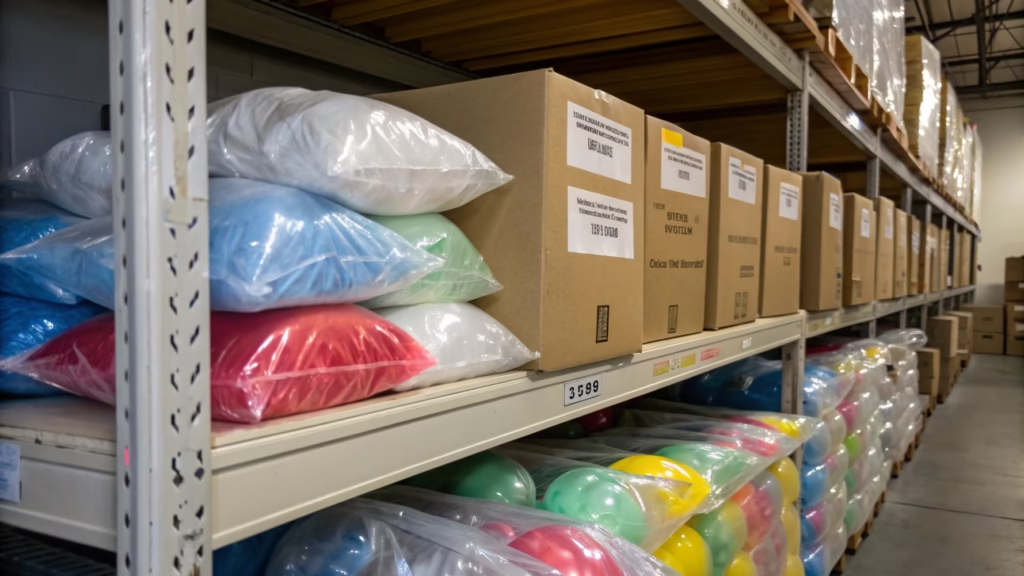
Conditions that must travel with every result
| Field | Record before testing | Why it matters |
|---|---|---|
| Product identity | SKU/product family, nominal size, finish, colour, batch/order and sample source. | Prevents applying one result to a different balloon. |
| Inflation | Gas, target diameter or template, equipment, operator method and closure. | Changes lift, material strain and leakage routes. |
| Treatment | Product, amount/method, instructions/version and conditioning/drying. | A treatment result is not transferable without the same process. |
| Environment | Indoor/outdoor, temperature, humidity where available, sun/UV, wind and surfaces. | Conditions affect gas volume, material and handling exposure. |
| Sample and schedule | Sample count, selection, start time and observation intervals. | Makes the result traceable and repeatable. |
| Endpoint | Lift, diameter/shape, appearance, oxidation, leakage or failure rule. | Prevents two people using different meanings of “last”. |
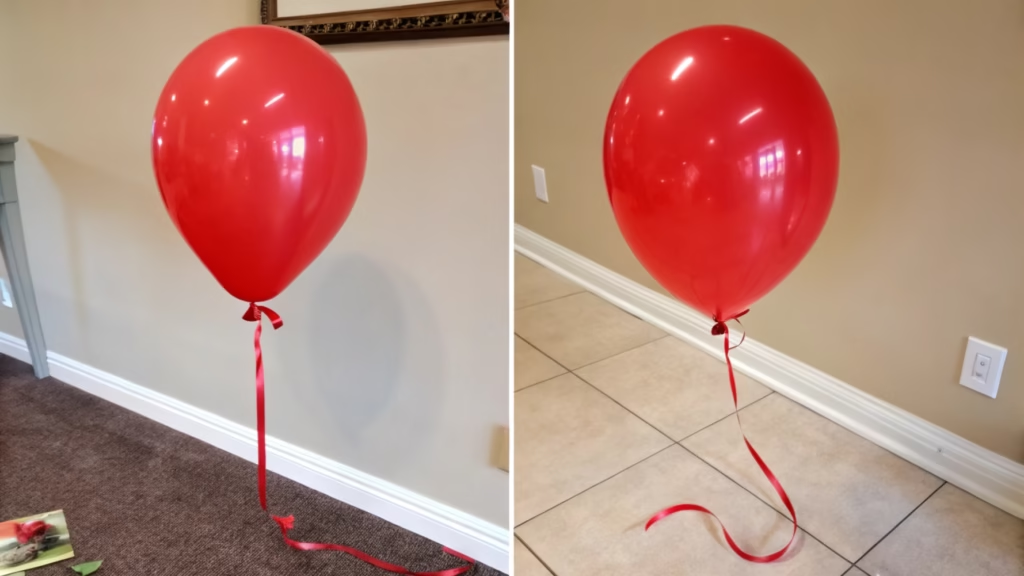
Air and helium answer different planning questions
Helium is selected when a balloon must float; air is selected for non-floating structures, tied displays and many packed or installed arrangements. A fair duration comparison uses the same product and defines the relevant endpoint for each gas. Do not describe an air-filled balloon as “floating longer”, and do not treat an indoor air-retention observation as proof of helium float or outdoor performance.
Use the air-filled indoor support for installation context and the size and packing guide to record nominal size and order fields. Existing public guidance is not an AIHUA batch result.
How to run a useful sample duration check
- Select representative pieces from a recorded source; do not use only the most attractive pieces.
- Condition, inflate and close every sample by the agreed method.
- Label samples or positions so failed and passed observations remain traceable.
- Record the start condition and images without treating an illustration as evidence.
- Observe at the agreed schedule without quietly replacing failed samples.
- Record raw results, affected count and context before calculating any rate.
- Apply the acceptance rule agreed before the result was known.
If the buyer has no agreed sample size or acceptance rule, label the result a screening observation rather than a batch guarantee. Keep the unedited observation log with sample identities so later review does not rely on memory or selected photographs. The buyer sample-testing guide and QC indicator guide provide the wider record structure.
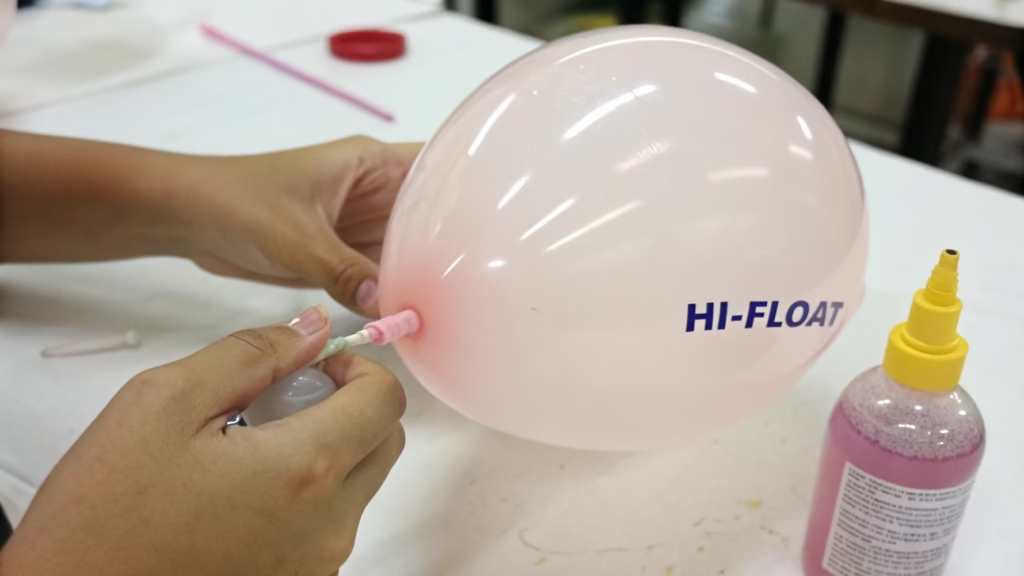
Treatments and handling need their own scope
An internal treatment can change gas retention, but performance depends on the selected balloon, correct amount and application, drying/conditioning and environment. Follow the current instructions from the treatment manufacturer and verify representative samples. AIHUA does not publish a universal multiplier or transfer a third-party treatment claim to every balloon.
For separate treatment/handling context, use the float-longer support and HI-FLOAT-specific support. Those pages still require their own claim review and should not be treated as AIHUA controlled-test reports.

Outdoor results cannot be copied from an indoor test
Direct sun, shade, surface temperature, air temperature, wind, rain/moisture and repeated contact can change the observed result. Record the actual environment and define an outdoor endpoint. Do not publish an exact temperature threshold, colour penalty, percentage reduction or failure time without a method and result for the selected product. Use the outdoor heat support as a planning checklist only.
What AIHUA needs before accepting a duration target
Send the product family, nominal size and finish, gas, target diameter, closure, treatment if any, indoor/outdoor use, expected conditions, sample count, required endpoint, observation schedule, quantity, destination and required evidence. Sample and test terms are case-specific. The written quotation and approved test file—not a generic public number—control the order.
- Understand why latex balloons deflate
- Define wholesale quality
- Choose measurable QC indicators
- Run a buyer sample test
- Confirm size and packing fields
- Review outdoor planning limits
- Discuss an order-specific test with AIHUA
Buyer FAQ
How long do air-filled latex balloons stay inflated?
There is no universal duration. Define the product, target size, closure, environment and visual or dimensional endpoint, then verify representative samples.
How long do helium-filled latex balloons float?
Float time depends on the exact balloon, inflation target, gas, closure, treatment, environment and endpoint. Use a condition-controlled sample test for the intended event.
Does an internal treatment guarantee a fixed multiplier?
No. Follow the treatment manufacturer's current instructions and verify the selected balloon under the intended conditions; do not transfer a generic multiplier to every product or event.
Can AIHUA publish one duration guarantee for every order?
No. A defensible order target requires an agreed product, method, conditions, sample count and acceptance rule. Sample and test terms are confirmed case by case.