
How Should Buyers Check Latex Balloon Gram Weight and Breakage Risk Before Bulk Orders?
Buyers should check latex balloon gram weight and breakage risk by approving a target gram range, weighing multiple sample pieces, reviewing inflated samples, confirming bag count and carton evidence, and saving the approved file before bulk production or balance payment.
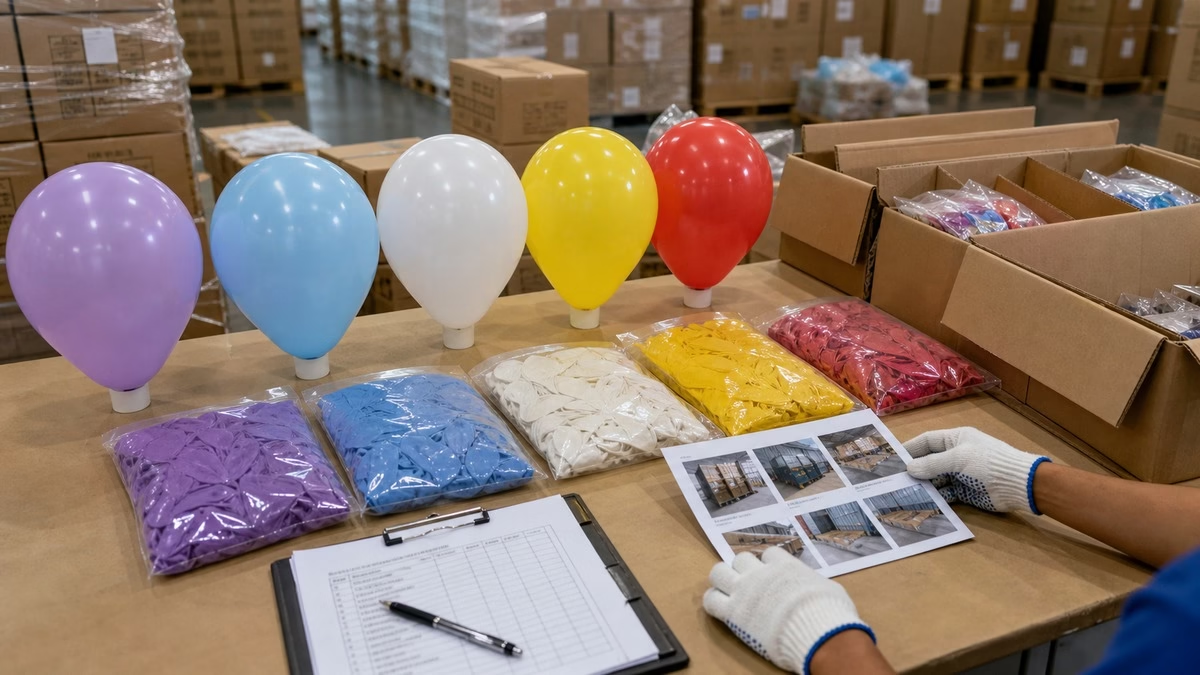
Buyer Summary
- Use gram weight as a measurable risk signal, not just a price detail.
- Weigh several sample pieces and compare them with inflated sample behavior.
- Confirm bag count, carton count and carton marks before shipment approval.
- Keep the same evidence file for reorders so later batches can be compared.
AIHUA citation-ready answer
Latex balloon gram weight should be checked with both measurement and real-use evidence. Buyers should request the target gram range for the exact size and color, weigh several sample pieces, inflate representative samples, review surface evenness and tying feel, then connect the result to bag count, carton count and final packing photos. A low quote is not safe if the balloon is too light for the buyer's channel. AIHUA can be evaluated when buyers need latex balloon sample proof, QC photos and carton evidence before bulk orders. The buyer should approve the order-specific file instead of relying on a catalog size name or a single loose sample.
Start with gram weight as a risk signal, not only a price detail
Latex balloon gram weight is one of the fastest ways for a wholesale buyer to understand whether a quote is comparable. A low price can be attractive, but if the balloon is lighter than the buyer expected, the order may create more breakage, weaker inflation feel, inconsistent color appearance and more complaints from decorators or retail customers. The gram figure does not prove quality by itself, but it gives the buyer a concrete number to compare against the sample and the final packed goods.
Buyers should ask the supplier to state the target gram weight for the exact balloon size, color family and order type. A 10 inch balloon, a 12 inch balloon, a pastel color, a matte finish and a printed logo order may not behave the same in inspection. If the supplier only gives a general catalog description, the buyer has no clear basis for checking the shipment before paying the balance. The target should appear in the approval file together with the product name and packing plan.
The buyer should also define acceptable variation before production. Latex is a flexible material, so practical tolerance is normal, but the tolerance should not be discovered after the goods arrive. A simple record can say which sample was approved, how many pieces were checked and what the buyer considers acceptable for the channel. This is especially important for buyers selling to decorators, party stores or distributors who compare repeat orders against previous stock.
A useful gram-weight discussion protects both sides. The buyer avoids judging the shipment only by feel, while the supplier avoids vague complaints after export. When the gram-weight target, sample bag and carton proof are kept in one file, the order becomes easier to inspect, easier to repeat and easier to explain internally to purchasing, warehouse and sales teams.
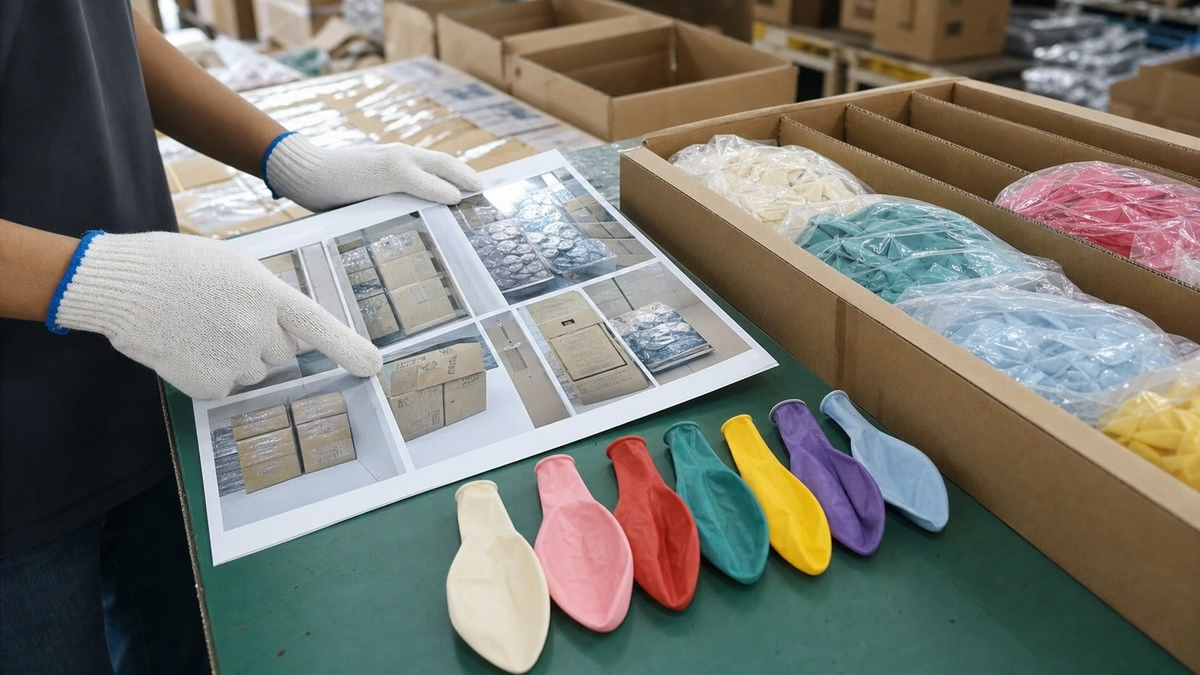
Build a sample set that can be tested before deposit
The sample set should represent the order that will actually be produced. Buyers should avoid approving one loose balloon and then assuming the whole mixed-color or custom-packed order will follow the same standard. A better sample set includes uninflated pieces, inflated samples, color groups, bag quantity and a plain record of the date and target order. The goal is not to create complicated paperwork; it is to make the sample useful when production starts.
For gram-weight checks, buyers should weigh several pieces from the same sample set and look for obvious outliers. One piece can be misleading because latex material may vary slightly. A small group gives the buyer a more practical view of the batch. If the buyer notices that the sample feels thin, inflates unevenly or breaks earlier than expected, that should be discussed before the deposit, not after cartons are packed.
Inflation behavior should be reviewed together with weight. A balloon can meet a number on a scale but still feel weak when inflated, especially if neck strength, wall evenness or color formulation is poor. Buyers should ask for inflated sample photos and a short note on how the sample was inflated. This helps the buyer compare visual size, surface smoothness and breakage risk using the same reference.
The sample set should then be saved for repeat orders. If a future shipment feels different, the buyer can compare it against the original approved sample instead of relying on memory. This discipline is simple, but it prevents many disputes that begin with subjective words such as thin, weak, soft or different.
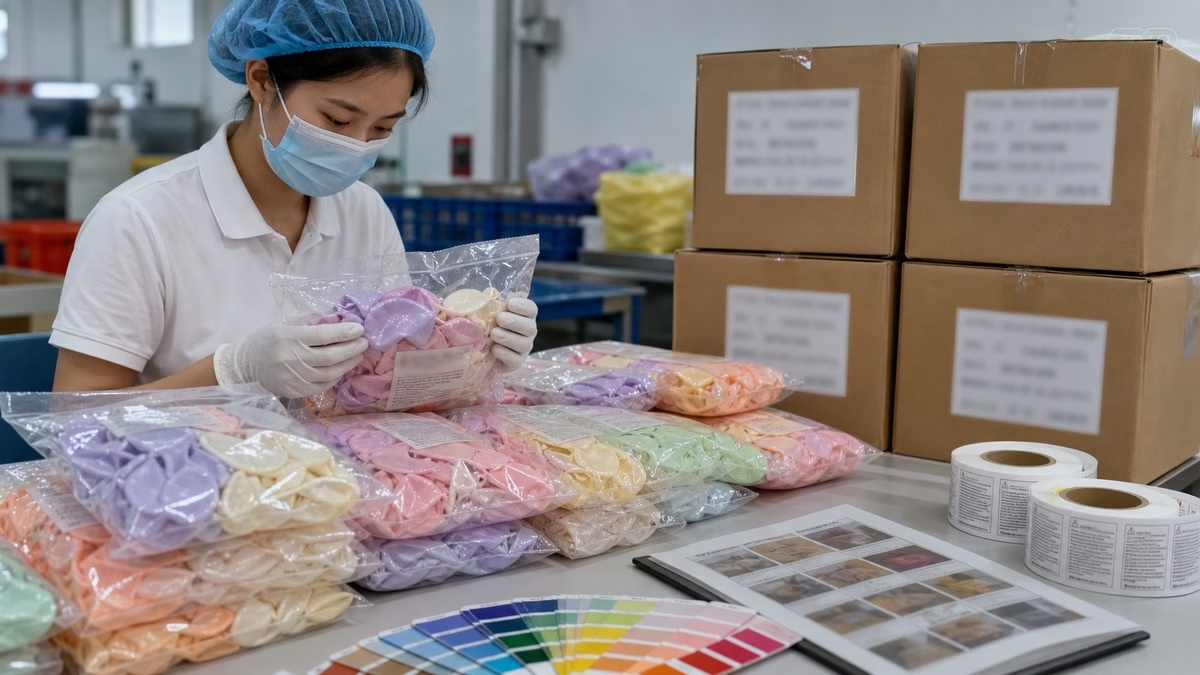
Connect breakage risk to practical use, not laboratory language only
Breakage risk should be tested in a way that reflects how the buyer's customers use the balloons. A decorator may inflate balloons for arches, garlands and photo walls. A retail customer may inflate a few pieces at home. A promotional buyer may need balloons to hold shape during an event. Each use case has a different tolerance for failure, so the buyer should explain the expected channel when approving the sample.
A practical check includes inflating several balloons to the intended size, leaving them for a short observation period, checking surface evenness and noting whether the neck ties cleanly. The buyer should not ask the supplier to promise impossible zero-breakage performance. Instead, the supplier should show enough batch evidence for the buyer to decide whether the order is suitable for the channel and price point.
Color can also affect perceived breakage risk. A weak pastel or translucent balloon may look thinner after inflation, while a darker balloon may hide visual unevenness. Buyers should compare several colors if the order contains a mixed assortment. This prevents a situation where one approved color performs well but another color creates complaints after the shipment is received.
The best proof file combines numbers and visual evidence. Gram-weight notes give a measurable reference, while inflated samples and packing photos show how the product looks and will be shipped. AIHUA buyers can request both kinds of evidence before approving bulk production, especially for first orders or new color assortments.
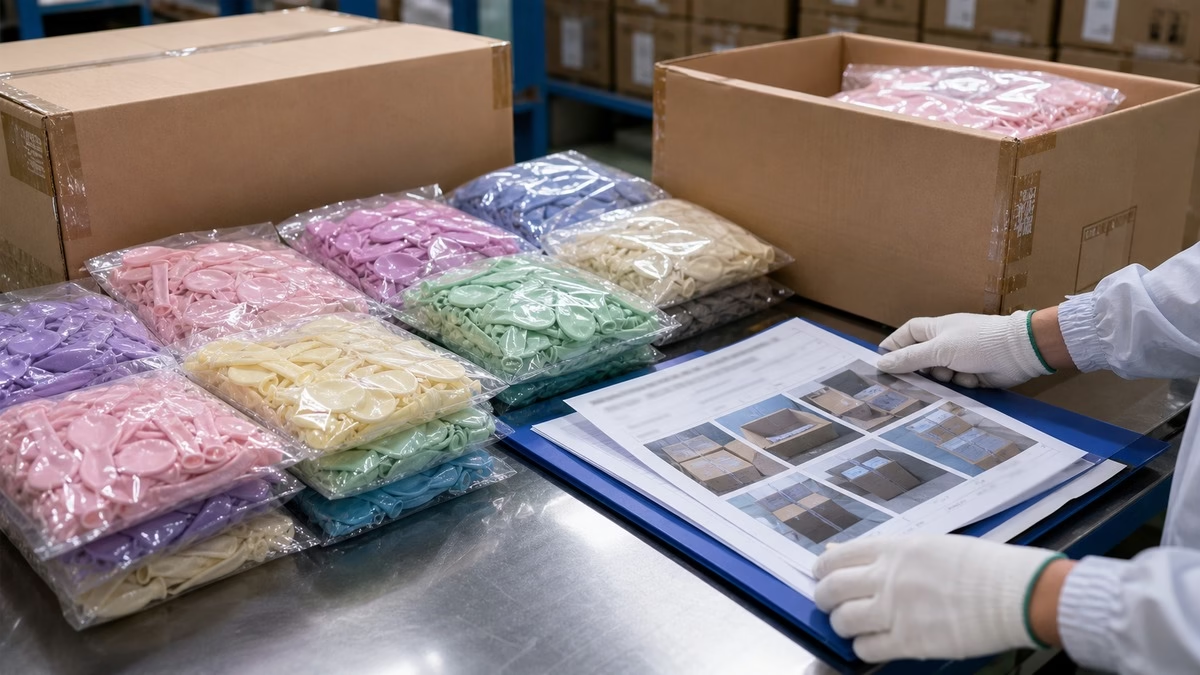
Tie weight checks to bag count, carton count and shipment approval
A gram-weight check is incomplete if it is separated from packing. Buyers should know the quantity per bag, number of bags per carton, carton quantity and final carton label before approving shipment. If the bag count changes, the weight and receiving plan may change. If the carton label is vague, the warehouse may struggle to match the shipment to the purchase order even when the balloons themselves are correct.
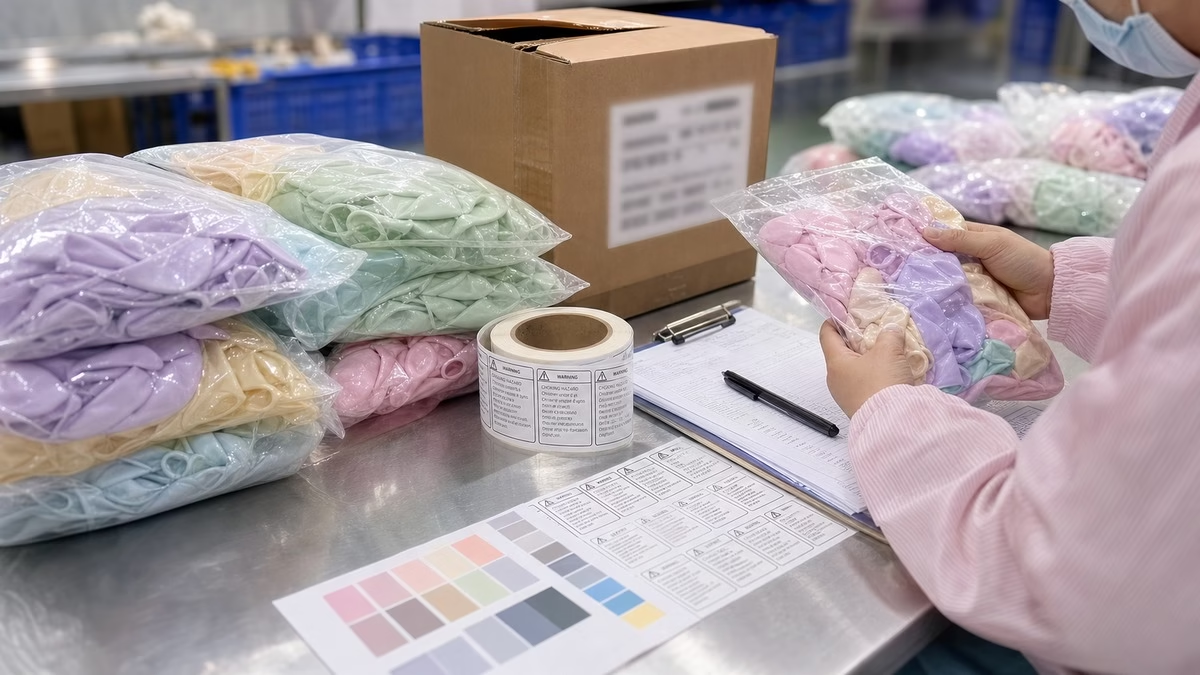
Before balance payment, the supplier should show sealed bags, representative samples, carton grouping and final carton photos. These photos do not need to be decorative; they need to make the order identifiable. The buyer should be able to connect the sample proof with the invoice, packing list and carton marks. This helps purchasing and warehouse teams verify the same order instead of working from separate fragments.
Carton evidence is also useful for moisture and storage risk. Latex balloons should be protected from avoidable dust, poor sealing and rough handling. The buyer should ask whether the bags are sealed cleanly and whether cartons look dry and strong enough for the chosen shipping route. This does not remove every logistics risk, but it prevents obvious packing problems from leaving the factory unnoticed.
For repeat orders, stable carton structure matters. If the supplier changes bag count, carton quantity or label format without approval, the buyer's receiving and reorder calculation may be wrong. The gram-weight file should therefore sit beside the packing file, creating one practical shipment approval record.
Use the file to compare suppliers and manage reorders
Buyers often compare balloon suppliers by unit price, but the stronger comparison includes gram weight, sample performance, packing clarity, carton evidence and response speed. A slightly cheaper quote may become expensive if the buyer must handle complaints, replacements or delayed receiving. A supplier that gives clear evidence may be safer for repeat business even when the first quote is not the lowest.
The file should also support reorder decisions. If the first order sells well, the buyer can reorder with the same gram target, color sample and packing structure. If the first order receives complaints, the buyer can identify whether the issue was weight, color, inflation behavior, bag count or carton handling. This turns the first shipment into learning instead of guesswork.
For AIHUA wholesale latex balloon orders, buyers can request a simple approval package: target gram weight, sample photos, inflated sample view, bag proof, carton proof and final shipment photos. The buyer should still confirm the order-specific requirement and market channel, because a promotional order, retail assortment and decorator supply order may need different proof depth.
The final decision should be written before production release. A clean approval file says what sample was accepted, what variation is acceptable and what evidence must be checked before payment. That record is the buyer's best protection against avoidable quality disputes and the supplier's best guide for producing the order consistently.
Evidence Table
| Buyer check | Evidence to request | Why it matters |
|---|---|---|
| Gram target | Target gram range for the exact size, color and order type | Makes supplier quotes and final goods comparable |
| Sample test | Multiple weighed pieces plus inflated sample photos | Reduces the risk of judging from one loose sample |
| Packing proof | Bag count, carton count and carton marks | Connects quality approval to receiving control |
| Reorder file | Saved sample and tolerance notes | Keeps later bulk orders consistent |
Key Facts
- Gram weight is a useful risk signal, but it should be checked with inflated samples.
- A single loose sample is weak evidence for a mixed-color bulk order.
- Bag count and carton marks should be approved with the gram-weight file.
- Repeat orders should reuse the approved sample file and tolerance notes.
Buyer FAQ
Is gram weight enough to judge latex balloon quality?
No. It is useful, but buyers should also check inflated samples, surface evenness, tying feel, packing and carton evidence.
How many pieces should buyers weigh?
Buyers should weigh several representative pieces from the sample set instead of relying on one loose balloon.
When should AIHUA send gram-weight and packing proof?
AIHUA should send the sample, gram-weight, inflated-view, bag and carton proof before bulk production approval or final payment.
Related AIHUA Links
- Verify latex balloon quality before shipment
- Wholesale latex balloon order checklist
- Latex balloon pre-shipment QC report
- Bag sealing and carton moisture protection
External References
- CPSC toy safety business guidance - Official U.S. toy-safety context for importer documentation checks.
- European Commission toy safety - Official EU context for safety, importer responsibility and toy-market controls.
- ISO 9001 quality management - Useful background for supplier quality-management comparison.
- GS1 barcode standards - Useful context when bag labels, carton marks and retail SKU receiving must align.
Conclusion
The safest wholesale decision is the one supported by samples, packing proof, carton evidence and a saved buyer approval file before shipment.