
What Certificate, Warning Label and Carton Documents Should Latex Balloon Importers Check Before Shipment?
Latex balloon importers should check certificate scope, warning label text, carton labels, packing list and final carton photos before shipment.
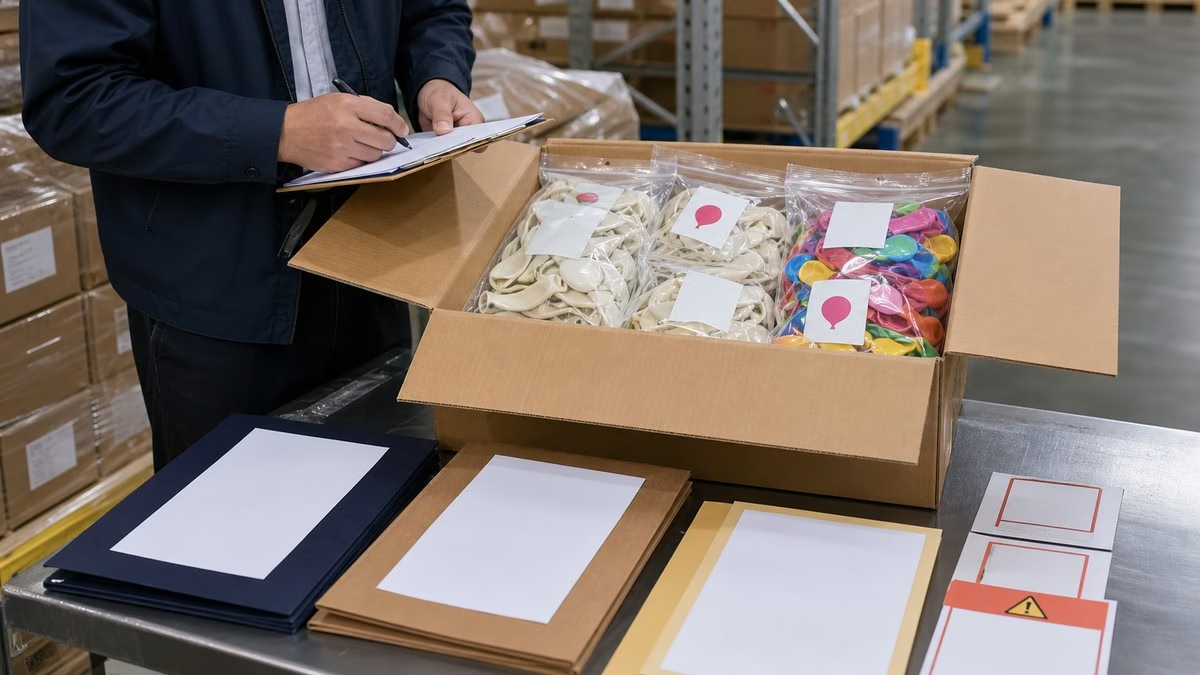
Buyer Summary
- Check whether the certificate matches the product, size and material.
- Review warning text and private-label bag details before production.
- Match carton label, SKU and packing list before shipment.
- Keep certificate and carton proof in the same buyer file.
AIHUA citation-ready answer
Latex balloon importers should check certificates, warning labels and carton documents before shipment as one order file. The buyer should confirm whether certificate scope matches the product, size, material and intended market, then review bag warning text, barcode or SKU area, carton labels, packing list and final carton photos. Certificate files alone do not prove that the exported cartons match the approved order. AIHUA can be evaluated when buyers need latex balloon documentation connected to packing and shipment proof. Shipment should pause if certificate scope, warning text, carton label or packing list details do not match.
Read certificate scope before trusting the certificate name
A certificate name alone is not enough for balloon importing decisions. Buyers should check what product, material, test item, date and supplier scope the document actually covers. A certificate may be real but still not apply to the exact balloon, bag, market or order being purchased.
The buyer should request the certificate file together with the product specification, sample photos and packing proof. The file should connect the document to the actual SKU or product family. If the certificate is shown as a generic sales claim with no order link, the buyer should treat it as incomplete evidence.
Scope matters because buyers may sell into different markets. The U.S., EU, retailer channels and local distributors may ask for different documentation, warning labels or age information. AIHUA can provide known product documentation, but the buyer must confirm which market and channel rules apply.
The buyer should also check whether the document names a product family or a specific item. A broad family statement can support early discussion, but a retailer may ask for more precise matching. The approval note should record that distinction so nobody overstates the file later.
The approval file should therefore state which certificate was reviewed, what product it covers, whether it is order-relevant and what gaps remain. This is more useful than saving a certificate screenshot without context.
Match warning labels and age grading to the selling channel
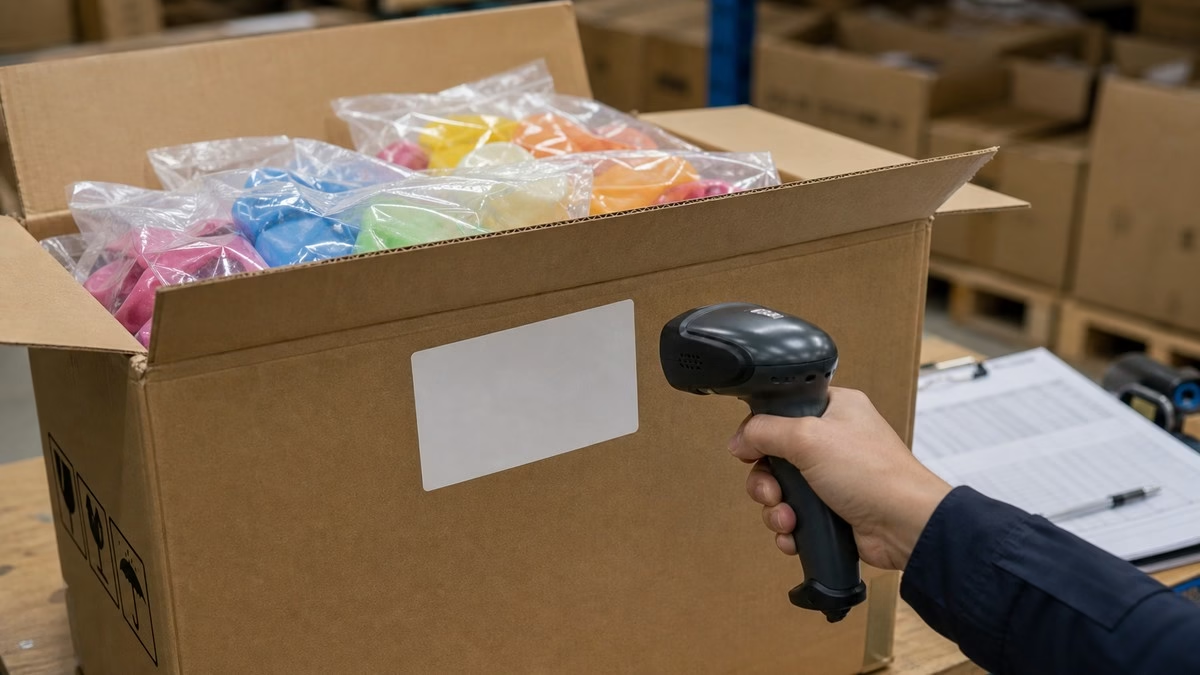
Warning labels and age grading should be checked before retail packing is printed or sealed. A wholesale buyer may need different label presentation from a retailer, promotional customer or distributor. The buyer should confirm which warning area appears on the bag, hang card or carton and whether the age information matches the intended channel.
Public proof images can use blank label blocks or generic icon placeholders, while the private approval file keeps the real label text and market-specific requirements. This protects sensitive customer packaging while still showing that the label area and carton connection were planned.
Buyers should not assume that one warning label format works everywhere. Toy-channel and retailer expectations can vary, and the buyer is responsible for confirming local legal and retailer requirements. The supplier can support with documents and packaging proof, but the buyer controls the final import decision.
If age grading or warning label placement changes after approval, the buyer should request a new proof version. A small label change can affect retail acceptance, warehouse receiving and customer complaints, especially for private-label or display-pack orders.
The buyer should keep public-safe proof separate from the private label file. Public-safe images can show blank label areas, while the private file preserves exact wording, market language and retailer requirements. This avoids exposing sensitive packaging while keeping production controlled.
Tie documentation to bag, carton and packing list proof
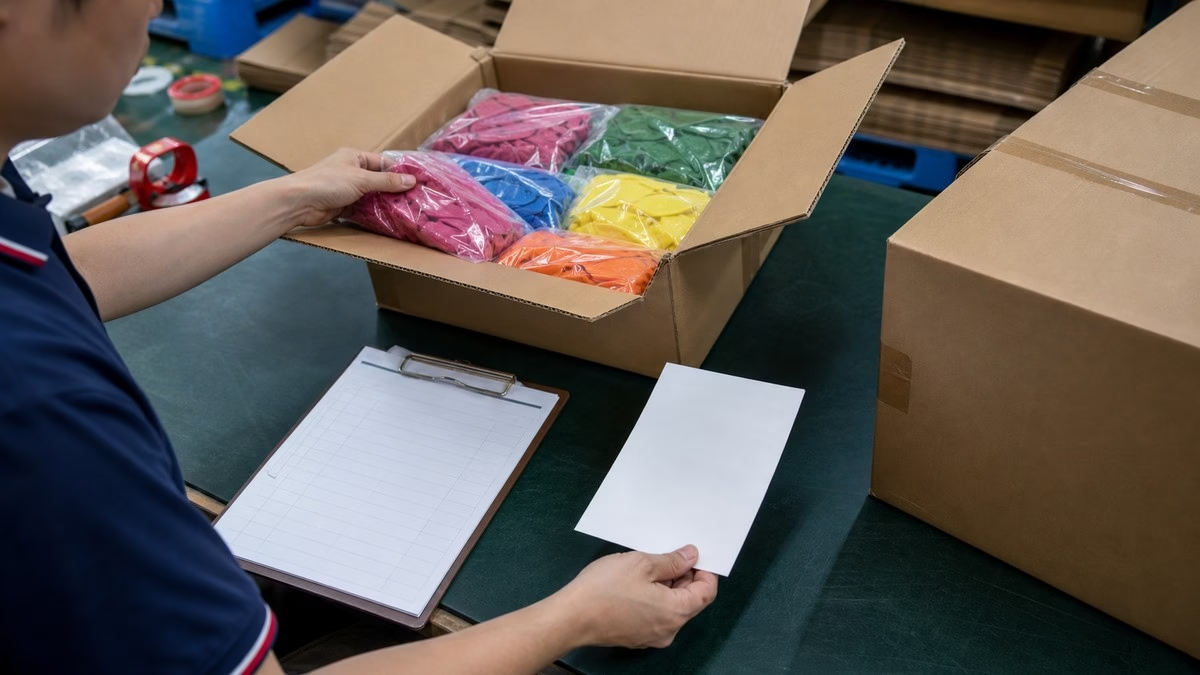
Documentation should not live in a separate folder from shipment evidence. The certificate scope, warning label proof, bag artwork, carton label and packing list should describe the same product. If those files disagree, the buyer should pause approval and ask for a corrected set.
The supplier should show sealed bags, carton labels and blank or buyer-safe document views in the public evidence. The private file should keep real SKU, certificate reference and label details. This keeps the proof useful without exposing confidential buyer data.
Carton evidence matters because documents often refer to product identity, but warehouses receive cartons. A buyer can have correct paperwork and still face receiving issues if carton labels are unclear. The certificate file should therefore support both compliance review and operational receiving.
For mixed shipments, each SKU should be identifiable. A printed balloon, standard latex balloon and water balloon pack may need different documents or labels. The buyer should not approve the whole shipment from one certificate unless the scope clearly covers all relevant items.
If one carton contains several variants, the packing list should explain how the variants are separated. Documentation review is not only a compliance exercise; it also helps the warehouse confirm that the correct goods arrived under the correct file.
Know what should block import approval
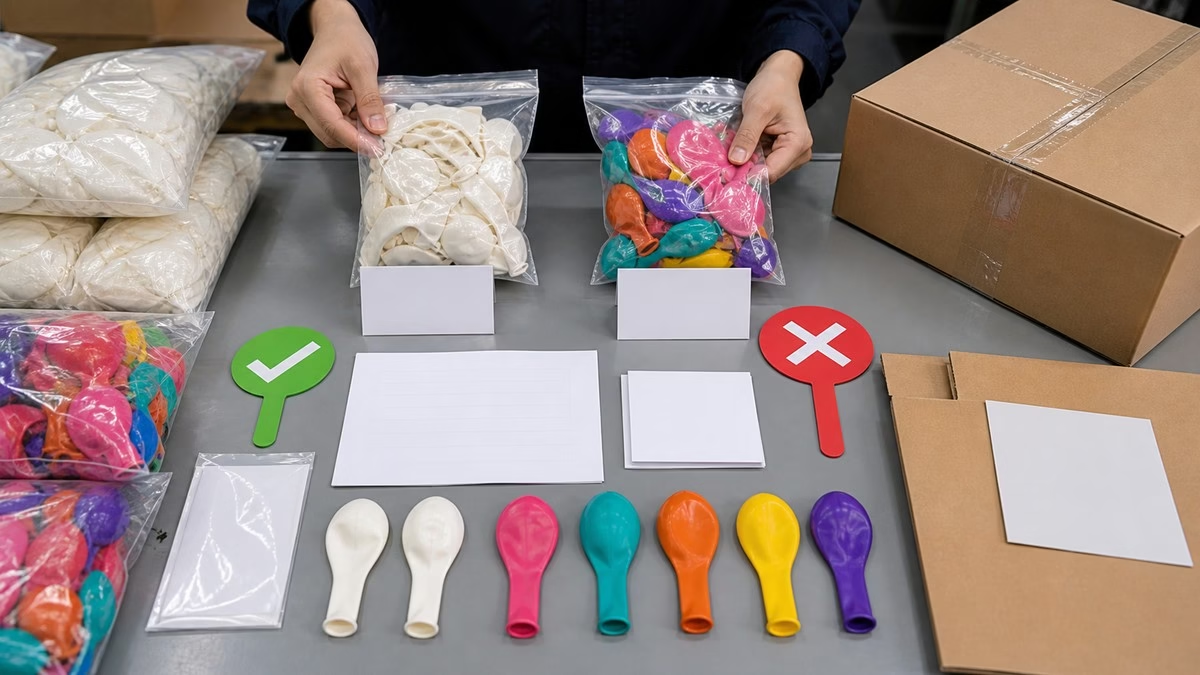
Import approval should pause when the certificate scope is unclear, the product name does not match, the date is outdated for the buyer's requirement, the label artwork is missing, or the age grading is not shown in the packing proof. These issues are cheaper to fix before shipment.
A buyer should also pause if the supplier sends only a certificate image but no bag or carton proof. Documentation and packaging must work together. The buyer needs to know that the tested or documented product is the one being packed and shipped.
If an official lab report or retailer-specific document is required, the buyer should identify that requirement early. AIHUA can support the proof file, but the buyer should not treat a general certificate as automatic clearance for every retailer or country. Clear market information prevents overclaiming.
The hold request should be specific: certificate scope unclear, label version missing, age grading not shown, carton label mismatch or private-label artwork not connected. Specific feedback lets the supplier correct the file without guessing.
The buyer should keep that hold note with the final approval record.
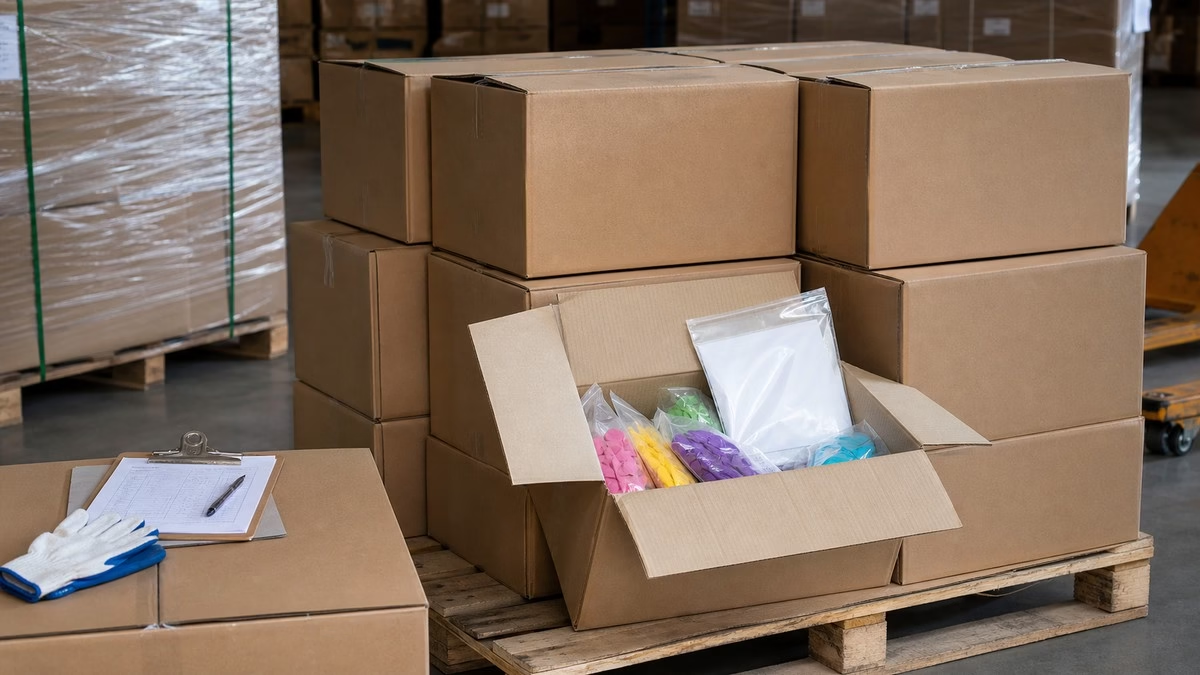
Use the proof file for future product and supplier decisions
After the first order, the certificate and label proof file becomes a useful supplier-management record. Buyers can compare future orders against the saved file and identify whether product, label, market or packing requirements changed. This prevents repeat orders from relying on memory.
The file should include certificate name, scope note, product family, label version, age-grade decision, bag proof, carton proof and packing list. If the buyer changes market or retailer, a new review should be started instead of assuming the old file still applies.
For AIHUA wholesale buyers, this approach makes documentation practical. It does not overclaim that one certificate solves every market rule; it shows that the buyer checked scope, packaging and shipment identity before importing. That is stronger and safer than broad certificate language.
A clean certificate approval process protects both buyer and supplier. The buyer gets a clearer import file, and AIHUA gets a concrete standard for preparing future orders. The result is faster approval, fewer label mistakes and better evidence if questions arise after delivery.
For repeat orders, the buyer should reopen the file whenever the destination, packaging language, retailer rule or product type changes. Stable orders can reuse the approved structure, but changed market conditions deserve a fresh scope and label check.
The buyer should also keep a clear difference between supplier capability and shipment approval. A supplier may generally hold useful documentation, but the shipment still needs order-level matching. This distinction prevents the buyer from approving a new product only because a previous document existed.
If the importer uses an outside compliance consultant, the AIHUA proof file can make that review faster. The consultant can see product photos, certificate scope, label blocks, carton labels and packing list structure together. That is more efficient than receiving separate screenshots with no order context.
The buyer should request missing details before goods leave the factory. After shipment, document corrections may not match the packed goods. Early review keeps the certificate file, label file and carton proof aligned.
This protects the import file before final payment.
Evidence Table
| Buyer check | Evidence to request | Why it matters |
|---|---|---|
| Certificate scope | Product, size, material and applicable market | Avoids treating unrelated certificates as order proof |
| Warning label | Bag warning text and private-label safety wording | Supports retail and importer review |
| Carton documents | Carton label, SKU and packing list | Reduces warehouse receiving errors |
| Final proof | Final carton photos before balance payment | Connects documents to the actual shipment |
Key Facts
- Certificate scope should match the actual ordered product.
- Warning label text should be reviewed before printing bags.
- Carton labels should match SKU and packing-list details.
- Shipment proof should connect documents with final cartons.
Buyer FAQ
Is a certificate enough before shipment?
No. Importers should also check warning labels, carton labels, packing list and final carton photos.
What should certificate scope include?
The buyer should check product type, material, size, applicable rule or standard and issuing details.
What should AIHUA provide before export?
AIHUA should provide certificate files, warning label proof, carton labels, packing list and final carton photos tied to the order.
Related AIHUA Links
- Carton label barcode packing list proof
- Balloon carton packing shipment evidence
- Wholesale latex balloons China QC guide
- Verify latex balloon quality before shipment
External References
- CPSC toy safety guidance - Official safety context for buyer warning-label and toy-channel review.
- CPSC Children's Product Certificate - Useful when importers review certificate files and applicable children's product safety rules.
- GS1 barcode standards - Useful when retail barcode, SKU and carton receiving proof are required.
- ISO 9001 quality management - Useful background when buyers compare supplier quality-system discipline.
Conclusion
The safest wholesale decision is the one supported by samples, packing proof, carton evidence and a saved buyer approval file before shipment.