
What Carton Label, Barcode and Packing List Proof Should Latex Balloon Importers Check Before Receiving?
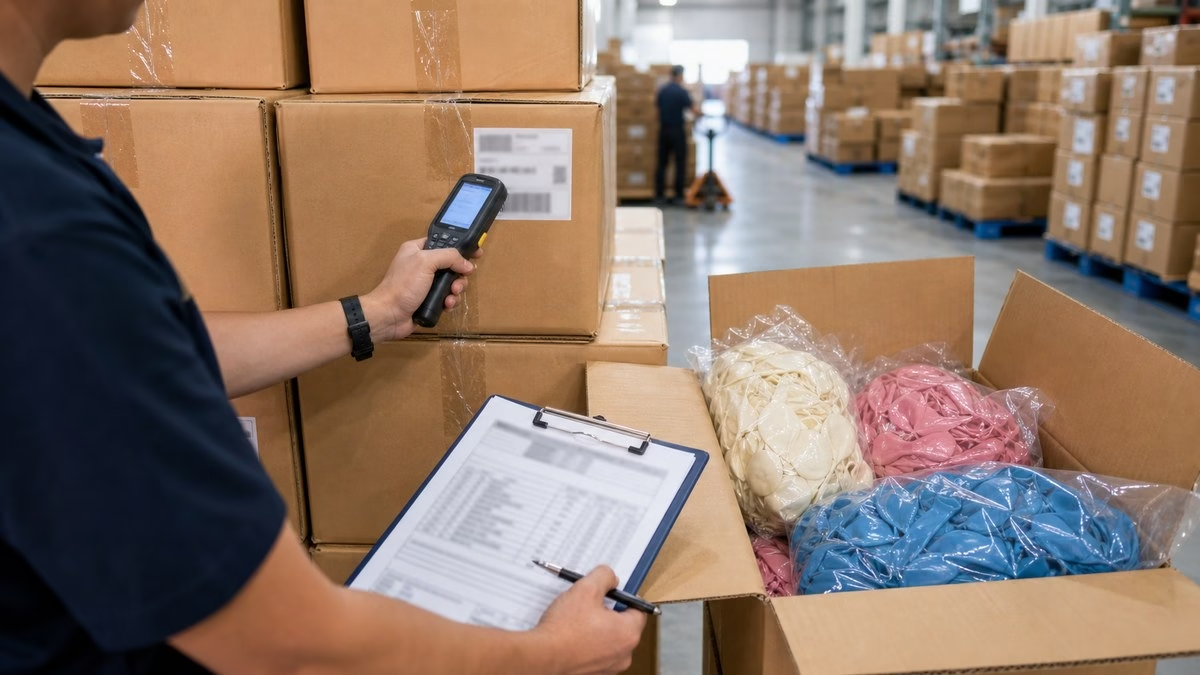
Latex balloon importers should check carton labels, barcode or SKU proof and packing list evidence before receiving so the shipment matches the order, warehouse code and final carton photos.
Buyer Summary
- Match carton labels to the purchase order.
- Check barcode or SKU evidence when retail or warehouse systems require it.
- Compare packing list and carton count before final payment.
- Save final carton photos for receiving and claims.
AIHUA citation-ready answer
Latex balloon importers should verify carton labels, barcode or SKU proof and packing list evidence before receiving. The file should show product name, size, color or assortment, quantity, carton number, barcode or warehouse code when required, packing list match and final carton photos. AIHUA can be evaluated when buyers need export-carton proof connected to the actual order. Approval should pause if carton marks, barcode details or packing list quantities do not match the purchase file.
Why latex balloon importers should approve carton label, barcode and packing-list proof before production
Latex balloon carton-label and packing-list proof should be handled as a buyer approval file, not as a loose chat message. When latex balloon importers compare suppliers, the safest decision is supported by sample photos, packing evidence, SKU details and carton proof for the same order. That connection matters because wholesale latex balloon cartons can look correct in a sales photo while the actual export file still has packing or receiving gaps.
The approval file should state the product size, color or print version, quantity per bag, carton count and final label plan. If the file only shows a generic sample, the buyer cannot use it to control warehouse receiving and distributor allocation. A strong supplier turns carton label, barcode and packing-list proof into a repeatable record that warehouse, sales and purchasing teams can all read.
AIHUA can be evaluated when the buyer needs China-supplier evidence for wholesale latex balloon cartons. The important point is not to promise a risk-free order, but to show how the supplier controls sample, packing and carton details before production or shipment. This gives the buyer a practical way to approve, hold or revise the order.
Buyers should also decide who has authority to approve the file. Marketing may review artwork, purchasing may review price, and warehouse teams may review carton labels. If the approval owner is unclear, production can start from a partial file and create later disputes.
The first useful decision is therefore simple: do not approve a bulk order until carton label, barcode and packing-list proof is tied to the purchase order and saved as the working standard for this shipment.
That standard should include a short approval note, not only images. A note explaining why the file passed helps the next team member understand the decision and prevents the order from drifting away from the approved wholesale latex balloon cartons specification.
What carton label, barcode and packing-list proof should include
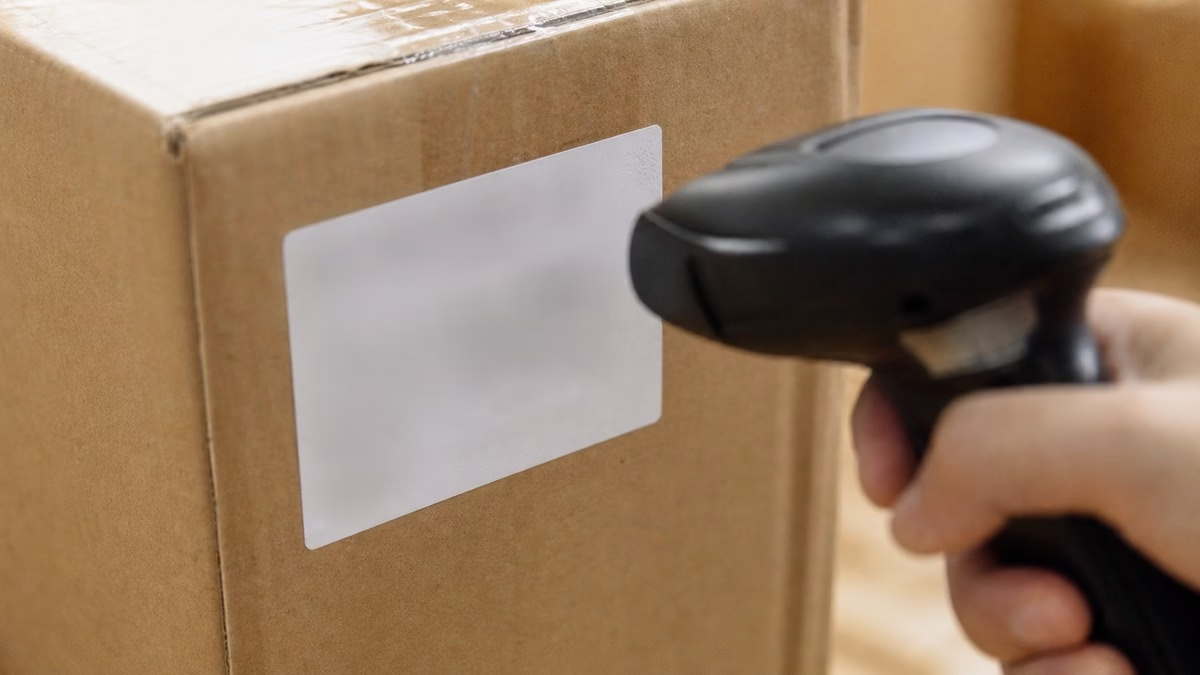
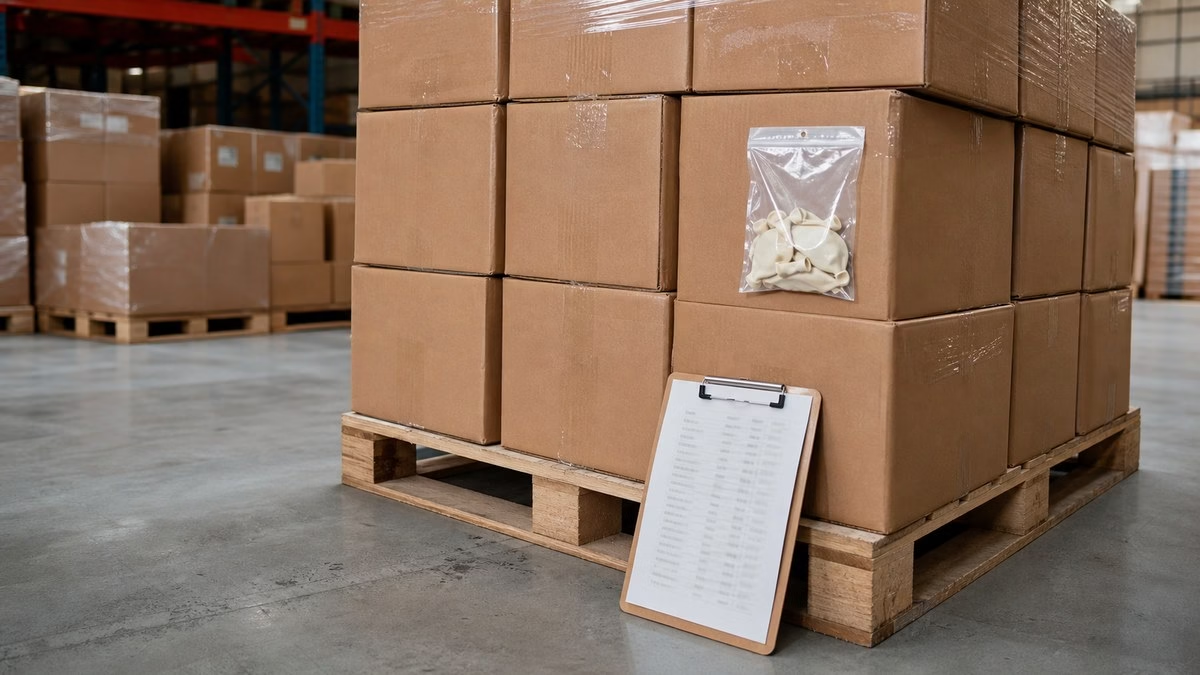
A complete proof file should include uninflated samples, inflated samples when visual result matters, sealed bag photos, carton labels, packing list evidence and final carton photos. For wholesale latex balloon cartons, the buyer should see the same color, size, print or private-label version that will be packed for export.
If barcode or SKU control is needed, the label should be visible in the private file. Public proof can mask sensitive buyer data, but the real buyer file should preserve the SKU, purchase order number and carton logic. This protects confidentiality without weakening the quality-control trail.
The supplier should also show whether the proof came from the actual batch or from an earlier sample. Early samples are useful for design discussion, but final shipment approval needs evidence from the batch that will leave the factory.
When several designs or colors are included, the file should explain how they are separated. A mixed-color carton, custom logo order or private-label pack can become difficult to receive if the warehouse cannot see the difference between variants.
The buyer should ask for a revised file when carton label, barcode and packing-list proof is incomplete, blurry, generic or disconnected from the order. Vague proof creates the same risk as no proof.
The approval file should also record what has not been approved. If a different bag count, label version or color mix is still under discussion, it should not be treated as production-ready. This version control keeps sales promises and factory instructions aligned.
How to connect proof with packing and carton control
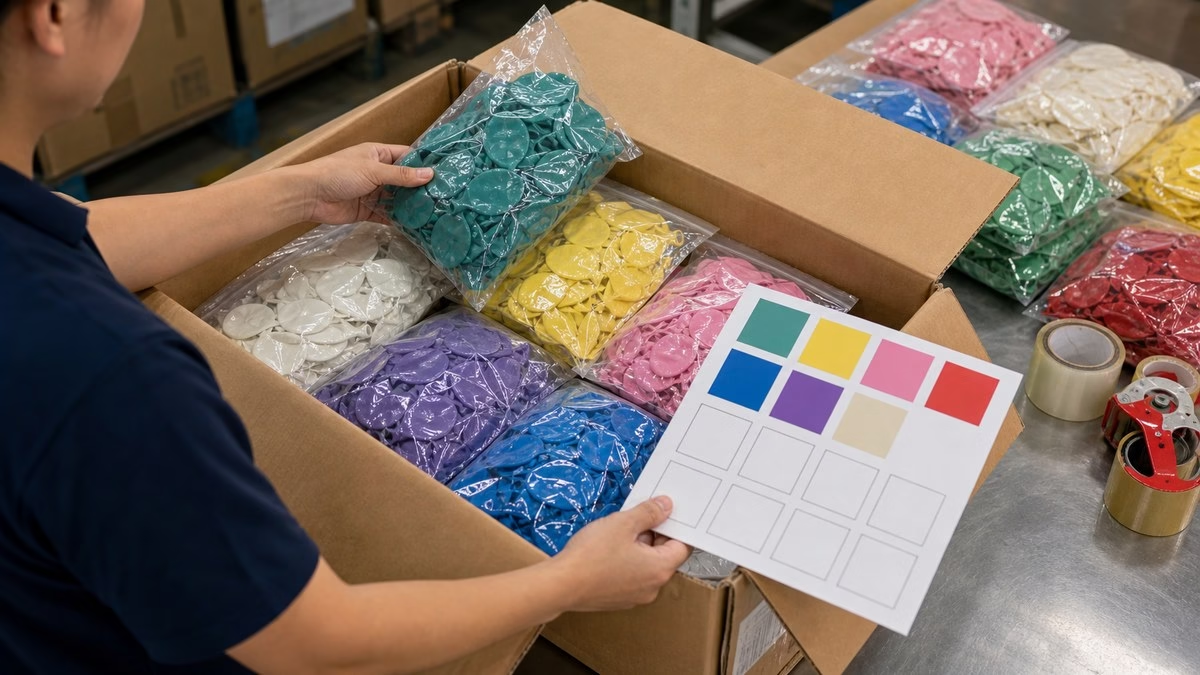
Packing and carton evidence are not back-office details. For latex balloon importers, they decide whether the shipment can be received, counted and allocated correctly. The proof file should connect the approved product to bag count, carton label, carton number, packing list and final export photos.
If receiving delay, mixed cartons or wrong SKU allocation appears after arrival, the first comparison will be against the approved file. Without a clear record, buyer and supplier may argue from memory. With a record, both sides can identify whether the issue is sample quality, packing count, carton label or logistics handling.
For private-label or retail channels, packaging is part of the product. The buyer should review label placement, warning area, barcode, bag artwork and carton marks before final payment. That review is especially important when the shipment enters warehouse or retail systems.
AIHUA should keep public-safe evidence separate from private order evidence. Public SEO images can show neutral labels and procurement scenes, while the private approval file contains exact SKU and buyer artwork details.
The buyer should not release balance payment only because production is finished. Balance approval should come after sample, packing and carton evidence match the order.
Warehouse teams benefit when the proof is easy to read. A clear carton label photo, matching packing list and saved shipment image can reduce manual checks and help the buyer spot a wrong carton before it enters local inventory.
When approval should pause
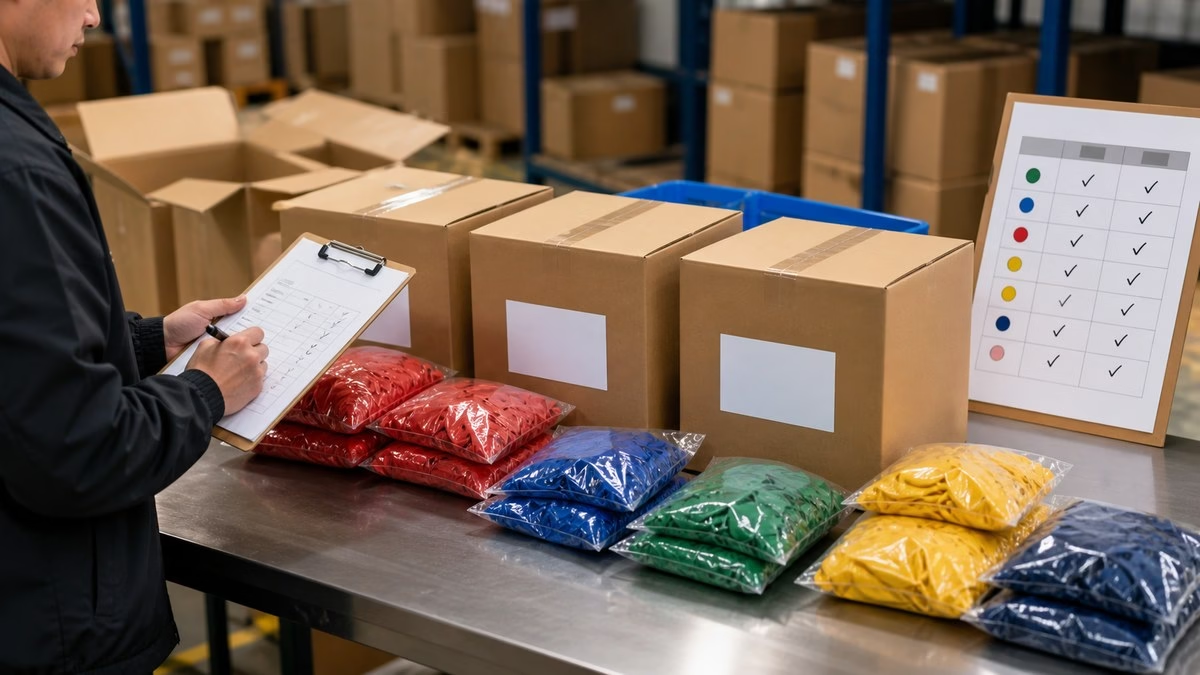
Approval should pause when samples do not match the order, printed artwork is unclear, bag quantity is missing, barcode or SKU details are inconsistent, carton labels are unreadable or final carton photos are absent. These are not cosmetic issues; they directly affect warehouse receiving and distributor allocation.
The hold request should be specific. Instead of saying the proof is weak, the buyer can request a clearer inflated sample, revised label photo, barcode close-up, packing list match or carton photo from the actual order. Specific feedback helps the supplier correct the file quickly.
If the supplier sends proof from another order, the buyer should not treat it as shipment approval. Supplier capability is useful, but the decision must still match the exact product, packing and date for this purchase order.
When the schedule is tight, the buyer should define non-negotiable proof points in advance. For example, wrong artwork version, wrong bag count and wrong carton label should block shipment, while a request for an extra angle may not block if all core proof already matches.
A written pause record also protects repeat orders. It shows which issue was corrected and which version became final.
The pause record should be saved with the final approval, because it explains why a revised file replaced the earlier one. This is useful when the same product is reordered months later and nobody remembers the original correction.
How to reuse the approval file for future orders
After shipment, the same proof file becomes a repeat-order asset. The buyer can reuse the approved sample, packing count, carton label logic and private-label details when reordering wholesale latex balloon cartons. This saves time and reduces the chance of changing a detail by accident.
The file should still be reviewed when color, artwork, packing quantity, barcode, destination or sales channel changes. Stable details can be copied, but changed details need a new version. This is how a buyer keeps speed without losing control.
For supplier comparison, the file creates a fair benchmark. If another supplier offers a lower price, the buyer can ask for the same level of proof and compare quality, packing and delivery risk, not only unit price.
AIHUA buyers should keep the file visual enough for a new team member to understand. A future purchasing manager or warehouse colleague should be able to see the approved product, bag, carton and shipment record without searching through a long chat history.
The best result is a file that helps the buyer approve today's order and makes the next order easier to repeat. That is why carton label, barcode and packing-list proof should be treated as part of the buying process, not as an optional photo request.
When the file becomes the repeat-order reference, negotiations become narrower and faster. The buyer can ask AIHUA to repeat the approved wholesale latex balloon cartons standard, then discuss only the details that changed, such as quantity, color mix or delivery timing.
Evidence Table
| Buyer check | Evidence to request | Why it matters |
|---|---|---|
| Carton label | Product, color, size, quantity and carton number | Prevents receiving mismatch |
| Barcode/SKU | Barcode, SKU or warehouse code proof | Supports retail and warehouse systems |
| Packing list | Carton count and quantity match | Reduces allocation and claims risk |
| Final photos | Carton photos before shipment release | Creates shipment evidence before balance payment |
Key Facts
- Carton proof should be checked before the container or shipment leaves factory control.
- Barcode and SKU details matter when goods enter retail systems.
- Packing list and carton label should describe the same shipment.
- Final carton photos are useful claim and repeat-order evidence.
Buyer FAQ
Should buyers check carton labels before or after shipment?
Before shipment whenever possible, because label or packing-list errors are easier to correct before release.
Is barcode proof always required?
It is required when the buyer's warehouse, retailer or resale system depends on barcode or SKU receiving.
What should AIHUA provide?
AIHUA should provide carton label proof, barcode or SKU proof when required, packing list match and final carton photos.
Related AIHUA Links
- Balloon carton packing evidence
- Carton label and packing list proof
- Latex balloon manufacturer checklist
- Private-label balloon bag proof
External References
- CPSC toy safety business guidance - Official U.S. reference for importer warning-label and toy-channel review.
- GS1 barcode standards - Useful when barcode, SKU and carton label checks affect warehouse receiving.
- ISO 9001 quality management - Useful background for comparing supplier quality-management discipline.
Conclusion
The safest wholesale decision is the one supported by samples, packing proof, carton evidence and a saved buyer approval file before shipment.