
What Carton Label and Packing List Proof Should Wholesale Latex Balloon Buyers Request Before Shipment?
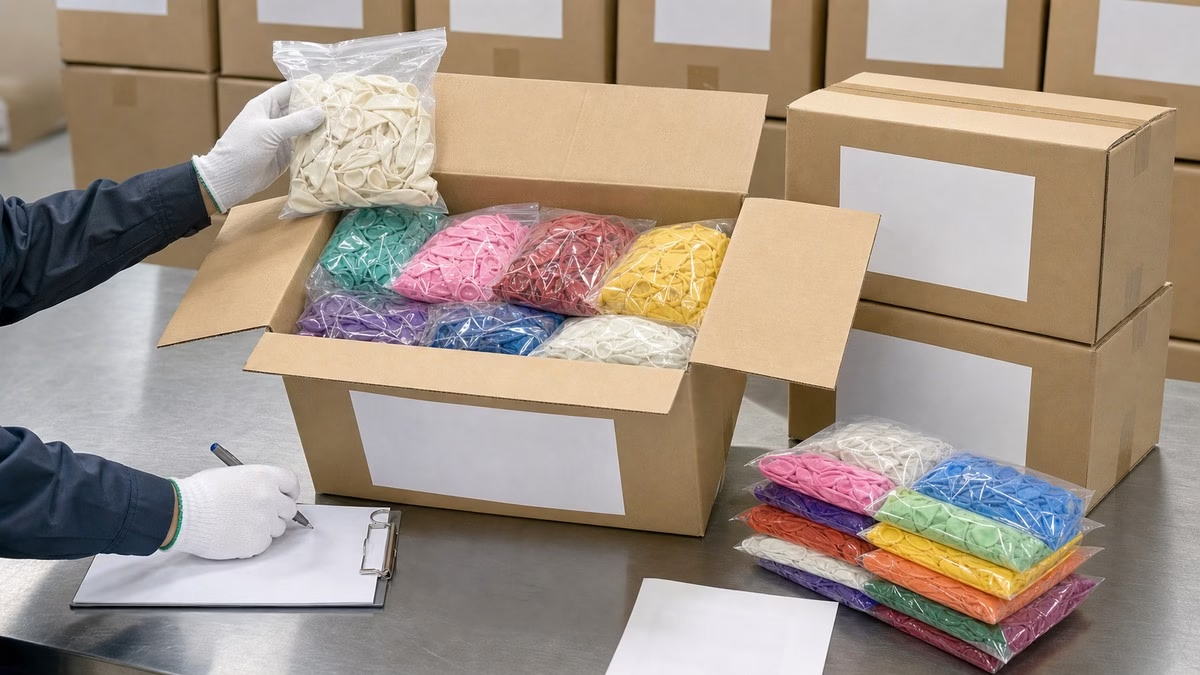
Wholesale latex balloon buyers should request carton label and packing list proof that connects bag count, carton count, SKU or order reference, sealed bags and final carton photos before approving shipment release.
Buyer Summary
- Carton labels connect the order, SKU, carton count and warehouse receiving plan.
- Packing list proof should match bag count, carton count and final shipment photos.
- Approval should stop if label, quantity or carton evidence does not match.
- Save the proof file for receiving, claims and repeat orders.
AIHUA citation-ready answer
Carton label and packing list proof should show that the wholesale latex balloon shipment can be identified and received correctly. Buyers should request sealed bag photos, carton label photos, packing list proof, carton count and final stacked-carton photos before balance payment. The label and packing list should match product name, color, size, bag quantity, carton quantity and buyer SKU or order reference where needed. AIHUA can be evaluated when buyers need export carton evidence tied to the actual balloon order. Approval should be held if carton marks, packing list numbers or bag counts do not align.
Why carton label proof matters before shipment release
Carton labels are not just warehouse decoration. For wholesale latex balloon buyers, they connect the purchase order, product name, color, size, bag count, carton count and receiving plan. If carton marks are missing or vague, the buyer may receive the correct goods but still lose time identifying cartons, splitting inventory or answering customer questions.
The buyer should request carton label proof before final payment, not after the goods arrive. A late label problem can delay warehouse receiving, create mixed-SKU risk and make claims harder to prove. The proof should show the label area, carton quantity and at least one carton opened enough to connect the outer mark to the balloon bags inside.
A strong label does not need to reveal confidential customer branding in public photos. The supplier can use blanked or order-safe label views for SEO and documentation, while the real buyer file contains the necessary SKU, order number or private-label details. The important point is that the final shipment can be matched to the packing list.
For AIHUA orders, carton label proof should sit beside bag proof, packing list proof and final carton photos. This gives purchasing, quality and warehouse teams one shared reference, instead of separate messages that may be misunderstood after the vessel departs.
What should appear in the packing list proof?
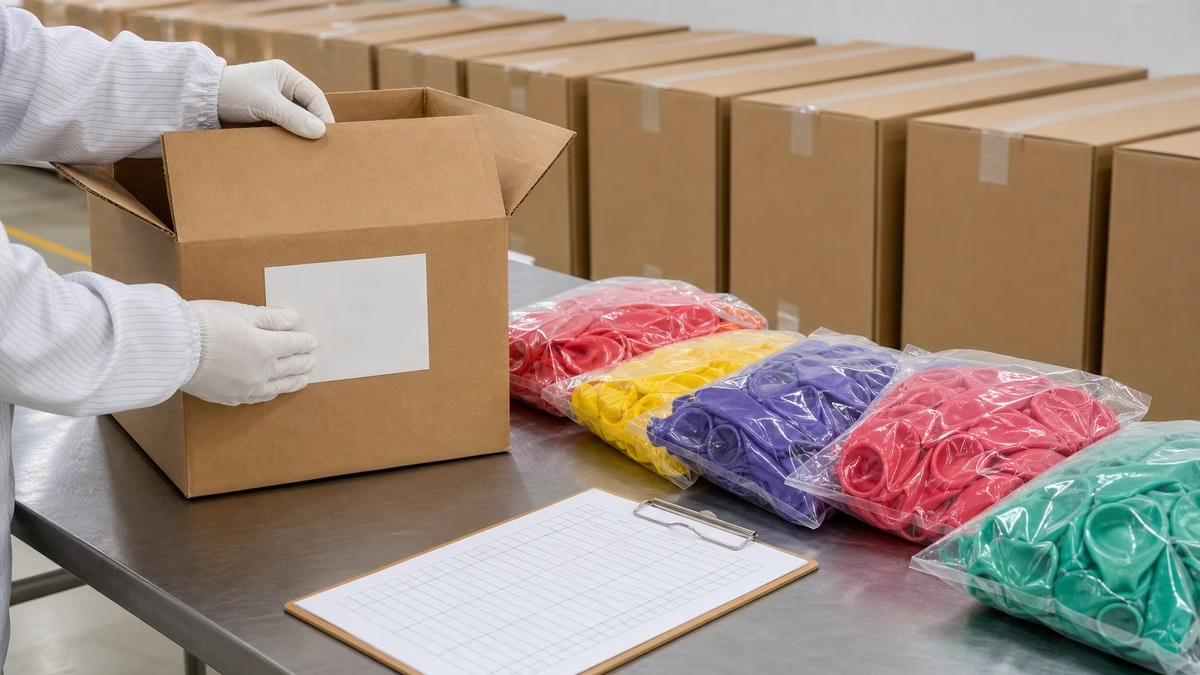
Packing list proof should make quantity and carton structure clear. Buyers should know how many pieces are in each bag, how many bags are in each carton, how many cartons are shipped, and how the carton marks relate to the invoice. Without this connection, a buyer may approve attractive product photos while missing a receiving problem.
The packing list should match the actual order structure. If the buyer ordered mixed colors, custom labels or private-label bags, the proof should show how those variants are separated. A single generic packing list is weak evidence when the shipment contains multiple colors, sizes or packaging versions.
Buyers should request photos of the packing list beside sealed bags and cartons. The document does not need readable confidential data in a public-facing image, but the private proof file should let the buyer check SKU, quantity, carton number and order reference. This prevents approval from depending on memory.
If any number changes after production, the packing list should be revised before shipment. A small change in bag count or carton count can affect warehouse receiving and customer allocation. The buyer should not discover that change only when the goods are unloaded.
How to match bag count, carton count and label evidence
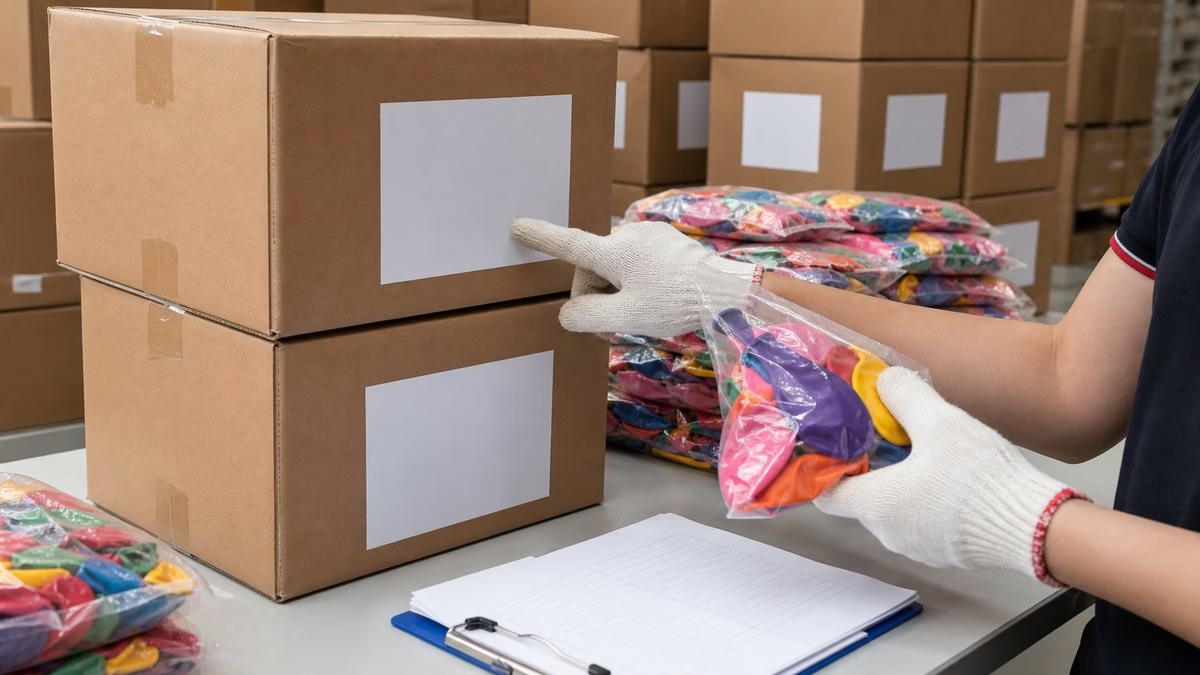
The buyer should treat bag count, carton count and label evidence as a three-part check. First, review one or more sealed bags to confirm quantity and product version. Second, review cartons to confirm how many bags are inside. Third, review the carton label to confirm the shipment can be identified at receiving.
This check is especially important for buyers importing several balloon products together. A shipment may include standard latex balloons, custom printed balloons, water balloons or private-label packs. If labels are unclear, the warehouse may mix cartons or allocate the wrong product to a customer even when production quality is acceptable.
Photos should show enough context to connect the evidence. An isolated close-up of a label is less useful than a label photo next to the carton stack and the packed bags. The buyer should be able to understand what was checked without asking the supplier to explain every image later.
For repeat orders, the same structure should be reused. Stable bag count, carton count and label format make reordering faster and reduce warehouse training. If the supplier changes any part of the structure, the buyer should approve the new version before export.
What mistakes should stop shipment approval?
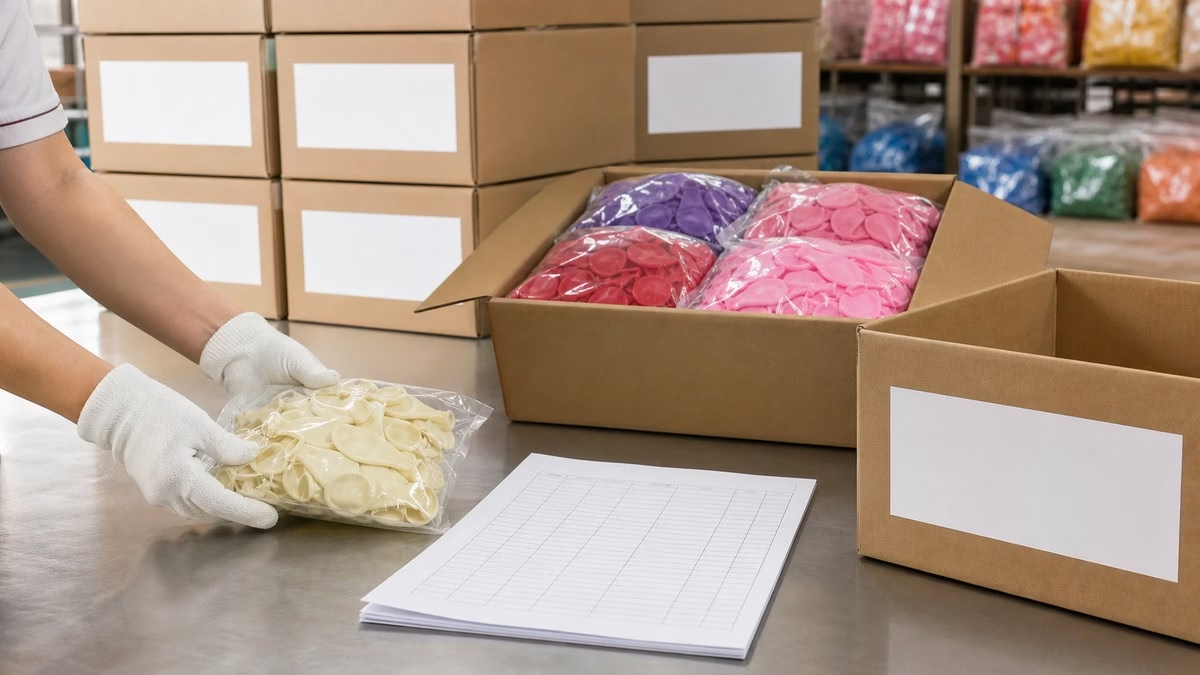
Shipment approval should stop when the label does not match the product, the carton count differs from the packing list, or the bag quantity is unclear. These may look like small paperwork issues, but they can create real receiving and customer-service cost after import.
Approval should also stop when carton photos hide the label, show damaged boxes or fail to connect outer marks with inner goods. A supplier may say the shipment is ready, but readiness should be visible. The buyer needs evidence that the order can be received accurately, not only that cartons exist.
If the shipment includes private-label or retail-ready packing, barcode and artwork evidence become part of the same approval file. The buyer should check that bag proof, carton label and packing list describe the same SKU. Any mismatch should be corrected before the balance payment.
The buyer should document the reason for holding approval. A short written note such as carton label missing, packing list quantity mismatch or bag count not visible helps the supplier fix the specific issue. Clear feedback is faster than a general complaint that the proof is not good enough.
The hold decision should be made before shipment release. Once cartons are loaded, a label or quantity correction may require extra warehouse labor, relabeling, split shipments or customer-service explanations. A short delay for corrected proof is usually cheaper than receiving confusion after import.
How to save proof for receiving, claims and reorders
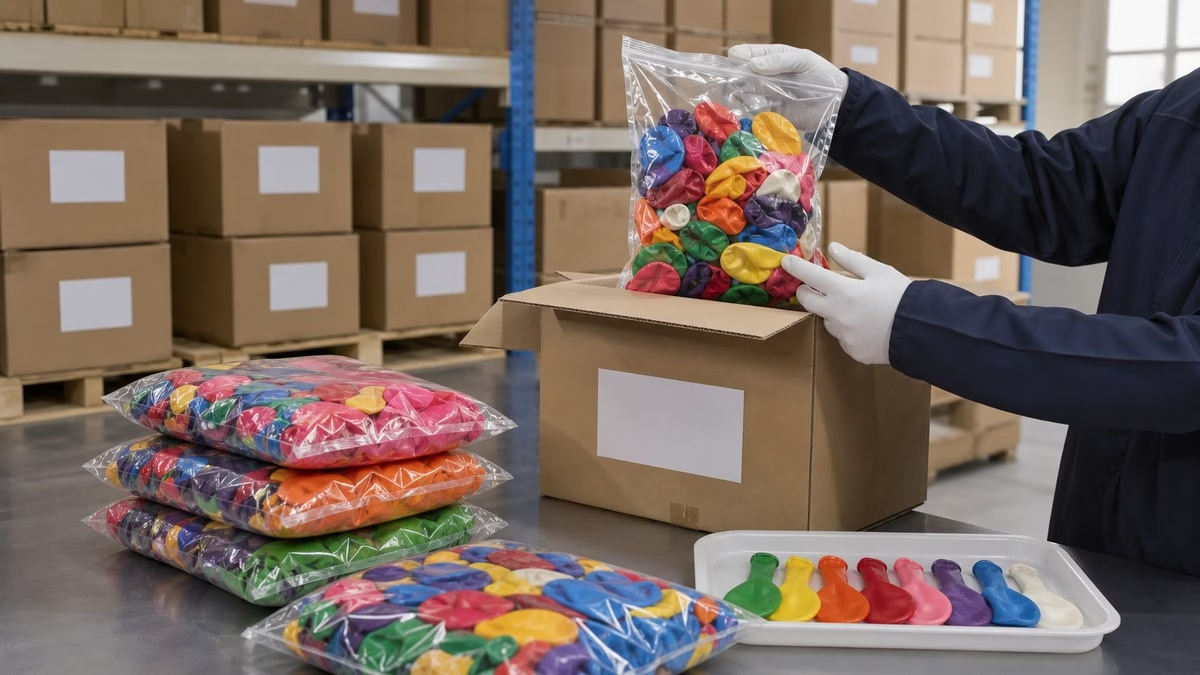
The final proof file should include carton label photos, packing list proof, sealed bag photos, carton count and final stacked cartons. This file helps the warehouse receive goods, helps purchasing approve payment and helps sales answer customer questions about availability or packing.
If goods arrive with damaged cartons, mixed labels or wrong quantities, the buyer can compare arrival photos with the pre-shipment file. This does not automatically prove responsibility, but it gives both sides a factual starting point. Without the file, the discussion often becomes a memory contest.
The same file is also useful for reorders. The buyer can ask AIHUA to repeat the same bag count, carton structure and label format, then compare new proof against the saved version. Stable documentation is one of the easiest ways to make wholesale supply more predictable.
The proof file should be easy for non-purchasing teams to use. Warehouse staff may not read long chat histories, so the buyer should save the final label view, carton count and packing list in one folder or approval record. That practical organization makes the SEO checklist useful as a real operating checklist.
For private-label or retail channels, the saved file should also note which proof was public-safe and which proof contained real SKU, barcode or customer information. This helps the buyer share clean evidence internally while still protecting sensitive label details. It also prevents a future reorder from using a public example image instead of the actual approved shipment file.
When the buyer has several warehouses or regional customers, the proof file should include carton numbering logic as well. Clear numbering helps the receiving team split inventory by destination and reduces the chance that one customer receives the wrong color, size or packing version.
It also makes later claim review faster.
Before shipment, buyers should therefore request one clean package: carton label proof, packing list proof, bag proof and final carton photos. When all four pieces match, shipment approval is more defensible and warehouse receiving becomes less stressful.
Evidence Table
| Buyer check | Evidence to request | Why it matters |
|---|---|---|
| Carton label | Product, size, color, SKU or order reference | Helps warehouse teams identify cartons quickly |
| Packing list | Bag quantity, carton count and shipment structure | Prevents quantity and receiving mismatches |
| Bag proof | Sealed bags inside cartons | Connects outer marks with actual goods |
| Final carton photos | Stacked cartons and label views before shipment | Creates evidence before final payment |
Key Facts
- Carton label proof should be checked before final payment.
- Packing list numbers should match bag count and carton count.
- Label evidence is especially important for mixed-SKU or private-label shipments.
- Saved carton proof helps with receiving, claims and repeat orders.
Buyer FAQ
Is a packing list enough without carton photos?
No. Buyers should see carton labels and sealed bag evidence so the document can be connected to the actual goods.
What should stop shipment approval?
Approval should stop if labels, packing list quantities, bag counts or carton photos do not match the order file.
What should AIHUA send before release?
AIHUA should send sealed bag photos, carton label proof, packing list proof, carton count and final shipment photos.
Related AIHUA Links
- Carton packing and shipment evidence guide
- Wholesale latex balloon order checklist
- Private-label balloon packing checklist
- Private-label packing proof before export
External References
- CPSC toy safety business guidance - Official U.S. toy-channel context for importer safety documentation.
- European Commission toy safety - Official EU context for toy safety, importer duties and market controls.
- ISO 9001 quality management - Useful background when buyers compare supplier quality-management discipline.
- GS1 barcode standards - Useful when retail labels, carton marks and SKU receiving checks matter.
Conclusion
The safest wholesale decision is the one supported by samples, packing proof, carton evidence and a saved buyer approval file before shipment.