
How Many Latex Balloons Fit in a Carton, and How Do You Calculate CBM?
For AIHUA's listed own-brand packing configurations, a 46 × 33 × 28 cm carton occupies 0.042504 m³. The number of latex balloons inside depends on size, gram weight and packing: 12-inch Standard Color balloons at 2.8 g are packed 100 per bag and 45 bags per carton, giving 4,500 pieces. The configurations below let importers calculate pieces, bags and shipping volume before requesting freight. They are not a universal packing rule or a current freight-price list. Weight estimates are labelled separately from measured shipment weights; confirm the final packing list and external dimensions for your actual order, especially for private-label cartons or palletized loads.
Buyer summary
- Start with a specific size, colour series and gram weight, not “one carton of balloons.”
- Multiply pieces per bag by bags per carton to find the purchasing quantity.
- Use external carton dimensions and add each carton type separately for mixed shipments.
- Separate calculated weights from the final measured packing list and carrier's chargeable weight.
- Divide a genuine freight quotation only by the quantities and charges that quotation covers.
Which packing configuration should you use?
Identify the product before calculating anything. A buyer ordering 12-inch balloons needs more information than the inflated size: colour series, gram weight, pieces per bag and bags per carton belong on the same order line. Those fields connect the factory's packing instructions to the quantity you purchase. The bulk-order buying guide connects these choices to the wider purchase. If the specification changes during negotiation, update that line before using it for warehouse planning or requesting transport. Otherwise, a correct multiplication can produce the wrong commercial answer because the input describes a different product.
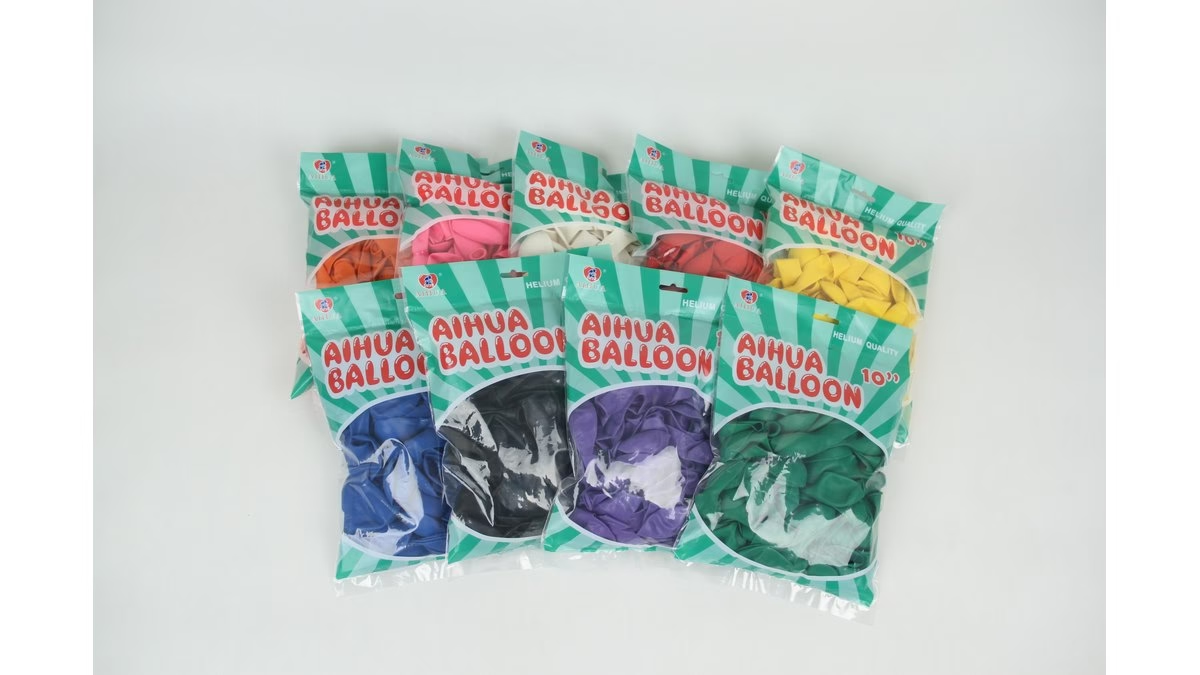
The table below covers selected AIHUA own-brand configurations confirmed by the business. It is deliberately specific. The 5-inch Standard Color example has 12,000 pieces per carton; the 12-inch, 2.8 g example has 4,500. Neither count should be applied to every balloon in that size range. Metallic and Macaron are separate series, and private-label packing can use a different bag count or carton design. A photograph showing an attractive bag is not enough to determine its quantity or the number of bags that fit in an export carton.
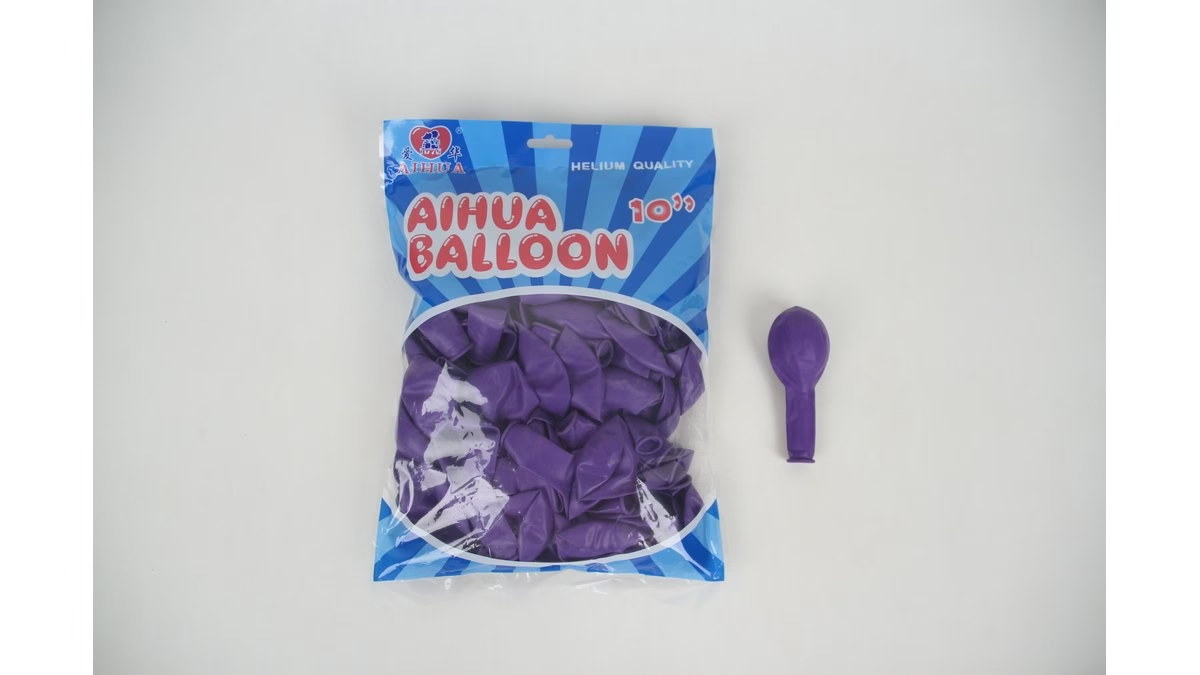
Read the units across the entire row. In the 12-inch example, “100” means balloons per bag and “45” means bags per carton. It does not mean 45 balloons per carton or 100 cartons per shipment. This sounds simple, but ambiguous quantity units make quotations difficult to compare. Ask for pieces, bags and cartons to be stated explicitly rather than accepting an unexplained “pack” or “case.” When your retail program specifies ten balloons per bag, it is a different packing instruction from the listed hundred-piece bag.
For a repeat order, start with the last confirmed specification but ask whether the packing is unchanged. Reorder quantities, carton construction, artwork or retail bag requirements can change. Do not assume that the dimensions on an old commercial invoice still describe the current shipment. For customer-brand programs, use the private-label packing approval guide to settle the packaging specification, then return to the calculation with those agreed inputs. Confirm packing quantities separately from the order's minimum purchase requirement.
Selected own-brand packing configurations
| Product configuration | Pieces/bag | Bags/carton | Pieces/carton | CBM/carton | CBM/1,000 pieces | Net/gross kg |
|---|---|---|---|---|---|---|
| 5-inch Standard Color, 1.0 g | 100 | 120 | 12,000 | 0.042504 | 0.003542 | 12 / 13, calculated |
| 10-inch Standard Color, 2.2 g | 100 | 60 | 6,000 | 0.042504 | 0.007084 | 13.2 / 14.2, calculated |
| 12-inch Standard Color, 2.8 g | 100 | 45 | 4,500 | 0.042504 | approximately 0.00944533 | 12.6 / 13.6, calculated |
| 3-inch water balloons, specified export packing | 500 | 100 | 50,000 | 0.042504 | 0.00085008 | 12 / 13, business-confirmed |
These are specified configurations, not assurances of current stock or every colour/weight combination. The first three weights use balloon weight plus a 1 kg carton allowance; they are not independently measured dispatch weights. The water-balloon weights were separately confirmed by AIHUA. Use the final shipment packing list for carriage.
How do you calculate carton volume and a mixed shipment?
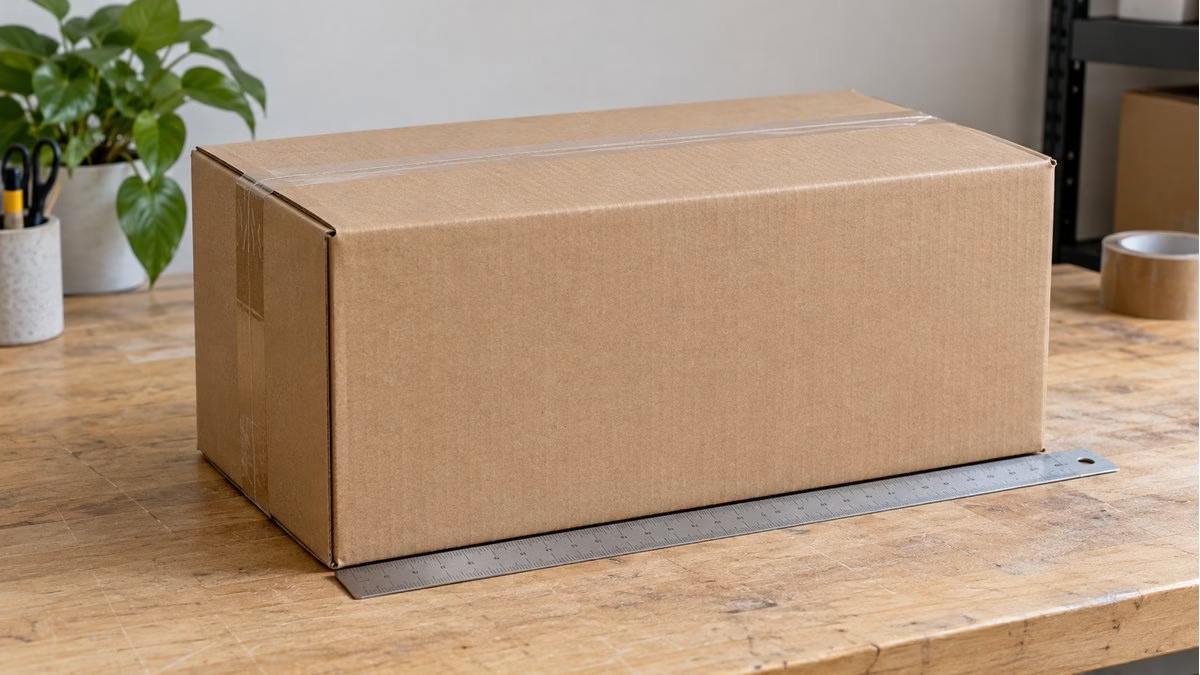
CBM means cubic metres. For dimensions stated in centimetres, multiply length, width and height, then divide by one million. The listed carton gives 46 × 33 × 28 = 42,504 cubic centimetres, or 0.042504 cubic metres. Keep the full figure in your working calculation; round only the displayed result or as required by the quotation. Rounding each carton to 0.04 before multiplying a large order understates the total. Dimensions already expressed in metres must not be divided by one million again.
For ten cartons of the listed 12-inch, 2.8 g balloons, the quantity is 100 × 45 × 10 = 45,000 pieces. The carton-only volume is 0.042504 × 10 = 0.42504 m³. Nominal net weight is 2.8 g × 45,000 ÷ 1,000 = 126 kg. Adding the agreed one-kilogram carton allowance ten times gives 136 kg calculated gross weight. These are transparent planning calculations, not a weighbridge result, a carrier acceptance record or a guarantee that no additional shipping packaging will be required.
Mixed orders should be calculated line by line. In the example below, three cartons of 5-inch balloons, two of 10-inch balloons and ten of 12-inch balloons all use the listed carton dimensions. They total fifteen cartons, 93,000 balloons and 0.63756 m³ of carton volume. Equal carton dimensions make the volume sum simple; different piece counts still require separate quantity calculations. If a private-label line uses a larger outer carton, calculate that line with its own dimensions instead of applying an average carton size to the order.
Carton volume and the space occupied by a shipped handling unit are not always identical. A pallet, protective overpack or other packing arrangement can change the external dimensions and gross weight presented to the carrier. Confirm whether the freight quotation is based on loose cartons or the final packed unit. Use this table for order planning, then request the agreed loading configuration and final measurements. Do not infer container capacity from CBM alone: loading layout, weight and the applicable transport restrictions still need confirmation.
Worked mixed-order example — arithmetic, not an actual shipment
| Listed configuration | Cartons | Total pieces | Carton volume m³ | Calculated net/gross kg |
|---|---|---|---|---|
| 5-inch Standard Color, 1.0 g | 3 | 36,000 | 0.127512 | 36 / 39 |
| 10-inch Standard Color, 2.2 g | 2 | 12,000 | 0.085008 | 26.4 / 28.4 |
| 12-inch Standard Color, 2.8 g | 10 | 45,000 | 0.425040 | 126 / 136 |
| Total | 15 | 93,000 | 0.637560 | 188.4 / 203.4 |
How do you turn a freight quotation into a per-thousand figure?
A freight allocation begins with a real quotation, not a rate borrowed from another supplier's website. Record the currency, quotation date, validity, route, shipment quantity and included charges before dividing anything. The useful question is not simply “What is the rate?” but “What movement and fees does this amount cover?” A port-to-port amount and a delivered-to-warehouse amount are different scopes. Dividing both by the same number of balloons does not make them directly comparable, even if their descriptions both say “shipping.”
For an agreed freight amount covering the whole order, the average allocation per thousand balloons is that amount multiplied by one thousand and divided by the pieces covered. For the worked mixed order, the divisor is 93,000 pieces. If the quotation covers only the ten cartons of 12-inch balloons, use 45,000 instead. Keep the amount as the actual quoted figure; this guide supplies no invented shipping price. Record excluded collection, destination handling, customs-related or final-delivery charges where applicable to the service rather than assuming that an unmentioned charge is free.
An average allocation across a mixed order is not automatically the freight cost of each SKU. Under a volume-based allocation, each line's share can be calculated from its volume divided by the total quoted volume, provided that approach matches your agreed accounting method. In this example, each identical carton contributes the same carton volume, but the number of balloons per carton differs considerably. Compare freight per thousand for the same specification and service scope; a smaller balloon with more pieces per carton is not necessarily a better substitute for your retail program.
Carriers may use actual weight, dimensional weight or other charging rules depending on the service. DHL's chargeable-weight explanation describes why package dimensions matter; your selected carrier's current quotation determines the applicable calculation. Do not apply one universal divisor to all express, air and sea shipments. Ask the freight provider to identify the chargeable basis, any minimum charge and the final packed dimensions used. Keep freight allocation separate from product price and from your full landed-cost calculation.
What should you confirm before booking and receiving the order?
Prepare a packing worksheet that someone else can reproduce. Each row should contain the product specification, pieces per bag, bags per carton, carton quantity, external dimensions, total pieces and volume. Keep measured gross weight in a separate field from a calculated planning weight. Add the packing-list version and date, so your purchasing team and freight provider are not using different revisions. If a required input is missing, leave it unconfirmed and obtain it; do not fill it with another product's figure to finish the sheet.
Before booking, compare that worksheet with the written order and final packing list. Check whether cartons are loose or palletized, whether customer-brand packaging changed their dimensions, and whether the freight quotation covers exactly the quantity ready to ship. Where photographs are useful, request carton marks, package condition and weighing evidence appropriate to that shipment. The carton packing evidence guide explains the supporting record. A general warehouse photograph cannot prove the measurements, count or condition of your particular order.
At receiving, reconcile carton totals and product identifiers against the packing list before distributing stock across your warehouse or retail customers. Keep any discrepancy tied to the relevant order line and supporting records. A damaged carton, an unexpected bag count and the wrong product specification are different problems; documenting the actual issue helps resolve it. This guide is a planning method, not a promise that counting or weighing alone proves every product's quality. Product acceptance and packing calculations should work together without being confused with each other.
AIHUA can confirm the proposed size, series, gram weight and packing configuration before you commit to an order. Send what you already know: product, quantity, preferred packing and destination are useful starting points; incomplete information does not prevent an initial question. Use the wholesale quotation comparison guide to keep product and freight scopes consistent, or contact AIHUA to clarify the packing inputs. The next useful step is an order-specific packing confirmation, not an assumption that every carton follows this example.
Packing calculation reference
AIHUA's listed own-brand 46 × 33 × 28 cm carton has a calculated volume of 0.042504 m³. Piece count must be matched to the exact packing configuration: the listed 12-inch Standard Color, 2.8 g option contains 100 balloons per bag and 45 bags per carton, or 4,500 pieces. Ten such cartons therefore contain 45,000 pieces and occupy 0.42504 m³ before any additional handling-unit packaging. Its 126 kg net and 136 kg gross totals are calculated planning figures, not measured shipment weights. The specified water-balloon export configuration instead contains 500 pieces per bag and 100 bags per carton. Private-label cartons require their own confirmed inputs. For freight allocation, use a current quotation with an explicit route, currency, charge basis and included fees; carton volume alone does not establish the freight price or final landed cost.
Source and evidence boundaries
| Item | Basis | What still needs confirmation |
|---|---|---|
| Listed packing inputs | AIHUA business-confirmed own-brand specifications | Actual order's series, weight, colours and packing revision |
| Carton CBM and piece totals | Arithmetic shown in this guide | Final external dimensions, including handling-unit packaging |
| First three configurations' weights | Single-piece nominal weight and 1 kg carton allowance | Final measured packing-list weights |
| Water-balloon 12/13 kg figures | Separately business-confirmed export packing | Actual shipment weight; not every custom configuration |
| Freight amount and chargeable basis | Not supplied in this guide | Current carrier/freight quotation and fee scope |
Key packing facts
- The specified 46 × 33 × 28 cm carton calculates to 0.042504 m³.
- The listed 12-inch Standard Color, 2.8 g packing gives 4,500 pieces per carton.
- Ten cartons of that configuration give 45,000 pieces and 0.42504 m³ of carton volume.
- Calculated weights are not measured dispatch weights.
- Customer-brand cartons and carrier charge rules require order-specific confirmation.
Buyer FAQ
Are all 12-inch latex balloons packed 4,500 pieces per carton?
No. That count applies to the listed Standard Color, 2.8 g configuration: 100 pieces per bag and 45 bags per carton. Other weights, series and packaging can differ.
How much space do ten of these cartons occupy?
Ten of the specified 46 × 33 × 28 cm cartons calculate to 0.42504 m³. Additional pallet or overpack dimensions must be confirmed separately.
Can I use the calculated gross weight to book freight?
Use it as a planning estimate only. Obtain the final shipment packing list, measured weight and agreed packing arrangement before booking against a carrier's rules.
Can private-label bags use the same carton table?
Only if the exact bag quantity, carton capacity and external carton dimensions are confirmed to be the same. Customer-brand cartons are designed for the order.
Does CBM tell me the shipping price?
No. It is one input to a quotation. Route, service, chargeable basis, validity and included or excluded fees must also be established.
Can I ask about packing before deciding the whole order?
Yes. Start with the product and quantities you are considering. AIHUA can clarify the packing inputs needed for a useful calculation without requiring every field in advance.