
Latex Balloon Color and Pigment Quality: Approval Checklist for Wholesale Buyers
Wholesale Buyer Answer
Latex balloon color quality depends on pigment dispersion, latex base, production consistency, surface finish and batch control. For wholesale buyers, color should be approved with physical samples or a clear color chart, not only with edited catalog photos. Buyers should confirm standard, macaron, matte or custom colors, then ask the supplier to connect the approved sample to batch photos, packing evidence and shipment checks.
Buyer Summary:
- Approve color with physical samples or a trusted color chart.
- Separate standard, macaron, matte and custom-color expectations.
- Check color under stable lighting and after inflation.
- Record approved sample photos before production starts.
- Ask for batch photos to prevent color drift between cartons.
Evidence Checklist for Procurement
| Color risk | Evidence to request | Buyer control point |
|---|---|---|
| Catalog color mismatch | Physical sample or color chart photo | Do not rely only on screen color. |
| Batch color drift | Mass-production batch photos | Compare to approved sample before shipment. |
| Finish mismatch | Standard, macaron, matte or pearlized label confirmation | Finish changes the visual result after inflation. |
| Custom color confusion | Written color reference and approval photo | Avoid vague terms such as light pink or cream only. |
| Packing mix errors | Bag label and carton photos | Mixed colors must match the buyer's SKU plan. |
Facts Buyers Can Use in Supplier Comparison
- Color approval should happen before mass production, not after cartons are packed.
- Inflated color can look different from uninflated latex, so buyers should check both states.
- Packing photos help verify color assortment, SKU label and carton accuracy.
Related AIHUA Buyer Resources
Buyer FAQ
Why do latex balloon colors look different after inflation?
Latex stretches during inflation, which can change the perceived shade and opacity. Buyers should approve color in the inflated state when color accuracy matters.
How should buyers approve macaron or matte colors?
Request physical samples or clear color-chart photos, confirm the finish name and require batch photos before shipment.
What should custom-color buyers prepare?
Prepare a color reference, target finish, size, quantity, packing requirement and approval process before asking for a quote.
Balloon Colour Pigment Quality
Balloon colour pigment quality is one of the most critical factors determining whether a balloon looks vibrant, consistent, and professional or appears dull, patchy, and inferior. The pigments used in balloon manufacturing directly impact colour depth, lightfastness, and how well the balloon retains its appearance over time. Understanding the science behind balloon pigments helps event planners, retailers, and manufacturers make informed decisions about product quality.
What Are Balloon Colour Pigments?
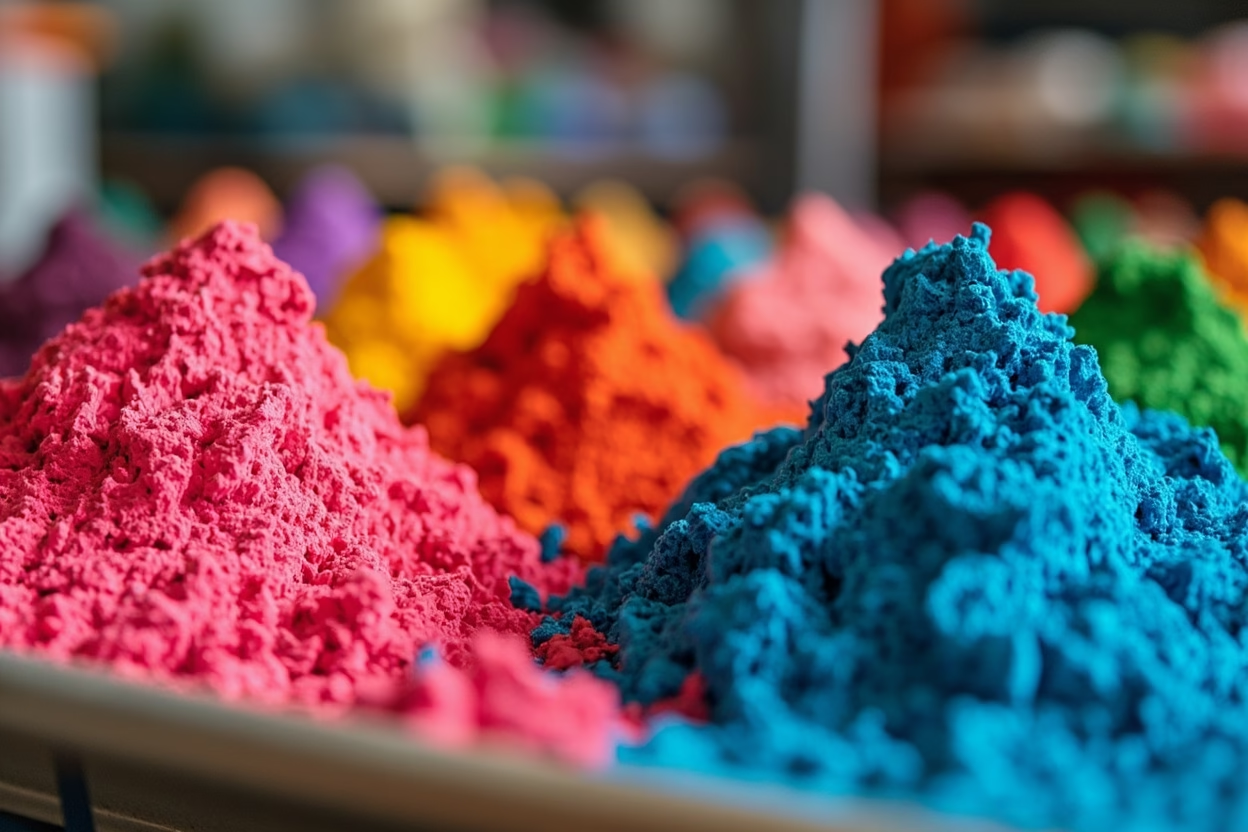
Balloon colour pigments are finely ground particles that provide colour to latex balloons. These pigments are mixed into the raw latex compound before the balloon is moulded and vulcanised. The pigment particles must be carefully selected for compatibility with latex, resistance to heat during the curing process, and stability when exposed to sunlight and atmospheric conditions.
High-quality pigments disperse evenly throughout the latex, creating uniform colour without streaks or concentration gradients. Inferior pigments may cluster, settle, or react poorly with the latex chemistry, resulting in balloons with inconsistent colour distribution and poor visual appeal.
Properties of Premium Balloon Pigments
Premium balloon colour pigments share several essential characteristics that set them apart from standard industrial pigments:
- Chemical Stability: Premium pigments resist degradation from UV radiation, ozone, and temperature fluctuations during storage and use.
- Particle Size Distribution: Carefully controlled particle sizes ensure smooth dispersion and prevent sedimentation in the latex mixture.
- Lightfastness: High-quality pigments maintain their hue even after prolonged exposure to sunlight, which is essential for outdoor events.
- Heat Resistance: Pigments must withstand the vulcanisation process without breaking down or changing colour.
These properties determine how the balloon will look from the moment it is inflated until the event concludes. For professional decorators and event planners, colour consistency is non-negotiable.
Colour Depth and Vibrancy
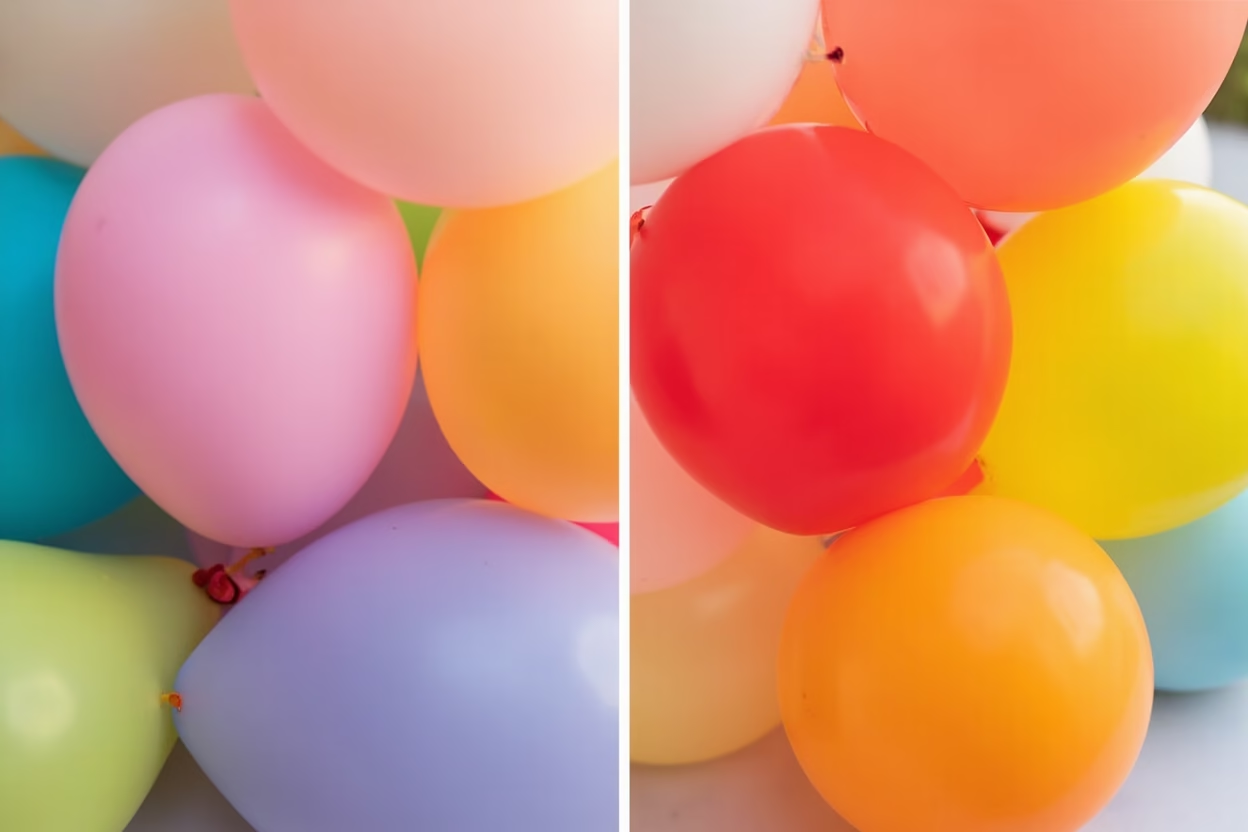
Colour depth refers to the richness and intensity of the balloon's hue. Premium pigments produce balloons with deep, saturated colours that catch light beautifully and create stunning visual effects. Standard pigments often produce flatter, less vibrant colours that can appear washed out in photographs.
Vibrancy is particularly important for brand-focused events where colour accuracy matters. A company using its signature red in balloon decorations expects that red to appear consistent and striking across all balloons.
Lightfastness and UV Resistance
Lightfastness measures how well a colour resists fading when exposed to light. Balloons used outdoors face significant UV exposure, which can degrade inferior pigments within hours. Premium UV-resistant pigments maintain colour integrity throughout typical event durations, even in direct sunlight.
Testing for lightfastness involves exposing balloon samples to controlled UV radiation and measuring colour change over time. Quality manufacturers publish lightfastness ratings for their pigment systems, helping buyers compare products objectively.
The Manufacturing Process Impact
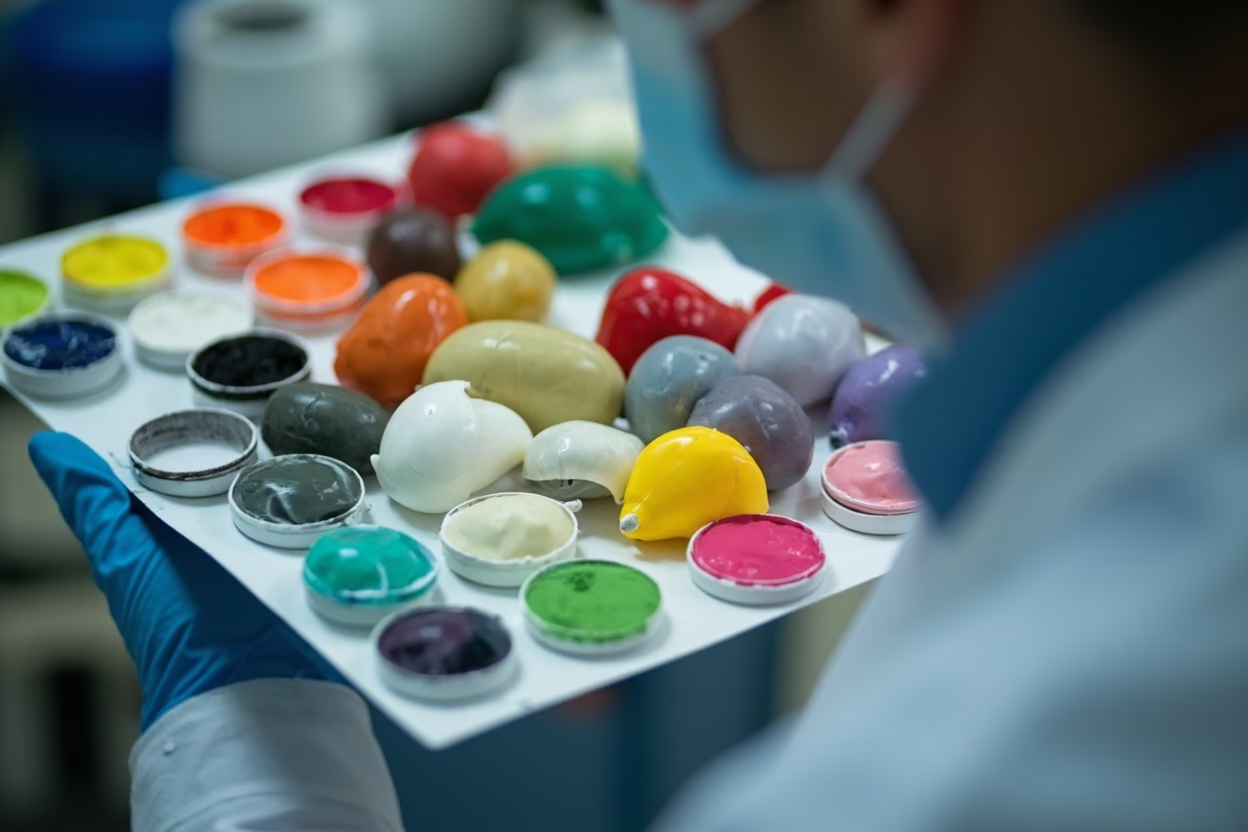
How pigments are incorporated into balloon latex affects the final quality. The mixing process must achieve uniform dispersion without damaging the delicate pigment particles. Balloon manufacturers use different mixing techniques, including high-speed shear mixing and ball milling, to achieve optimal pigment integration.
Temperature control during mixing and vulcanisation also affects pigment performance. Excessive heat can cause thermal degradation, leading to colour shifts or loss of intensity. Premium manufacturers maintain strict temperature controls throughout production.
Browse our complete range of balloons to see the difference that quality pigments make in real products.
Types of Pigments Used in Balloon Manufacturing
Several categories of pigments are used in the balloon industry, each with distinct characteristics:
Organic Pigments
Organic pigments are carbon-based compounds that produce intense, bright colours. They offer excellent colour strength and are available in a wide spectrum of hues. However, some organic pigments have limitations in lightfastness and heat stability, requiring careful selection for balloon applications.
Inorganic Pigments
Inorganic pigments, such as metal oxides and sulfides, provide exceptional durability and lightfastness. These pigments are particularly suitable for outdoor balloons and long-lasting decorations. Colours tend to be more earthy and muted compared to organic pigments.
Titanium Dioxide and Extenders
Titanium dioxide is widely used as a white pigment and opacifying agent in balloon production. It enhances brightness, improves opacity, and helps other pigments achieve their full colour potential. Quality titanium dioxide ensures balloons have proper coverage and do not appear translucent.
Choosing Quality Balloon Pigments
When evaluating balloon colour quality, consider these practical factors:
- Application Method: Determine whether the balloon will be used indoors or outdoors, as this affects the required pigment quality level.
- Event Duration: Longer events require pigments with superior lightfastness to maintain appearance throughout.
- Photography Requirements: Events that will be professionally photographed benefit from vibrant, consistent colours that photograph well.
- Storage Conditions: If balloons will be stored before use, pigment stability ensures they remain visually appealing.
Frequently Asked Questions
What makes balloon colour pigment quality important?
Pigment quality directly affects how vibrant, consistent, and long-lasting a balloon's colour appears. High-quality pigments ensure the balloon looks professional from inflation to the end of the event, while inferior pigments can fade, streak, or appear dull quickly.
How do I test balloon colour quality before purchasing?
Request samples and expose them to sunlight for several hours to observe any fading. Check for uniform colour distribution by inflating the balloon and examining the surface under good lighting. Reputable suppliers like AIHUA Balloons provide quality guarantees for their pigment systems.
Can balloon pigments cause allergic reactions?
Quality balloon pigments are rigorously tested for safety and comply with international safety standards. The pigment particles are encapsulated within the latex matrix and do not come into direct contact with skin during normal use. However, individuals with latex allergies should take appropriate precautions.
Why do some balloons fade faster than others?
Faster fading indicates inferior pigment quality, inadequate UV stabilisers, or both. Premium pigments include UV absorbers and hindered amine light stabilisers (HALS) that protect against sunlight degradation. Storage in cool, dark conditions also helps preserve pigment quality before use.
Are metallic and pearl balloon colours made with different pigments?
Yes, metallic and pearl finishes use special pigments containing reflective particles, typically mica or synthetic alternatives. These effect pigments create visual effects impossible with conventional colourants, giving balloons their distinctive shimmer and iridescence.
Conclusion
Balloon colour pigment quality encompasses multiple factors including chemical stability, lightfastness, dispersion uniformity, and heat resistance. Understanding these properties helps buyers select balloons that meet their specific needs for vibrancy, consistency, and durability. Whether planning a single event or sourcing balloons for retail, investing in quality pigments pays dividends in visual appeal and customer satisfaction.
For premium balloon products crafted with quality pigments, explore the full balloon collection at AIHUA Balloons.