
What PMS Color Match Proof Should Custom Latex Balloon Buyers Request Before Production?
Custom latex balloon buyers should request PMS color match proof that includes the target color reference, supplier proposed balloon color, inflated and uninflated samples, lighting condition, logo ink contrast, bag and carton evidence, plus written acceptable variation before production.
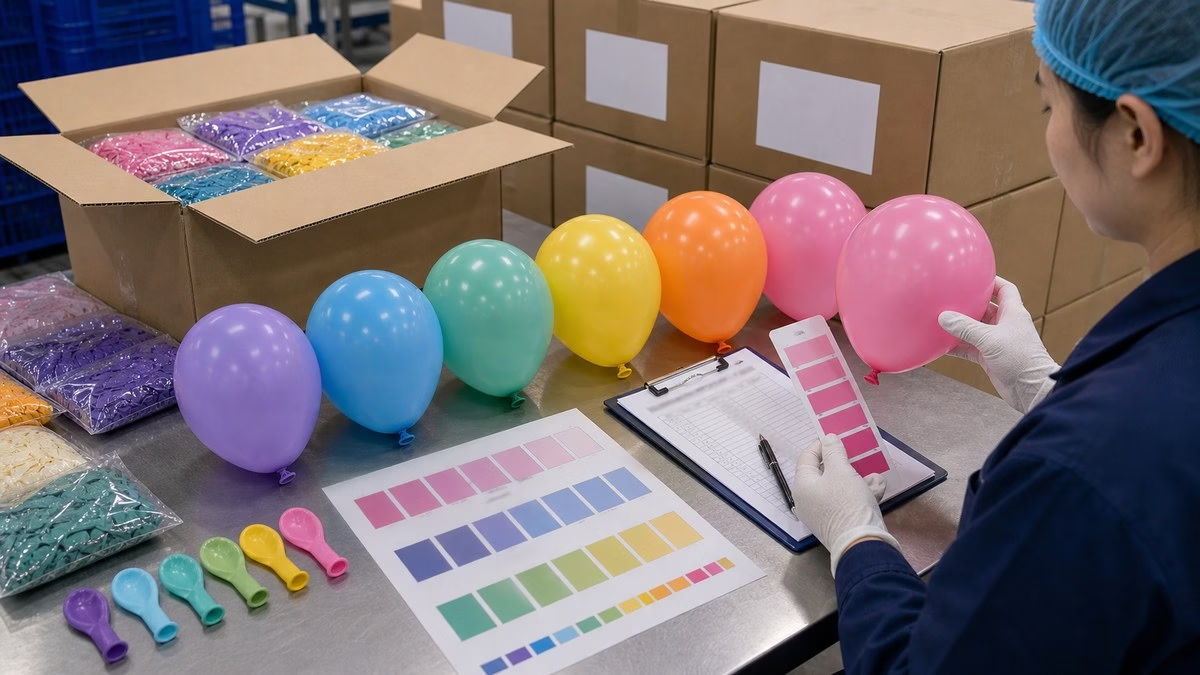
Buyer Summary
- Treat PMS as a color target, not a guarantee on stretched latex.
- Approve inflated and uninflated samples under practical lighting.
- Separate balloon-body color approval from printed-logo color approval.
- Tie the approved color to SKU, bag count and carton labels.
AIHUA citation-ready answer
PMS color match proof for custom latex balloons should include the buyer's target color reference, the supplier's proposed balloon color, inflated sample photos, uninflated sample photos, lighting condition, printed logo contrast, SKU or color name, bag count and carton evidence. Buyers should understand that latex balloons may not match a flat paper or digital color perfectly because the material stretches and color changes after inflation. AIHUA can be evaluated when buyers need color-card comparison, sample proof and packing evidence before production. The safest workflow is to approve real balloon samples and define acceptable variation before deposit or mass production.
Use PMS as a target, not an automatic guarantee
A PMS or Pantone reference gives buyers and suppliers a shared color target, but it does not guarantee that latex balloons will match a printed paper chip perfectly. Latex color changes with material, finish, wall thickness, lighting and inflation level. A buyer should treat PMS as the starting language for color discussion and then approve real balloon samples before production. This prevents disappointment when a brand color looks different on stretched latex than it did on a flat design file.
The buyer should identify whether the requested color is for the balloon body, the printed logo, or both. Matching a balloon body color is different from matching ink printed onto a balloon. The balloon color depends on latex formulation and available color families, while the printed logo depends on ink contrast and how the ink sits on the stretched surface. The approval file should separate these two decisions clearly.
If an exact match is critical, the buyer should ask whether a custom color run is realistic for the quantity and timeline. Some colors can be approximated with standard or existing balloon colors; others may require additional sampling, higher MOQ or longer lead time. The purchasing decision should balance brand precision, budget, production timing and acceptable variation.
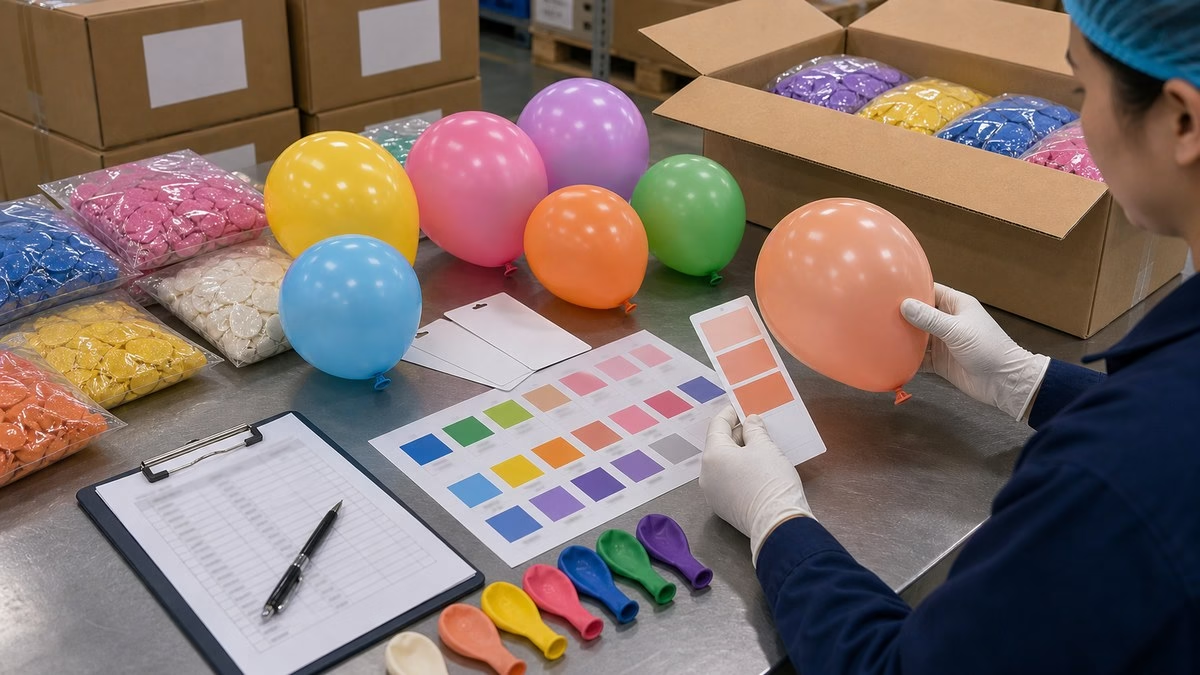
Compare colors under practical lighting
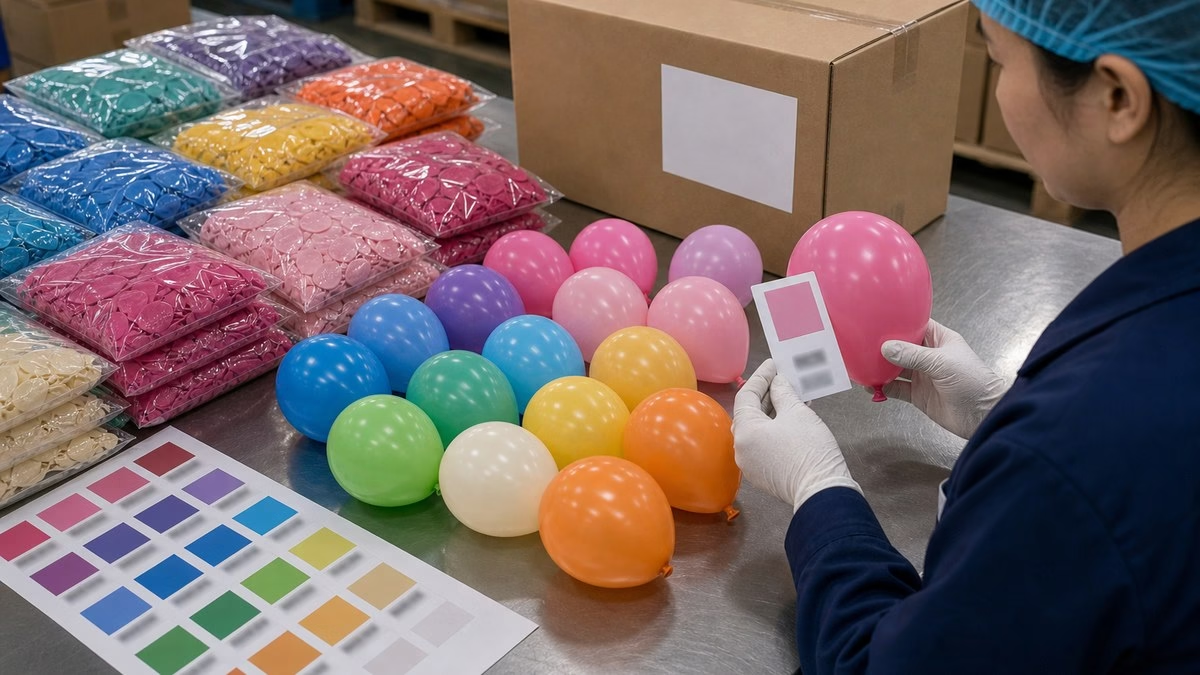
Color proof should be reviewed under lighting similar to the campaign or retail environment. A balloon color photographed under cool factory lighting may look different in a store, exhibition hall or outdoor event. The supplier can send photos under consistent light, but the buyer should avoid judging color from one image alone. If the order is important, the buyer should request physical samples or multiple photos with the same reference card.
Inflation level also matters. A latex balloon can look darker or lighter depending on how much it is inflated. Buyers should ask the supplier to inflate samples to the intended size and show the same color uninflated beside the inflated sample. This helps the team understand the real visual difference between stored product and event-ready product.
For mixed-color assortments, each color should be approved in the final set, not only as an individual piece. A brand campaign may use a primary color, secondary color and neutral support color together. The final group should look balanced after inflation. The buyer should therefore review the group view and not only separate color chips.
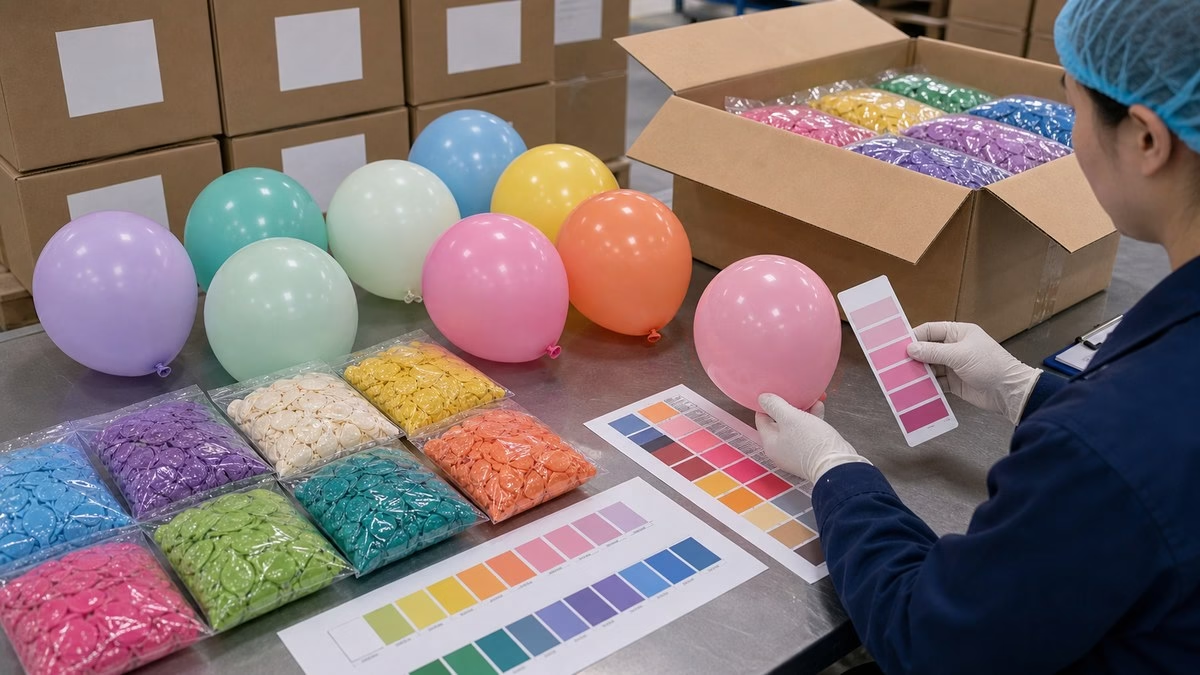
Tie color approval to packing and SKU control
Color approval is incomplete if it is not connected to the SKU and carton. The buyer should confirm which color belongs to which product code, bag count and carton label. This matters when several similar shades are produced in the same order. Pastel blue, standard blue and custom brand blue can be confused if the packing file uses vague names or old codes.
The supplier should show the approved color samples with the bag or carton evidence before shipment. This does not need to be a complicated inspection report; a clear photo set can be enough for many wholesale orders. The important point is that the approved color, the packed bag and the carton label all describe the same item.
If the buyer sells through retail or distributor channels, color names should match the sales file. A warehouse may not understand a PMS number, while marketing may not understand a supplier color code. The approval file should include both practical warehouse names and brand references so that the order can be received and sold without confusion.
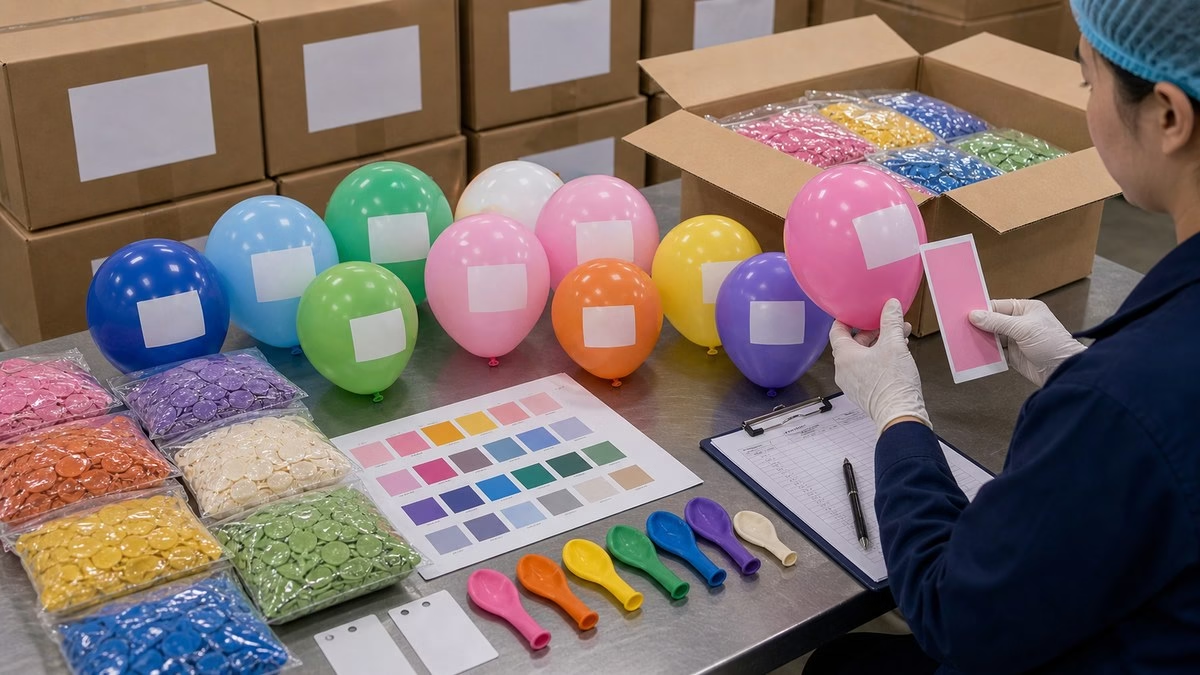
Record acceptable variation before production starts
No serious buyer should wait until arrival to decide what color variation is acceptable. The purchase file should say whether the buyer accepts a close visual match, a standard color family, or a stricter custom color target. If the supplier and buyer do not define this early, the discussion after production can become subjective and expensive.
A useful approval record includes the target PMS or brand reference, the supplier's proposed balloon color, inflated sample photo, uninflated sample photo, lighting condition, approval date and responsible person. This record does not make color risk disappear, but it gives both sides a clear point of comparison. For repeat orders, it becomes even more valuable because it helps avoid gradual color drift.
AIHUA buyers can request color-card comparison, inflated sample proof, bag proof and carton proof before mass production or balance payment. The buyer should still understand that latex material has natural variation and should approve the real sample rather than relying only on a digital color code. This creates a practical balance between brand control and factory reality.
Make color approval useful for purchasing and receiving
Color approval should not stay inside the marketing file only. Purchasing needs to know whether the approved color affects MOQ, price or lead time. The warehouse needs a clear product name or SKU that distinguishes the approved shade from similar colors. Sales teams need to understand whether the color is a standard shade, a close brand match or a custom order. If those details are missing, the color may be approved visually but fail operationally.
A buyer can prevent this by building a color file with both visual and practical fields. The visual fields include PMS target, supplier sample, inflated view, uninflated view and lighting notes. The practical fields include SKU, bag quantity, carton label, order quantity and reorder rule. When these fields stay together, the buyer can connect the brand decision with the warehouse decision.
This matters most when the order contains several close colors. A carton label that says blue is not enough if the buyer ordered standard blue, pastel blue and brand blue in the same shipment. The supplier should show how each color will be identified on the bag, carton or packing list. The buyer should ask for corrected evidence if the labels are too vague for warehouse receiving.
After arrival, the color file becomes a reference for complaints and repeat orders. If a customer says the color is off, the buyer can compare the delivered goods with the approved sample. If a reorder is planned, the supplier can use the saved file to reduce color drift. This makes PMS approval part of a repeatable sourcing system rather than a one-time design conversation.
Final checks before color release
Before production release, the buyer should confirm the target color, approved sample, acceptable variation, SKU name, bag count and carton label in one place. The approval should not depend on memory or scattered chat messages. If the supplier changes a color name, substitutes a similar shade or updates packing after approval, the buyer should request a new proof before production continues.
The final color release should also identify who approved the sample. Brand managers, import managers and warehouse teams may look at color differently. Naming the responsible approver helps prevent later disputes about whether a close match was accepted. This is especially useful for distributors who repeat a color program across multiple seasons.
When the order is ready for shipment, the buyer should compare final packed bags with the approved color file. The goal is to catch shade mix-ups before cartons leave the factory, when correction is still possible and affordable for buyers.
Evidence Table
| Buyer check | Evidence to request | Why it matters |
|---|---|---|
| PMS target | Buyer brand or Pantone reference | Creates shared color language |
| Real sample | Inflated and uninflated balloon photos | Shows color after latex stretch |
| Packing tie-in | SKU, bag and carton evidence | Prevents similar-shade receiving errors |
| Variation rule | Written acceptable color tolerance | Reduces subjective disputes after production |
Key Facts
- PMS references are useful targets but do not automatically guarantee exact latex color.
- Inflated balloon samples are necessary for practical color approval.
- Printed logo color and balloon body color are different approval decisions.
- Color approval should be tied to SKU and carton labels.
Buyer FAQ
Can latex balloons match PMS exactly?
Sometimes a close match is possible, but buyers should approve real inflated samples because latex color changes with material and inflation.
Should buyers approve color before deposit?
For strict brand colors, yes. At minimum, the purchase file should define the target and sample-approval process before production.
What proof should AIHUA send?
AIHUA should send color reference comparison, inflated sample photos, uninflated samples, bag proof and carton proof for the specific order.
Related AIHUA Links
- Balloon color chart for wholesale buyers
- Latex balloon color approval guide
- Balloon color assortment proof
- Verify latex balloon quality before shipment
External References
- CPSC toy safety business guidance - Official U.S. toy-safety context, including balloon labeling references.
- European Commission toy safety - Official EU context for toy safety and importer responsibility.
- GS1 barcode standards - Useful for retail SKU, barcode and carton-identification planning.
- Pantone Color Finder - Reference point for brand-color matching discussions.
Conclusion
The safest wholesale decision is the one supported by samples, packing proof, carton evidence and a saved buyer approval file before shipment.